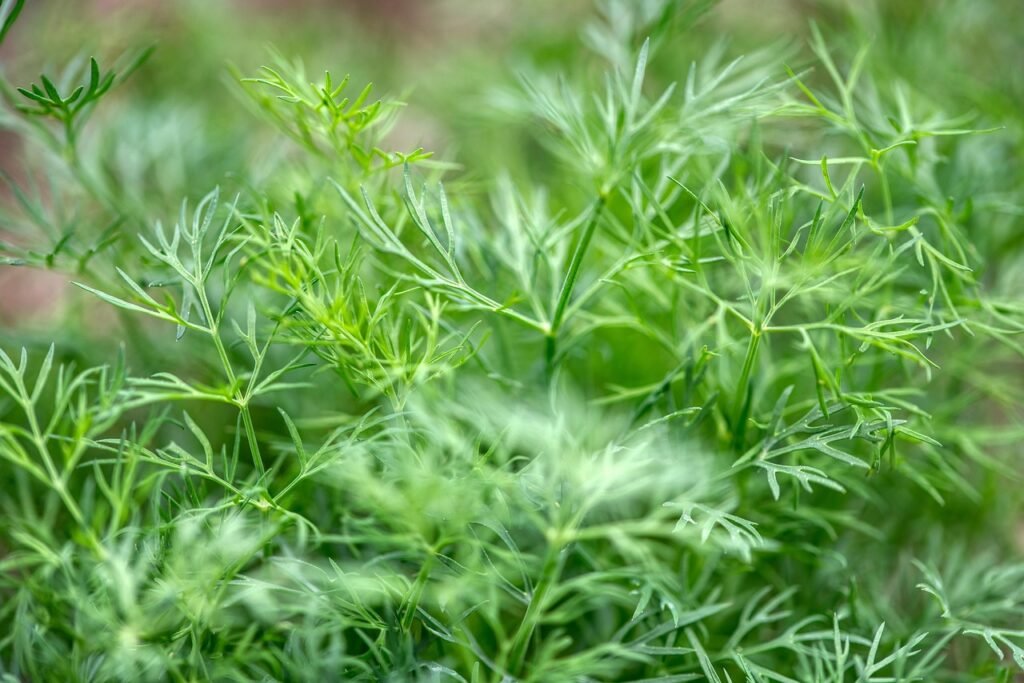
Dill fails by drying out, not by rotting, so it needs humid air around it in the refrigerator. Leave the bunch unwashed, wrap it loosely in a slightly damp towel, and slide it into a bag you leave partly open. Set aside whatever you cannot use within a few days for the freezer.
Why dill gives up faster than parsley
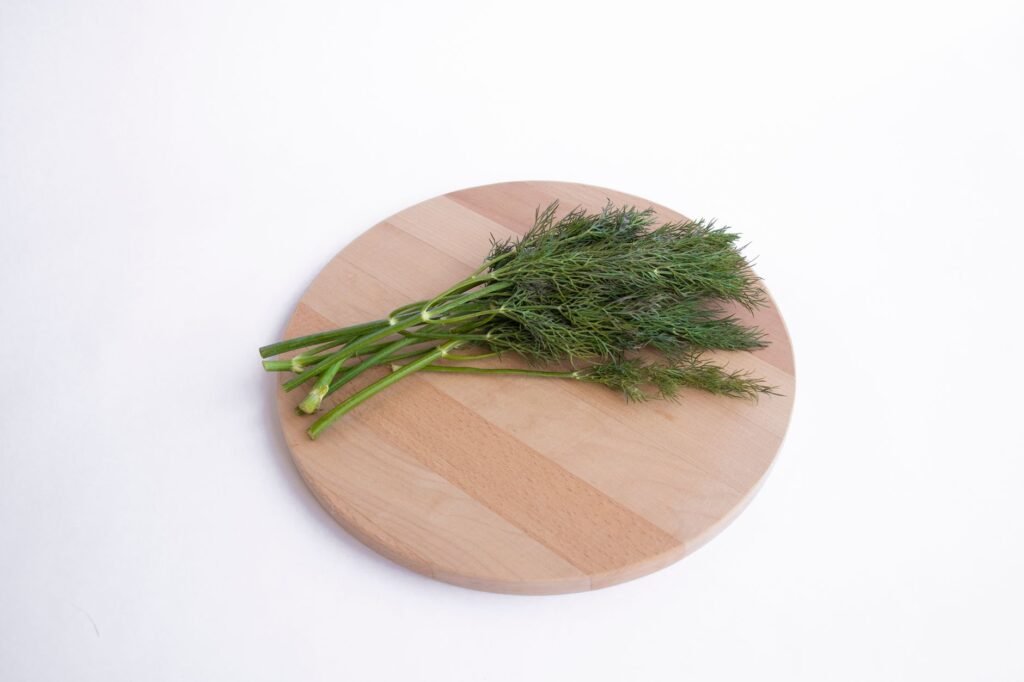
Look closely at a frond and the reason is obvious. Dill is split into hundreds of hair thin threads, which means enormous surface area and almost no water held inside. Sturdier herbs wilt slowly and slime up when trapped wet. Dill skips that stage and simply desiccates, going pale and brittle while it still looks intact from across the kitchen.
That flips the usual priority. Keeping dill alive is mostly about surrounding it with damp air while keeping standing water off the fronds themselves.
| Setup | Result |
|---|---|
| Damp towel wrap, bag left open a corner | Best balance, stays green longest |
| Stems in a little water, bag over the top | Works well, the fronds bruise if crowded |
| Straight into the crisper in the store sleeve | Pale and papery within days |
| Sealed container with wet fronds | Dark patches and a sour smell |
| Left on the counter in a glass | Droops the same afternoon |
Setting it up in the refrigerator
- Skip washing. Rinse only the sprigs you are about to chop, because water sitting in those threads is impossible to shake out.
- Pull out any sprig that already looks slimy or blackened so it does not take neighbors with it.
- Dampen a paper towel, wring it hard, and lay the bunch on it without pressing down.
- Roll loosely and put the roll in a bag, leaving one corner open for air exchange.
- Store it on a middle shelf rather than the door, and never under anything heavy.
Drying and freezing, and which keeps more taste
Freezing wins for anything where the dill goes in near the end. Chop it, pack it into an ice cube tray with a splash of water or oil, freeze, then transfer the cubes to a bag. Whole sprigs also freeze fine on a tray and get crumbled straight into a pot while still frozen. Texture goes either way, so frozen dill is a cooking ingredient rather than a garnish.
Drying works better here than it does for most tender herbs. Hang small bundles somewhere warm with moving air and out of sunlight, or spread sprigs on a tray until they crumble between your fingers. Store the crumbled leaves in a jar in a dark cupboard, whole rather than powdered, and crush them as you cook.
Where people lose half the bunch
Rinsing the whole bunch on the way home is the single biggest waste, because damp threads and a closed bag produce dark mushy patches in about a day.
Close behind: cramming the fronds down into a jar until the delicate tips fold and bruise, forgetting the bunch behind a jug where it freezes against the back wall of the refrigerator, chopping the whole thing in advance so every cut edge starts fading, and storing dill next to apples or bananas, whose ripening gas yellows tender greens noticeably faster.
Faded, wilted, or finished
Limp and green comes back. Stand the stems in cold water for twenty minutes or so and most bunches lift again. Pale and crispy is not dangerous, just weak, and that batch is better crumbled into a dressing than laid on a plate.
Stop at dark slimy fronds, a smell that has gone sour rather than grassy, or any fuzzy growth where the stems were bundled. Once the base is slick, the rest of the bunch is usually further along than it looks.