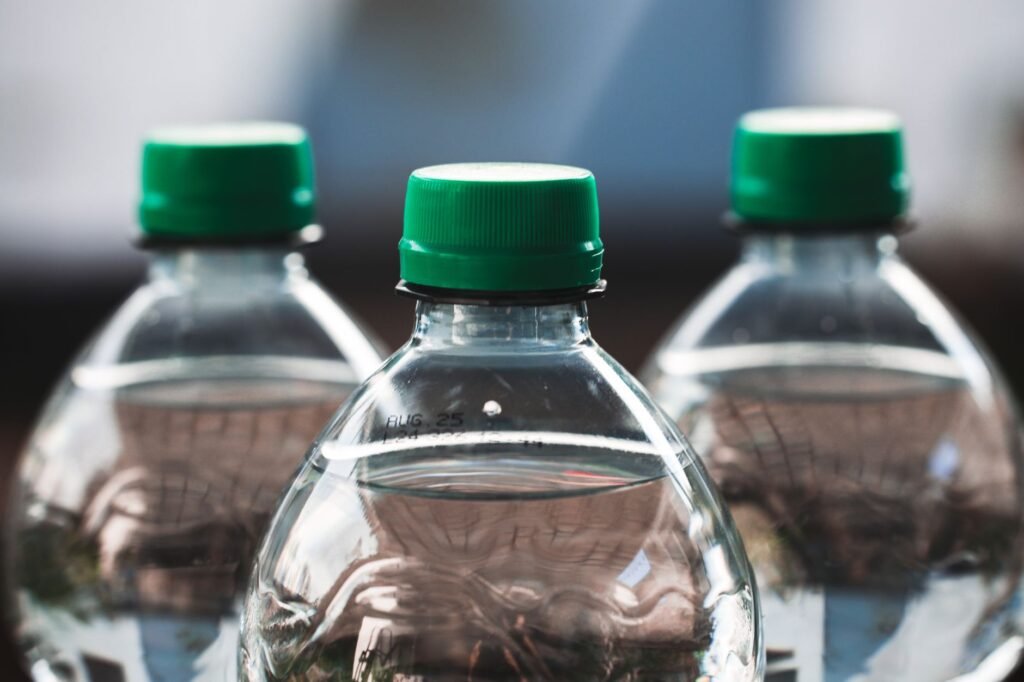
Store emergency water in food grade containers, keep it dark and cool, label the fill date, and rotate on a schedule you will actually keep. Commercially sealed bottled water is the simplest starting point. For quantities, treatment and how long a supply should cover you, follow Ready.gov and your local emergency management office.
Containers that are safe to fill
The container is where most home water storage goes wrong, long before anything happens to the water. You are looking for food grade plastic or glass with a seal that clamps rather than perches, and a size you can still carry when it is full.
| Container | Verdict |
|---|---|
| Commercially sealed bottled water | Easiest, dated by the manufacturer |
| Purpose made water storage jugs and barrels | Built for this, check the food grade marking |
| Clean food grade buckets with gasket lids | Workable, label them clearly |
| Reused milk jugs | Avoid, residue plus weak seams |
| Reused juice or soda bottles | Sugar residue, poor long term choice |
| Any container that held a non food product | Never, regardless of how well it was washed |
Where the jugs should sit
Dark, cool and stable. Light encourages algae in anything translucent, heat stresses plastic, and a spot that swings from freezing to baking works the seals loose over a season.
The part people miss is what sits nearby. Plastic is not a perfect wall, and vapors from gasoline, pesticides, paint thinner and similar products can move through it over time. A garage shelf above the lawn mower fuel can is the wrong shelf. So is a corner of the basement next to the paint cans.
Spread the supply across more than one room if you can. Water stored only in a basement is water you cannot reach if that basement is the part of the house that floods.
Rotation, and how to not forget
- Write the fill date on every container in permanent marker, on the side, not the lid. Lids get swapped.
- Pick a rotation trigger you already notice, like the twice yearly clock change or the start of hurricane season where you live.
- When the date comes up, use the old water on plants or laundry rather than tipping it away, and refill immediately.
- Check the containers as you go for bulging, weeping seams and cloudiness, and retire any that look tired.
- Note somewhere how much you have, so you are not counting jugs by flashlight.
Common mistakes with a home water supply
Storing everything in one place. Stacking heavy jugs high enough that a full one becomes a hazard on the way down. Assuming the shutoff will happen with warning. Having no clean way to move water from a barrel into a glass, which turns fifty gallons into a decoration.
And the big one: half remembering a disinfection ratio from something read years ago. Treatment instructions vary by product and concentration, and guessing is worse than not treating. Look it up from the source at the time you need it, and keep a printed copy with the supply.
Where to check instead of guessing
Ready.gov publishes household water guidance, the CDC covers safe water in emergencies, and the EPA handles drinking water quality questions. Your county or state emergency management office is the one that knows local hazards, and the utility that serves your address is who to follow during an actual advisory.
Signs to act on without waiting for advice: cloudiness, floating matter, slime on the inside wall, a smell, or a container that is swelling or leaking. Those are container failures, and the answer is to empty, clean and refill rather than to inspect it further.