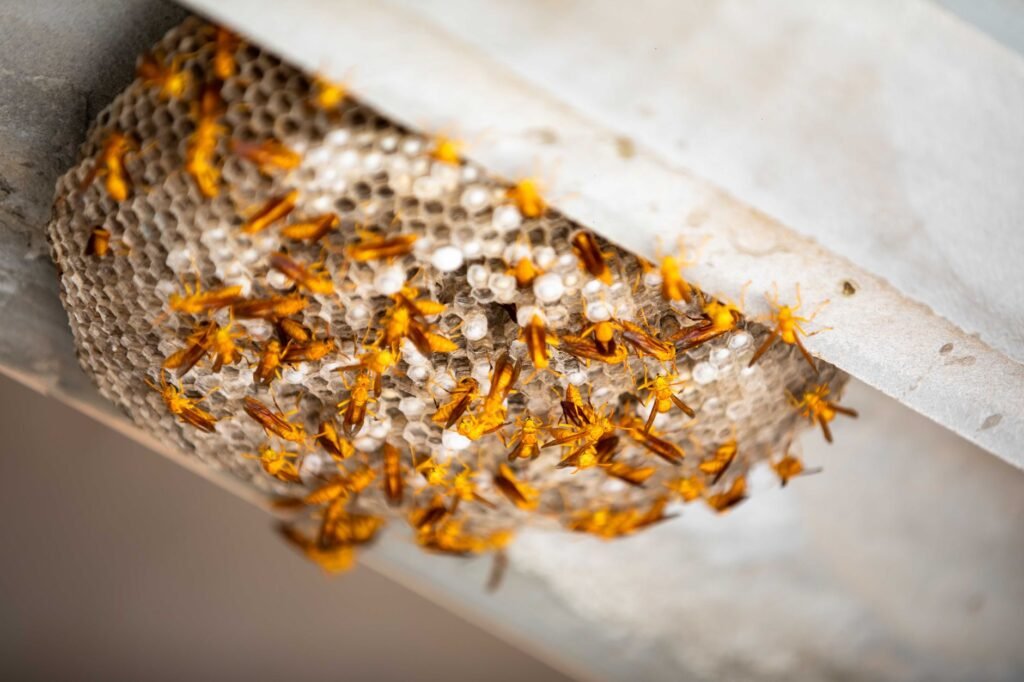
Yellow jackets defend a nest hard and each worker can sting more than once, so the first decision is whether to handle it at all. Nests in the ground, inside wall voids, or beside a doorway belong to a licensed professional. Late season colonies are the biggest and the touchiest.
Why a late summer colony behaves differently
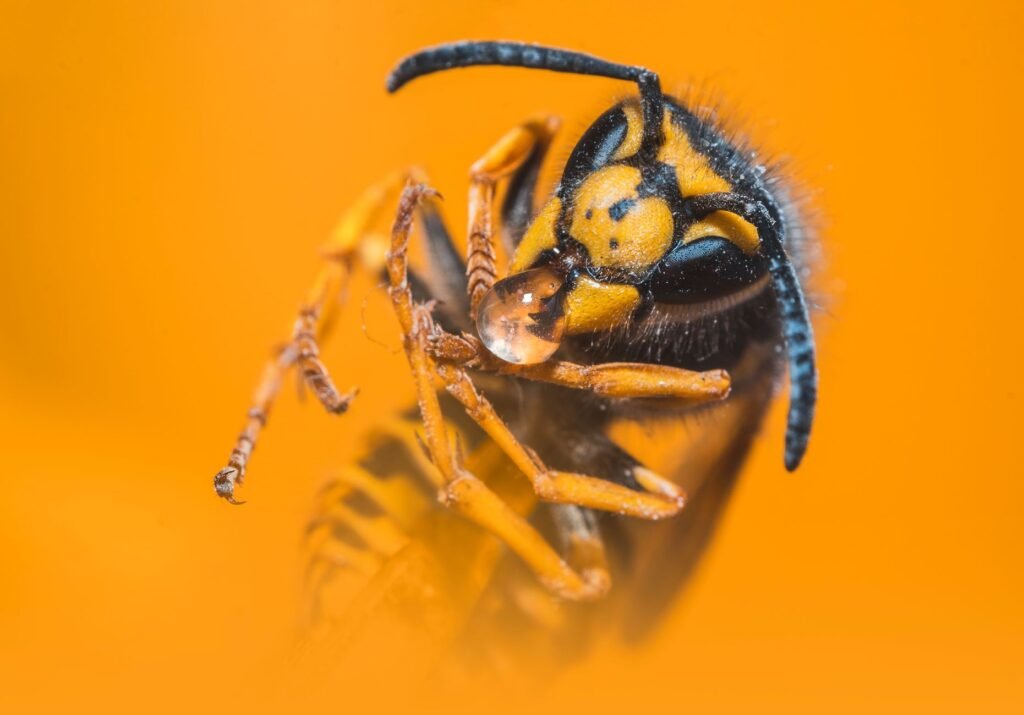
A colony starts in spring with a single overwintered queen and stays small and unnoticed for months. Numbers build all summer, and by the end of the season the nest holds its largest worker force of the year. Those workers also change diet, shifting from hunting insects for the brood toward anything sweet, which is when they start appearing at grills, trash cans and open cans of soda.
Two other traits matter for safety. The nest is usually hidden, either underground in an old rodent burrow or inside a cavity, so people find it by mowing over it rather than by seeing it. And unlike a honey bee, a yellow jacket has a smooth stinger and can use it repeatedly while releasing an alarm signal that recruits nestmates.
Situations that call for a professional
| Situation | Call a pro? |
|---|---|
| Nest inside a wall, soffit or ceiling void | Yes, always |
| Ground nest beside a path, play area or door | Yes |
| Anyone in the household reacts badly to stings | Yes, no exceptions |
| Nest needs a ladder to reach | Yes, falls hurt more than stings |
| You already disturbed it once | Yes, the colony is primed |
| A few foragers at a picnic, no nest found | No, manage the food |
If you decide to hire, ask whether the quote covers a return visit. A nest in a void sometimes needs a second treatment, and a firm that charges twice for that is worth knowing about before you book.
If you are dealing with foragers rather than a nest
Most complaints in August are about individual wasps at the food, not about an accessible nest. That is a manageable problem.
- Keep drinks in bottles with lids or in cups you can see into, since a wasp inside a can is how most patio stings happen.
- Serve food in covered dishes and clear plates as soon as people finish.
- Use a trash can with a lid that closes and move it away from the seating area.
- Rinse recycling. A sticky can in an open bin recruits foragers to the whole yard.
- Hang traps at the property line a week ahead so they draw insects away from where people gather, not toward it.
- Stay still if one lands on you. Swatting triggers a defensive response, brushing it off calmly usually does not.
Telling yellow jackets from bees and paper wasps
Honey bees are fuzzy, golden brown, and interested in flowers rather than your lunch. They also die after stinging, and colonies in a structure are a job for a beekeeper or a removal specialist rather than a spray can.
Paper wasps hang an open umbrella shaped comb under an eave or railing, with visible cells and no paper envelope. They are far less defensive and will often tolerate people a few feet away. Yellow jackets are slick and bright, fly with legs tucked in, and their nest is either hidden underground or wrapped in a gray paper envelope. Getting the identification right decides how much caution the situation deserves.