
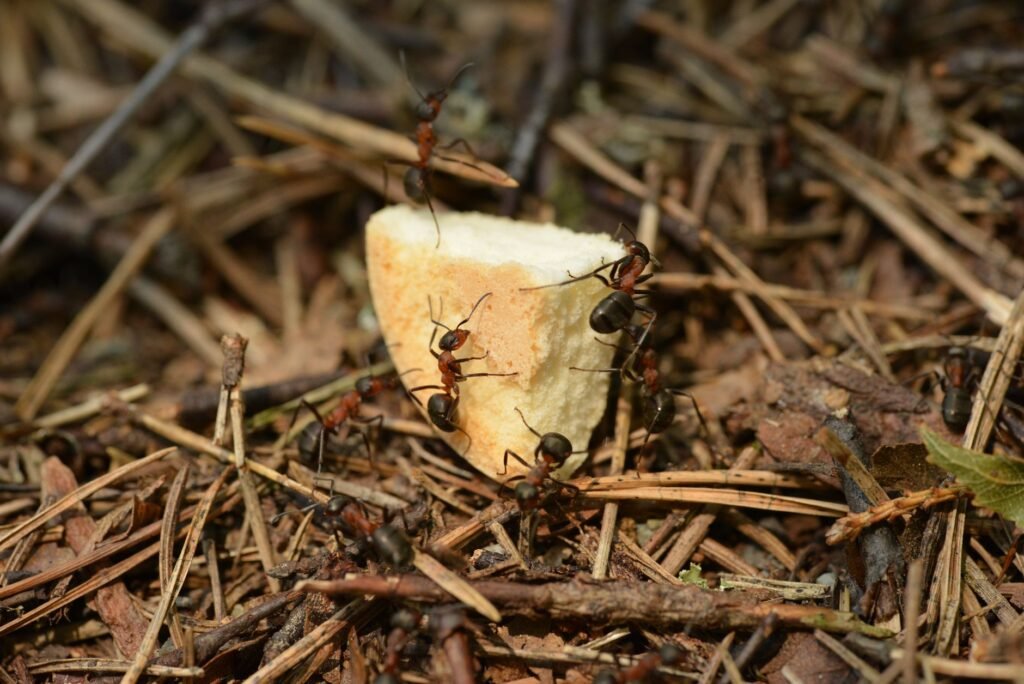
The line of ants crossing your counter is a chemical trail, and the insects you can see are a small fraction of the colony. Wipe the trail to erase the scent, then let bait do the work, because foragers carry it back and feed the nest that you cannot reach.
How a trail forms in the first place
It starts with a single scout wandering more or less at random. When one finds something worth taking, it returns to the nest laying a scent trail behind it, and other workers follow that trail to the same spot. Each successful trip reinforces the chemistry, so a crumb behind the toaster turns into a marching column within hours.
Understanding that explains the two most useful moves. Erasing the trail with a soapy cloth strands the followers and buys quiet time. Leaving a food source in place, however small, guarantees the trail rebuilds, because the reinforcement loop restarts the moment one scout succeeds again.
Wipe the trail, then leave the bait alone
- Follow the column both directions before you clean anything, so you learn where they enter and what they found.
- Wipe the whole route with soapy water or diluted vinegar, including the vertical surfaces they climb.
- Seal the food. Cereal and pet kibble into hard containers, fruit bowl checked for anything soft, sticky bottle rims rinsed.
- Cut the water. A dripping tap, a damp sponge or condensation under a dish rack keeps a colony interested even with the food gone.
- Place bait stations on the path they were using, near the entry point rather than in the middle of the room.
- Do not spray or scrub around the stations. A cleaner near the bait breaks the trail the workers need in order to carry it home.
The most common mistake is impatience. Bait is designed to be slow so that it circulates through the nest by sharing before it acts, which means visible traffic for a few days is the process working rather than failing.
Why spraying feels better and works worse
| Approach | What actually happens |
|---|---|
| Contact spray on the column | Kills visible foragers, nest keeps sending more |
| Residual barrier on the counter | Repels workers away from bait they should be taking |
| Bait station on the trail | Carried back and shared, so it reaches the brood |
| Soapy wipe of the route | Erases the scent, immediate quiet, no lasting effect |
| Sealing the entry gap | Redirects them, best done after baiting has worked |
There is a further catch with some of the species that invade kitchens. Several common indoor ants live in colonies with many queens, and heavy spraying can push them to split and establish new satellite nests, a behavior called budding. You end up with three trails where you had one.
Follow the line back to where they come in
Watch where the column disappears. Common entries are the gap where a pipe passes through a cabinet base, the joint between countertop and backsplash, a window frame corner, or a hairline crack in the baseboard caulk. Outdoors the source is often a nest under a slab, in a planter against the wall, or beneath mulch at the foundation.
Caulk those gaps once the interior activity has stopped. Sealing early just traps foragers inside with the food, and it hides the trail that was showing you where the problem actually starts.