
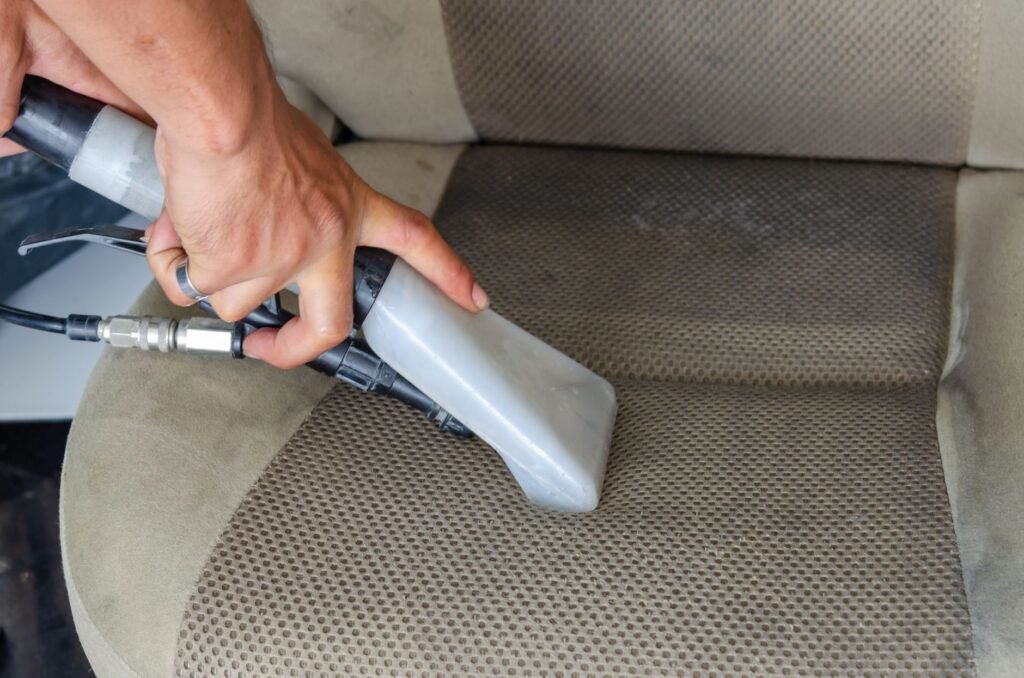
Vacuum the seats first, then clean them with a product made for their material, such as upholstery shampoo for cloth, leather cleaner for leather and mild soapy water for vinyl. Work one small section at a time, use as little liquid as possible, and let the car air out until everything is dry.
Figure out what your seats are covered in first
The interior care section of your owner’s manual usually names the seat material and lists cleaners the maker approves or warns against. If the manual is gone, look closely. Woven fabric shows threads, real leather has an irregular grain and a faint smell, and vinyl or synthetic leather looks uniform and feels slightly slick.
| Seat material | What to clean it with | What to avoid |
|---|---|---|
| Cloth or fabric | Upholstery shampoo or a few drops of dish soap in warm water | Soaking the cushion, colored cloths that can bleed dye |
| Leather | A cleaner labeled for automotive leather, then a conditioner | Household all purpose sprays, bleach, heavy scrubbing |
| Vinyl or synthetic leather | Mild soap and water on a soft cloth | Abrasive pads and solvent cleaners |
| Perforated or ventilated seats | Cleaner sprayed onto the cloth, not the seat | Liquid pooling in the holes |
Whatever you pick, test it on a hidden spot such as the lower back of the seat and wait for it to dry before doing the rest.

Shampooing cloth seats without soaking the foam
Fabric seats hide a thick foam cushion that holds water like a sponge. Wet it deeply and it can stay damp for days and start to smell. The goal is to clean the surface fibers and pull the dirty liquid back out.
- Vacuum hard with a crevice tool, pushing into the seams where crumbs collect.
- Spray stains with the shampoo and give them a few minutes to work.
- Mist one section lightly, then scrub with a soft upholstery brush in overlapping circles.
- Pull the foam and dirt out with a wet and dry vacuum or a small upholstery extractor. If you have neither, press firmly with dry microfiber towels.
- Go over the section once with a cloth dampened in clean water to lift leftover soap, which otherwise attracts new dirt.
- Blot again and move to the next section.
Wiping down leather and vinyl seats gently
Leather needs less water, not more effort. Vacuum first so grit doesn’t scratch the finish, then spray leather cleaner onto a soft brush or microfiber cloth and work it across one panel at a time. Wipe off the residue with a second damp cloth and dry the surface. Follow up with a leather conditioner so the hide stays supple and less likely to crack.
Vinyl is more forgiving. Warm water with a little mild soap removes most grime, and a soft brush reaches into textured patterns. Rinse the cloth often so you aren’t spreading dirt around, and dry the seat when you finish.
Stains that need their own approach on car upholstery
Blot fresh spills with a dry towel before adding any cleaner, since rubbing drives them deeper. Coffee and soda usually lift with upholstery shampoo. Greasy marks from food or hands come out better with a dab of dish soap, because it is formulated to break down oil. Mud should dry completely so you can vacuum most of it away first.
Milk, vomit and pet accidents leave odors that soap alone can miss, so an enzyme cleaner made for upholstery is the better choice. Ink and dye transfer from new jeans are harder, and on leather they are a job for a detailer or the product your dealer recommends.
Drying the interior so it doesn’t smell musty
Damp upholstery in a closed car invites mildew. Clean on a dry day, park in the shade so cleaners don’t dry into streaks, and leave the doors or windows open afterward. A fan pointed into the cabin speeds things up. Press a dry paper towel into the seat before you close up; if it comes away damp, give it more time. Paint scratches on the outside are a separate job with their own guide.
Frequently asked questions
Can I use a carpet cleaner machine on car seats?
A small handheld upholstery attachment or portable spot cleaner works well because it sprays and extracts in one pass. A full size carpet machine is awkward in a car and tends to put down more water than seat foam needs. Whatever you use, make light passes and extract thoroughly.
How often should car seats be deep cleaned?
Most cars do fine with regular vacuuming and a deeper clean a couple of times a year. Cars that carry kids, pets or daily takeout meals may need it more often. Treat spills the day they happen and the deep cleans get much easier.
Is it safe to use baking soda on car seats?
Sprinkling baking soda on dry fabric seats, letting it sit, then vacuuming it up can help with odors. Avoid mixing it into a paste on leather, since grit and residue can dull the finish. Test any home remedy on a hidden spot first.
How do I remove dog hair from car upholstery?
Vacuum first, working the nozzle into the seams and the gaps between the seats and the floor, then pick up what is left with a lint roller or a pet fur removal tool. Take out and wash any seat covers or dog bedding according to their care labels. A pet seat cover or crate makes the next cleanup easier.