
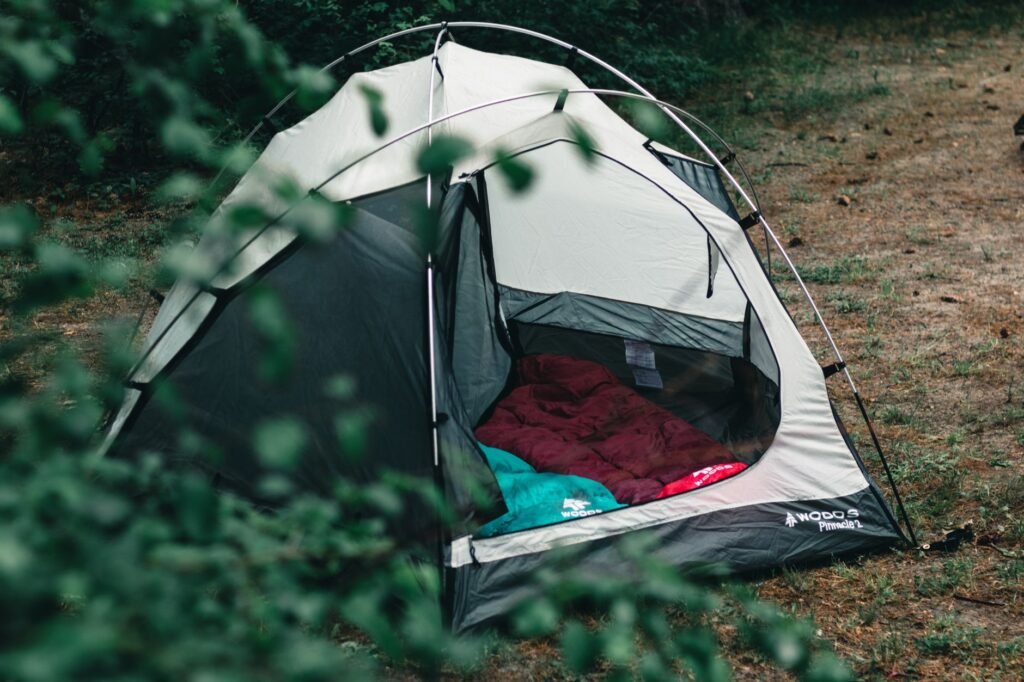
Choose a sleeping bag by the coldest night you expect to face, then match the fill, shape and weight to how you camp. Read the comfort rating instead of the number in the product name, and pair the bag with a sleeping pad that keeps the ground from stealing your heat.
Reading the comfort and lower limit numbers on the tag
Many bags sold in the US carry temperature ratings from the ISO 23537 test, the international standard that replaced the older EN 13537 method. A heated mannequin wearing one layer of long underwear lies in the bag on an insulating mat inside a cold chamber, and the results are turned into several numbers.
| Rating | What it describes | Who should use it |
|---|---|---|
| Upper limit | Warmest temperature a standard man can sleep at without heavy sweating, bag unzipped | Rarely printed on retail bags |
| Comfort | Temperature at which a standard woman sleeps comfortably in a relaxed position | Cold sleepers and most women |
| Lower limit | Temperature at which a standard man can sleep eight hours curled up without waking | Warm sleepers who run hot |
| Extreme | Survival only rating for a standard woman, with real risk of hypothermia | Nobody planning a night out |
A bag named for 20 degrees might hit that figure only at its lower limit. Check the spec sheet for both numbers, then pick a bag whose comfort rating sits at or below the coldest low you expect.
Down or synthetic fill for your kind of trips
Down gives the most warmth for its weight and squeezes into a small stuff sack, which is why backpackers favor it. Fill power tells you how much the down lofts for its weight, so a higher number usually means a lighter bag for the same warmth. Its weakness is water. Wet down collapses and stops insulating until it dries, which can take a long time in a damp tent.
Synthetic fill costs less, handles moisture better and dries faster, but it is heavier and bulkier for the same rating. For car camping, canoe trips or humid regions where things never fully dry, synthetic is the safer pick. For long hikes where every ounce gets carried, down usually wins.
Mummy, rectangular or semi-rectangular shapes
A mummy bag tapers toward the feet and wraps a hood around your head. Less empty space means less air for your body to warm, so it feels warmer than a roomy bag with the same fill. Restless sleepers and side sleepers sometimes find it confining.
Rectangular bags give you room to move and often unzip flat into a quilt, which suits summer camping from the car. Semi-rectangular designs sit in between. Whatever the shape, check the length listed on the spec sheet. A bag that is too short compresses the insulation at your feet, and one that is far too long leaves a cold pocket your body has to heat.
Why the pad under your bag changes how warm it feels
The fill beneath you gets crushed flat by your body weight, so it does little to block the cold ground. That job belongs to the sleeping pad. Pads are rated by R-value, a measure of resistance to heat flow, and a higher R-value means more insulation. Many major pad makers now test to ASTM F3340, a shared lab method, so R-values from different brands can be compared fairly.
Remember that the bag ratings above assume an insulating mat underneath. Sleep on a thin, uninsulated air mattress on frozen ground and even a well-rated bag will feel colder than its label promises.
Seven checks before you buy a sleeping bag
- Write down the coldest overnight low you realistically expect.
- Compare that number with the comfort rating, not the name on the bag.
- Choose down for weight savings or synthetic for damp conditions and a lower cost.
- Pick a shape that matches how you sleep and how you travel.
- Confirm the length fits you with a little room at the feet.
- Look at packed size and weight if you will carry it on your back.
- Check the hood, draft collar and zipper, then match the bag with a pad that has enough R-value for the season.
Try it on in the store if you can. Zip it up, roll onto your side and see whether your shoulders feel pinched or the zipper snags.
Frequently asked questions
Should I buy a sleeping bag rated colder than I need?
A small cushion helps, because weather forecasts miss and fatigue makes you feel colder. Many campers pick a bag whose comfort rating sits a bit below the lowest temperature they expect, then vent it on mild nights by opening the zipper or sleeping with the hood down.
Can I use a summer sleeping bag in winter?
Only with backup. You can add a fleece liner, wear dry base layers and a hat, and use a pad with a higher R-value, but a summer bag in real winter cold is a risk. For regular cold-weather trips, rent or buy a bag rated for those temperatures.
How should I store a sleeping bag between trips?
Keep it loose in a large cotton or mesh storage sack, or hang it in a closet, rather than packed tight in its stuff sack. Long compression flattens the fill, and a flattened bag traps less warm air. Make sure it is completely dry before you put it away.
How do you wash a sleeping bag?
Check the maker's care label first. REI recommends a front loading washer, since a top loader's agitator can damage the bag, and a cleaner made for down or synthetic fill instead of regular detergent. Unzip it, use a gentle warm cycle and rinse at least twice, then dry on low heat with two or three tennis balls.
Do sleeping bags degrade over time?
Yes, gradually. REI notes that body oils, sweat and dirt rob a bag of insulating power over time, long compression reduces loft, and sunlight slowly degrades the fabric. Sleeping in clean clothes or a liner, storing the bag loose and washing it when it gets grimy all slow the decline. A bag that stays flat after fluffing will sleep colder.