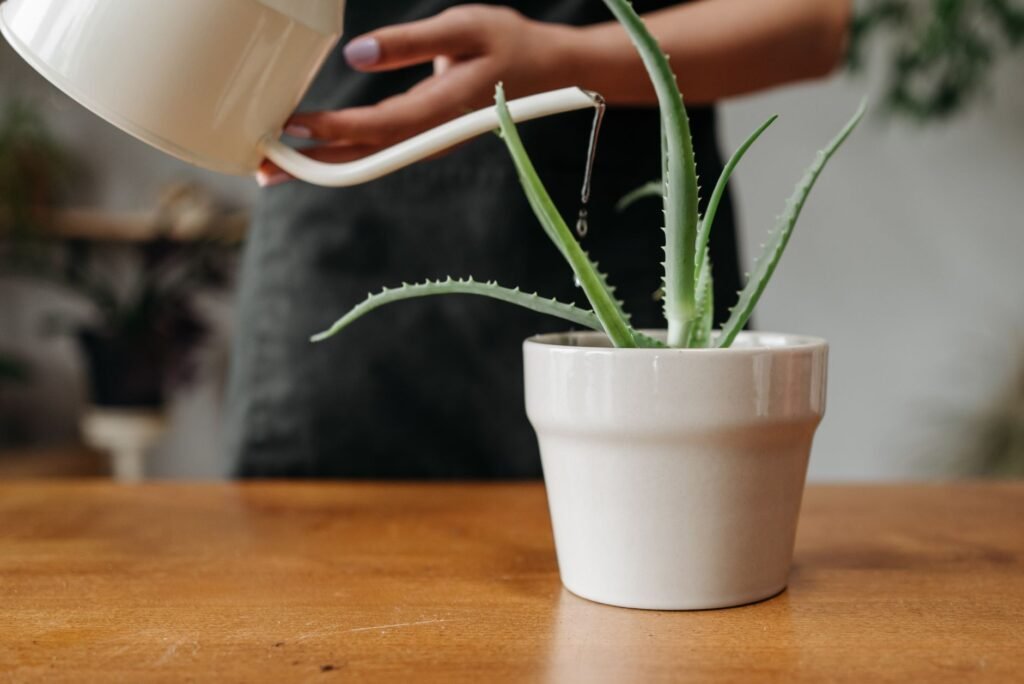
Grow aloe vera in a pot with drainage holes, fill it with a fast draining succulent mix, set it in the brightest window you have, and water only after the soil has dried out completely. Soggy soil is the quickest way to lose one, so lean toward too dry, especially through winter.
Giving aloe vera enough light indoors and out
Aloe vera is a desert succulent, and light is what keeps its leaves thick and upright. The NC State Extension plant profile lists it for full sun to partial shade outdoors, and indoors that translates to the sunniest window in the house. A south or west facing sill usually does the job. In a dim room the plant stretches toward the glass, the leaves go pale and floppy, and the whole rosette starts to lean.
Outdoors, aloe stays in the ground year round only in the warmest parts of the country, roughly USDA zones 10 through 12. Elsewhere, it can spend summer on a patio and come back inside before cold nights arrive. Move it outdoors gradually, starting in bright shade, because a plant that goes directly from a windowsill into hot afternoon sun can scorch.
Choosing a pot and soil for aloe vera
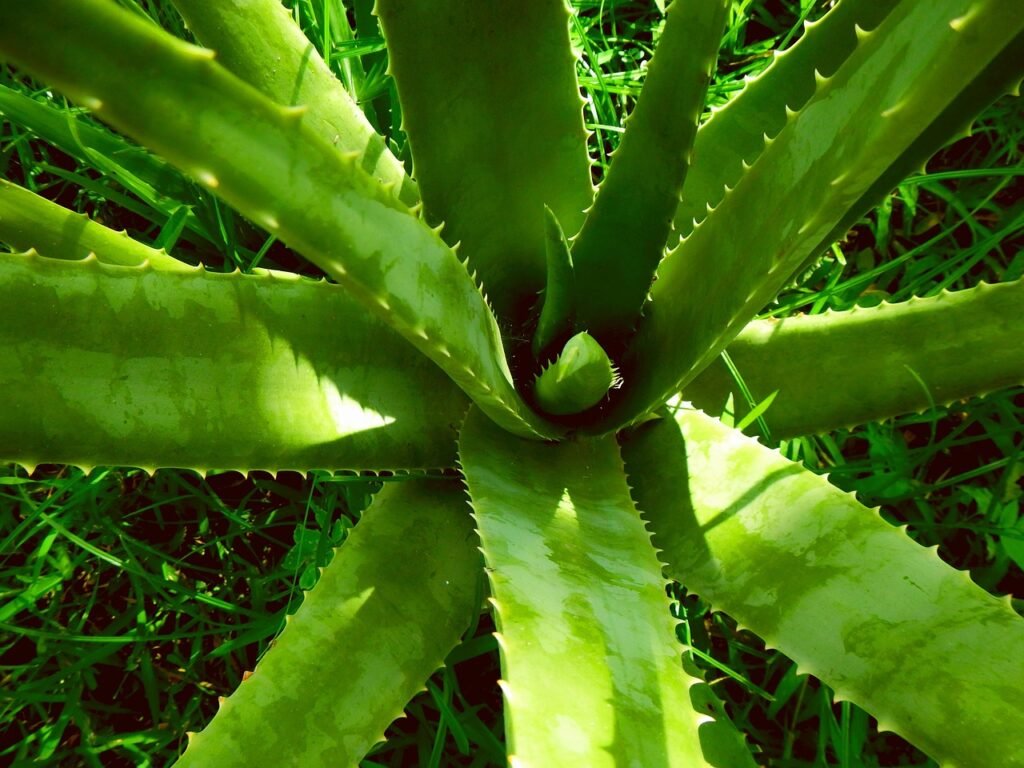
Drainage decides almost everything. Pick a pot with at least one drainage hole, and the NC State plant profile favors clay with several. Unglazed terracotta pulls moisture out of the soil through its walls, which gives aloe roots a margin for error that plastic and glazed ceramic do not.
Fill it with a cactus and succulent mix, or stretch regular potting soil with perlite or coarse sand until water runs through it quickly. Choose a pot only a little wider than the root ball. Too much soil stays wet around the roots long after the plant has taken what it needs. Aloes are top heavy, so a sturdy, wide based pot also keeps a mature plant from tipping over.
Repot only when the rosette crowds the rim or roots circle the bottom, and do it in spring or summer while the plant is growing. Let the roots sit in dry mix for several days before the first watering, which gives any torn roots time to seal.
Watering aloe vera by the soil, not the calendar
- Push a finger or a wooden chopstick deep into the pot. If you feel any moisture, wait.
- When it is bone dry, water slowly until it trickles from the drainage hole.
- Empty the saucer after a few minutes so the pot never sits in a puddle.
- Stretch the gap between waterings in winter, when the plant grows slowly and the soil dries more gradually.
- Skip fertilizer through the cool months, and in spring and summer use a diluted houseplant or cactus food only occasionally.
How often that works out depends on your pot, your window and your climate, so the soil check is more reliable than any fixed schedule.
What aloe vera leaves are telling you
| What you see | Likely cause | What to do |
|---|---|---|
| Soft, mushy or see through leaves at the base | Overwatering and root rot | Unpot, cut away black roots, repot in dry mix |
| Thin, curled or wrinkled leaves | Thirst | Water deeply once the soil is dry |
| Pale, stretched, leaning growth | Too little light | Move to a brighter window |
| Brown or reddish tint after a move | Sudden strong sun | Shift to bright shade and adjust slowly |
| White cottony clumps between leaves | Mealybugs | Isolate the plant and wipe the pests away |
Pups, flowers and pets around aloe vera
A healthy aloe spreads by offsets, the small plants that pop up around its base. Leaving them makes a crowded clump, and separating them into their own pots is a separate project. Mature plants, at least three years old according to NC State, can send up tall stalks of tubular yellow to orange flowers, though indoor plants bloom less reliably.
Keep aloe out of reach of pets. NC State lists it as poisonous to cats, dogs and horses if eaten, and the yellow latex just under the leaf skin can irritate skin. If a pet chews a leaf, call your veterinarian.
Frequently asked questions
How often should I water an aloe vera plant?
Water only when the soil is completely dry all the way down, which may be every couple of weeks in a warm, bright summer window and far less often in winter. Pot size, material and humidity all change the timing, so check the soil with a finger or chopstick instead of following a calendar.
Why is my aloe vera turning brown?
Brown or reddish leaves often mean the plant got more sun than it was used to, such as a sudden move outdoors. Brown, mushy spots at the base usually point to overwatering. Dry, crispy brown tips can come from long dry spells. Match the symptom to the conditions before changing anything.
Can aloe vera live in a bathroom or low light?
Aloe can survive a while in a bathroom only if the room has a bright, sunny window. Humidity is not a problem, but low light is. Without enough sun, the plant stretches, leans and weakens. A windowless bathroom will not sustain one, so give it a sunny sill and bring it in only briefly.
How do you cut an aloe vera plant?
Cut the oldest, outermost leaves, since new growth comes from the center of the rosette. Slice each one off close to the base with a clean, sharp knife, and remove only a few at a time so the plant keeps most of its leaves. Wash your hands afterward, because the yellow latex under the skin can irritate.
Why is my aloe plant drooping?
Drooping usually comes down to light or water. In a dim spot the leaves grow pale, thin and floppy, and the rosette leans toward the window, so move it somewhere brighter gradually to avoid sunburn. Soft, mushy leaves near the base point to overwatering and root rot, while thin, curled leaves mean it needs a deep drink.