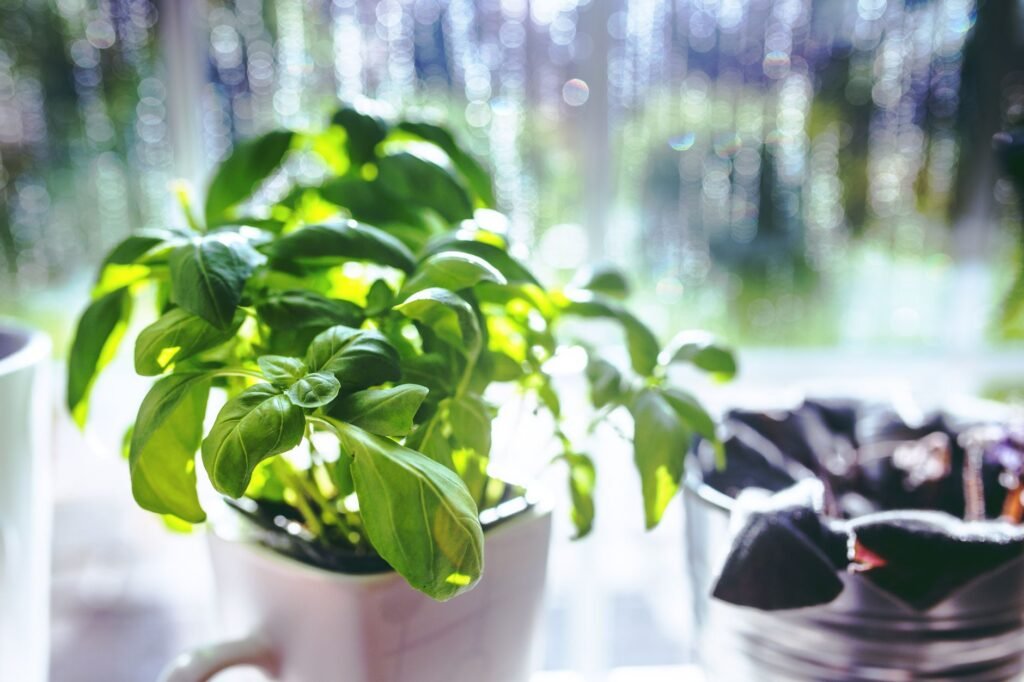
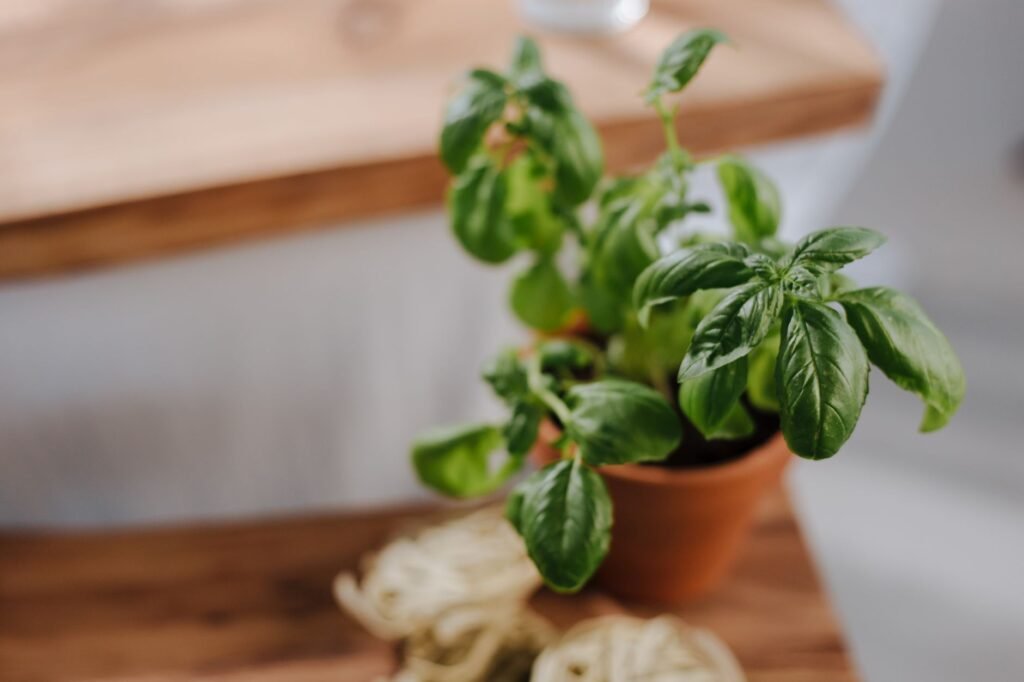
Give basil a wide pot with drainage holes, the brightest spot you own, and start pinching the growing tips once it carries three or four pairs of true leaves. Basil is an annual that turns harsh and small leaved the moment it flowers, so the pinching is not optional decoration. It is the job.
Pot size, drainage and the light basil actually wants
Basil roots run shallow and wide, and a narrow pot dries faster than the plant can cope with on a hot afternoon. Six inches across is the floor for one plant, and eight or more keeps it going deep into the season. Crowding several plants into one small pot leaves all of them stunted.
Drainage holes are not negotiable. A basil sitting in a sealed decorative pot stands in every drop it was given, and the lower stem goes soft and brown. If the pretty pot has no hole, leave the plant in a plain nursery pot and lift it out over the sink to water.
| What it needs | Reason | What shows up without it |
|---|---|---|
| Wide pot with open holes | Shallow roots, no standing water | Soft brown stem at soil level |
| Direct sun for much of the day | Leaf oils build under bright light | Stretched stems and bland leaves |
| Warmth and no cold draft | The plant comes from hot climates | Blackened leaf edges overnight |
| Regular pinching | Forces side shoots to wake up | One tall stalk racing to flower |
Pinching decides whether you get a bush or a stick
Left to itself, basil sends up one central stalk, flowers at the top, sets seed and quits. Pinching interrupts that sequence and keeps the plant in leaf making mode.
- Wait until three or four pairs of true leaves sit above the first rounded seed leaves.
- Look at the joint where each leaf meets the stem. A tiny pair of shoots is already waiting there.
- Snip or pinch the stem just above that joint and remove the top. Those two waiting shoots take over as two stems.
- Repeat on every new stem once it has put out two or three more leaf pairs.
Every round roughly doubles the number of growing tips, so a plant pinched three or four times reads as a bush. Harvest the same way all summer. Take the top of a stem rather than stripping leaves off the sides, because a bare stem has no joint left to branch from.
Watering a potted basil without rotting it
Potted basil drinks more than garden basil and punishes both extremes. Push a finger into the mix, and when the top inch reads dry, water until it runs out of the holes. A light splash wets only the surface and coaxes roots upward into the hottest, driest layer.
A wilted plant is ambiguous on its own. One wilting in dry mix stands back up within an hour of a real soak. One wilting in soggy mix has root damage, and adding water drives it further down. Feel the mix before you reach for the can, every time.
Timing helps outdoors. Watering in the morning gives the plant a reserve to spend through the hot hours and lets the leaves dry before dark, which gives leaf spots less to work with overnight.
Flower buds mean the clock has started
Once buds form, the plant moves its energy from leaves toward seed. Anything grown after that point comes in smaller, tougher and sharper tasting. Because basil is an annual, this is not a stage it passes through and recovers from on its own.
Pinch the tight green cluster off as soon as it appears at a stem tip, and take the top leaf pair along with it. Catching buds early buys weeks of good picking. Catching them after the flowers open buys far less, since the plant has already shifted gear.
One exception is worth keeping. Letting a single plant bloom at the end of the season feeds bees and gives you seed that dries on the spike for next year. Just pick a spare plant for that role rather than the one you cook from.
Frequently asked questions
Can I grow basil indoors all year?
You can keep one alive, but it seldom thrives through a northern winter without extra light. Short days and cold window glass give you pale, stretched growth. Most people run indoor basil as a rolling crop, starting fresh plants every couple of months instead.
Why are the bottom leaves turning yellow?
The usual suspects are soggy mix, a pot too tight for the root ball, or a plant that has exhausted what came in the bagged potting mix. Check drainage first because that is the quickest thing to fix, then look at repotting or light feeding during active growth.
Is it better to start from seed or buy a plant?
Seed is slower but opens up varieties that grocery stores never stock, and basil sprouts readily in warm mix. A bought plant gets you cooking sooner, though supermarket pots usually hold a crowd of seedlings that do much better once split into separate containers.