
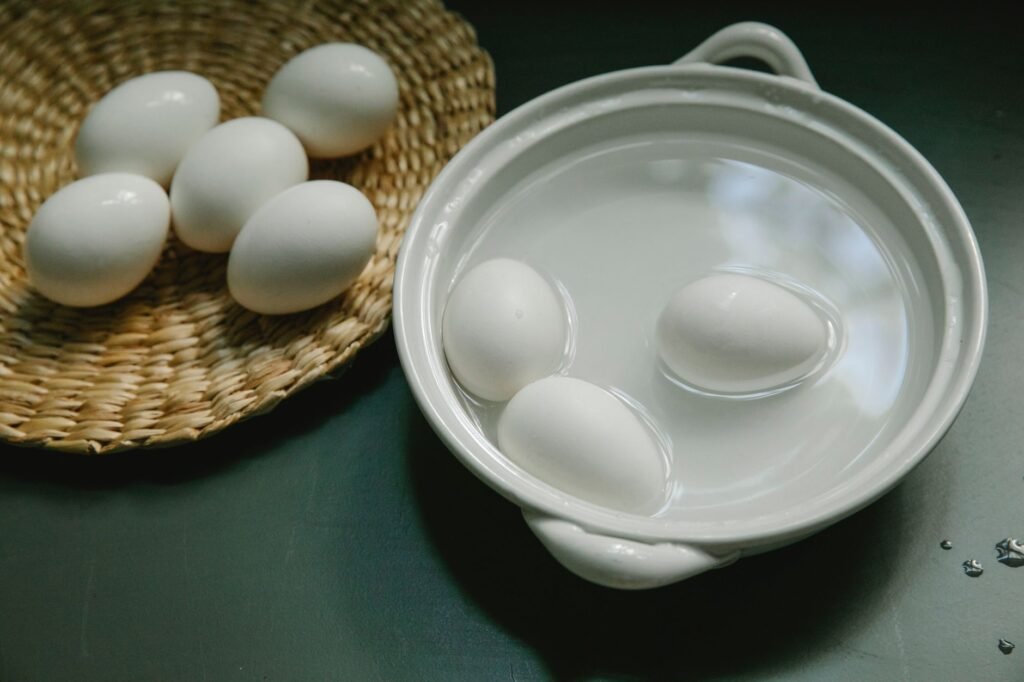
Sit the eggs, still in their shells, in a bowl of warm tap water for roughly five to ten minutes. The water should feel warm against the inside of your wrist and never hot. That is enough to pull the refrigerator chill out without setting the white that touches the shell.
The warm water bath, and how warm is too warm
Let the tap run until the water feels warm but never hot, fill a bowl, and lower the eggs in whole. Five minutes clears ordinary refrigerator cold. Eggs pulled from the back of a very cold shelf sit closer to ten. If the water loses its warmth partway through, pour it off and refill once.
Temperature is where this goes sideways. Water hot enough to be uncomfortable on your wrist has already begun to set the thin skin of white against the inside of the shell, and that turns up later as a stringy bit in the batter that refuses to blend. Think bath water, not dish water.
| Starting point | Rough time in warm water | What moves the number |
|---|---|---|
| Whole eggs, normal fridge cold | Around five minutes | How many eggs crowd the same bowl |
| Whole eggs from a very cold shelf | Toward ten minutes | A colder start and a thicker shell |
| Already cracked into a bowl | A couple of minutes | How often you stir them |
| Left on the counter instead | Much longer | Kitchen temperature that day |
Why baking recipes ask for the chill to be gone
Creamed butter and sugar hold a foam of tiny air pockets. Drop a cold egg into that mixture and the butter stiffens around it, the emulsion breaks, and the bowl looks curdled. The finished bake usually comes out denser and shorter than the recipe promised, which is the actual penalty rather than the ugly bowl.
Whites behave differently at different temperatures too. Chilled whites whip to less volume because the proteins are stiffer and slower to unfold, so a meringue or a sponge notices immediately while a quick muffin batter barely registers the difference.
That split is useful for deciding whether the step is worth your time. Anything built on creaming, whipping or emulsifying wants the chill gone. Anything where eggs get beaten into a liquid batter and poured straight into a pan will forgive you.
Faster routes when even ten minutes is too long
- Hold each egg under the warm tap while you weigh out the rest of your ingredients.
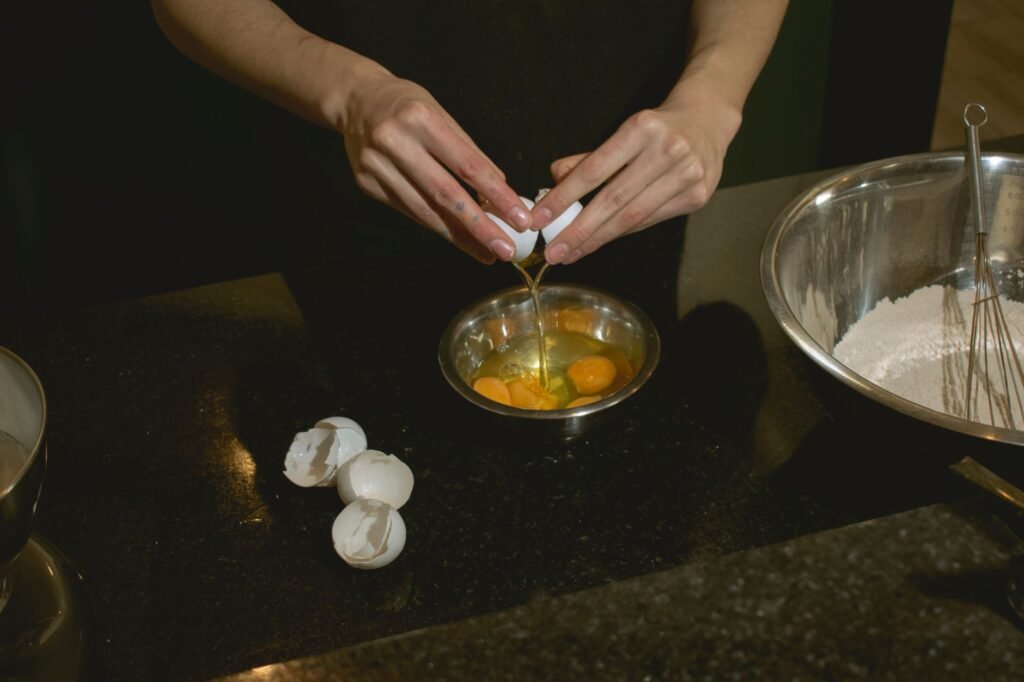
- Crack the eggs into a metal bowl and rest that bowl over a pan of warm water, whisking gently until the cold edge is gone.
- Separate first and warm only the whites, since whites are the part that pays you back in a whipped recipe.
That third option catches people out because the order feels backward. A cold yolk is firm and far less likely to tear into the whites, so do the separating while everything is still chilled, then warm the whites on their own. Warming first and separating second is how yolks end up broken in the white bowl.
Where the shortcut goes wrong
Two failures account for most of it. The first is heat. Water with steam coming off it has started cooking the shell side of the white, and nothing reverses that once it happens. Lukewarm is genuinely enough, and patience costs less than a ruined batch.
The second is time left unattended. A few minutes in a warm bowl is a very different thing from eggs standing out all afternoon, and the standard advice in American kitchens is to keep raw eggs refrigerated until shortly before use. Warm them close to the moment you actually need them.
A couple of uses do not want warm eggs at all. Poaching holds a neater shape with a cold egg, and eggs meant for slicing after hard cooking peel and cut better starting cold. Warming is a baking habit, not a universal one.
Frequently asked questions
Can I microwave eggs to warm them up?
Skip it. A microwave heats in uneven patches, an egg still in its shell can build pressure and burst, and a cracked one starts setting at the edges before the middle warms at all. The warm water bowl needs the same attention and makes no mess.
How do I know an egg has reached room temperature?
Press it against the inside of your wrist. A chilled egg reads clearly cool, while a ready one feels close to neutral against your skin. No thermometer is needed here, because losing the hard refrigerator cold matters far more than hitting any exact figure.
Does this work for whites I already separated?
Yes, and it goes quicker. Rest the bowl of whites over a slightly larger bowl of warm water and stir now and then. Whites are thin, so they take on warmth fast, which is part of why separated whites whip up taller than whites straight from the door.