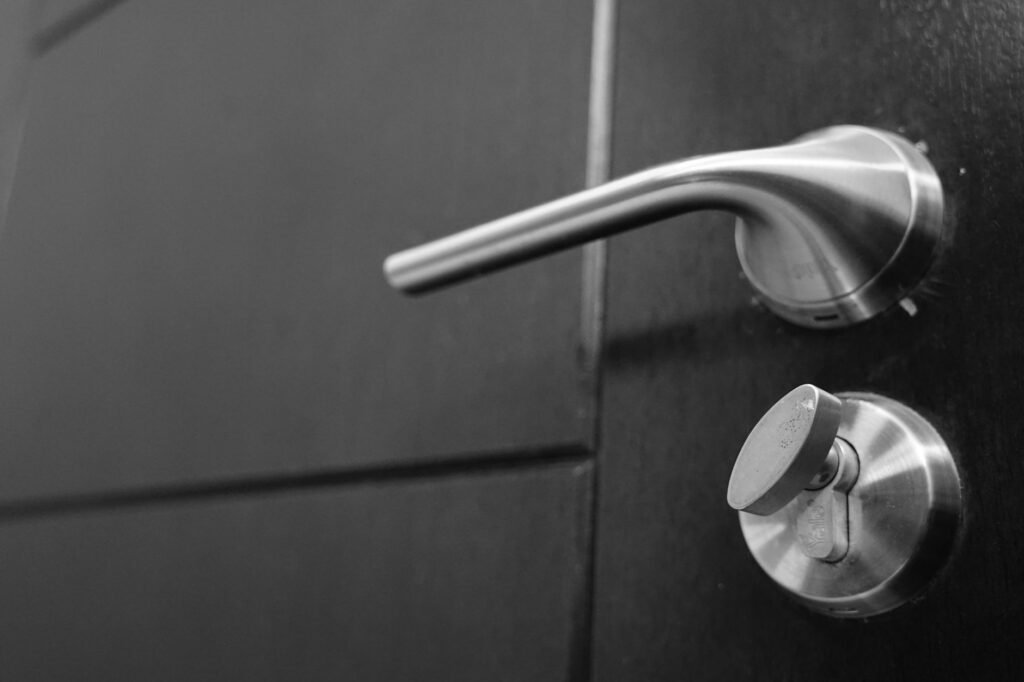
Replacing a door lock is a two measurement job before it is a screwdriver job. Measure the backset, which is the distance from the door edge to the center of the large hole, and measure the borehole diameter. Buy a lock that matches both numbers and the swap takes well under an hour.
Measure the backset and borehole before you buy anything
Two numbers decide whether the lock in the box will fit the door you own. Backset is the distance from the edge of the door to the center of the big round hole drilled through the face. American residential doors use one of two standard figures, and plenty of retail sets ship with an adjustable latch that covers both, so measuring mainly tells you whether you need the adjustable version or a fixed one.
Borehole is the diameter of that round hole. A modern bore is wide enough for almost any knob or lever set, but older doors and some storm doors were drilled narrower, and no amount of tightening will make a wide lock sit in a narrow hole. The smaller hole through the door edge holds the latch body, and it has its own size.
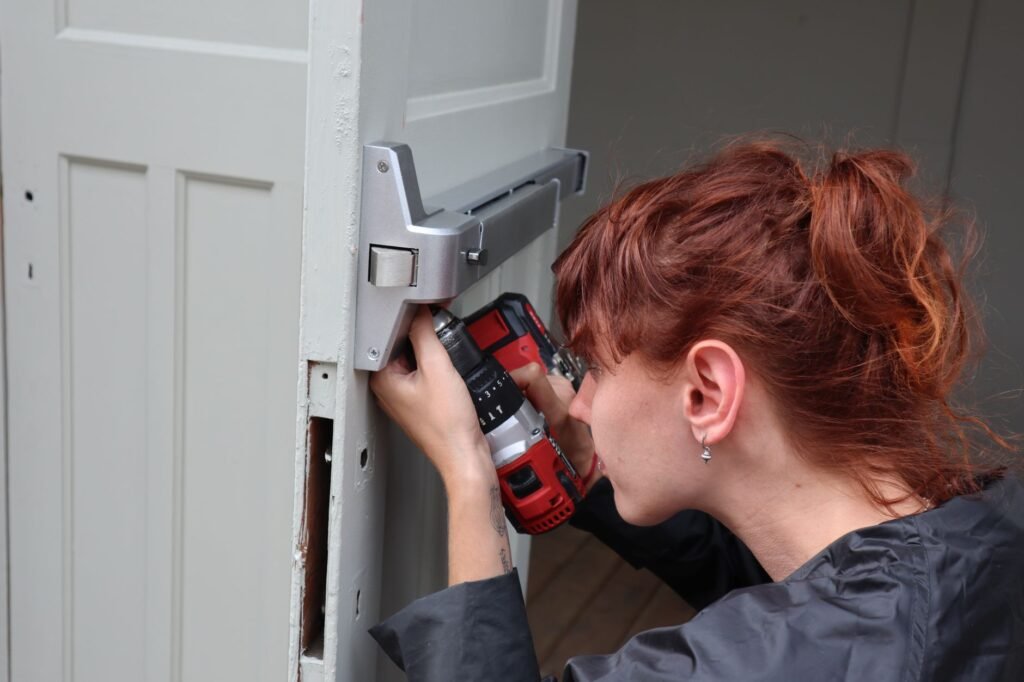
| What to measure | Where to take it | Why the purchase depends on it |
|---|---|---|
| Backset | Door edge to the center of the large hole | The latch will not reach the strike if this is off |
| Borehole | Straight across the large hole in the face | A narrow bore rules out most modern knob sets |
| Latch bore | The small hole in the door edge | The latch body has to slide in without forcing |
| Door thickness | Across the edge of the slab | Thick doors need longer screws and a longer spindle |
Cylindrical sets and deadbolts are not the same swap
A cylindrical lock is the knob or lever with a spring latch, meaning the angled tongue that pushes itself closed as the door swings shut. A deadbolt is a separate unit mounted above it, with a square bolt that moves only when a key or thumbturn turns. They sit in different holes, they are measured separately, and they are sold separately.
Trading one knob set for another knob set is the easy version of this job. Adding a deadbolt where the door never had one means drilling a fresh bore through the face and cutting a fresh mortise into the edge, which is the moment a boring jig earns its keep. Freehand holes in a door you care about rarely come out square.
Levers add one more check. Many are reversible inside the box so either hand works, some are not, and a lever that points the wrong way means a second trip to the store.
Pulling the old lock and seating the new one
- Back out the two screws on the interior plate and pull both halves of the old lock away from the door.
- Remove the screws holding the latch faceplate in the door edge, then slide the old latch out of its hole.
- Slide the new latch in with the angled side facing the direction the door closes. Reversing this is the most common error of the whole job, and the door simply will not catch.
- Pass the exterior half through the bore so its spindle or tailpiece runs through the slot in the latch.
- Seat the interior half, start both long screws by hand, then tighten them in alternating turns instead of driving one all the way down first.
- Test the action with the door still open, so a jam does not lock you out of the room.
If the mechanism binds, back the screws off slightly and retighten. Overtightening pinches the housing out of round, and people blame the lock when the screwdriver was the problem.
The jobs worth handing to a locksmith
Some situations are not lock problems at all. If the door has sagged and the latch no longer lines up with the strike plate, a new lock will land in exactly the same wrong spot. Hinges or the strike need attention first. A bolt that scrapes its way into the frame is telling you the same thing.
Rekeying several locks to one key, fitting a mortise lock into an older door, or working with a commercial grade latch all sit outside tape measure territory. So does a lock on a door you are currently locked out of, since forcing entry usually costs more in door repair than the visit would have.
Renters have one extra step. Leases frequently restrict changing locks or require that the landlord receive a key, so read yours before the screwdriver comes out.
Frequently asked questions
Do I need to replace the strike plate too?
Not always, though a new one usually comes in the box and costs nothing extra to fit. If the replacement latch sits at a slightly different height, or the old plate is bent from years of slamming, swapping it lets the door close cleanly instead of needing a shove.
Can I keep using my old key on a new lock?
Only if the new lock is rekeyable to your existing key, which generally means a rekey kit or a locksmith visit. A set bought off the shelf arrives keyed to its own blanks, so your old key will not turn it even if the two look almost identical.
Is a smart lock a drop in replacement?
Many retrofit models keep your existing deadbolt and replace only the interior thumbturn, so your key still works and the measurements matter less. Full replacement units need the same backset and borehole check as any other lock, plus a battery compartment inside the door.