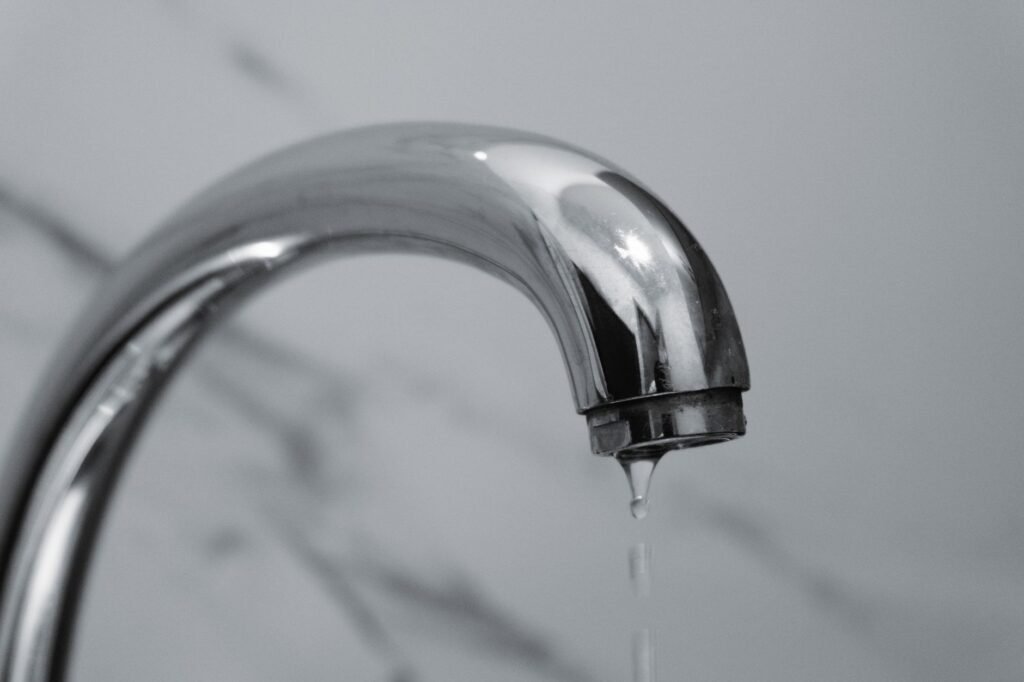
Most dripping faucets are fixed by shutting off the water, taking the handle apart, and replacing the worn washer, O-ring or cartridge inside. Which part you need depends on the valve type, so identify that first, and take the old part to the hardware store so the replacement matches exactly.
Why a slow drip deserves a repair this week
A drip sounds trivial until you add it up. The EPA WaterSense program estimates that a faucet dripping once per second can waste more than 3,000 gallons a year. It also notes that old, worn washers and gaskets are frequent causes of faucet leaks.
The good news is that those parts are small, inexpensive rubber or plastic pieces, and most repairs need only a screwdriver, an adjustable wrench and some patience. Your water utility bill shows your local rates if you want to see what a steady drip is costing you.
Telling compression, cartridge, ball and ceramic disc faucets apart
Faucets look alike from the outside, but four valve designs sit inside them, and each fails in its own way.
| Valve type | How to recognize it | Part that usually wears out |
|---|---|---|
| Compression | Two handles that you turn down harder to stop the flow | Rubber washer at the bottom of the stem, sometimes the valve seat |
| Cartridge | One or two handles that move smoothly with no tightening at the end | The cartridge itself or its O-rings |
| Ball | A single handle that swivels over a rounded cap, common on kitchen sinks | Rubber seats and springs under the ball |
| Ceramic disc | A single lever over a wide cylinder | Neoprene seals under the disc cylinder |
If you still have the model number or the paperwork, the manufacturer’s website usually has an exploded parts diagram that removes all doubt.
Before any tools come out
- Close the shutoff valves under the sink by turning them clockwise. If there are none, shut off the main water supply.
- Open the faucet to drain the remaining water and confirm the supply is off.
- Close the drain stopper or cover it with a rag so small screws cannot disappear.
- Pry off any decorative cap on the handle to reach the screw beneath it.
- Photograph each stage as you take the faucet apart, and lay the parts out in order on a towel.
Wrap wrench jaws with tape or a cloth so they do not scratch the finish. Keep a small container handy for screws and clips. Hardware stores sell assortments of washers and O-rings, but cartridges are specific to the maker and model, so match those part for part.
Swapping the washer, cartridge or seals
On a compression faucet, remove the handle, unscrew the packing nut and the stem, then take out the screw holding the washer at the bottom. Fit a new washer of the same size and shape, and replace the O-ring on the stem while it is out.
On a cartridge faucet, remove the retaining clip or nut and pull the cartridge up and out. Install the replacement facing the same direction as the original, because a reversed cartridge can swap hot and cold.
On a ball faucet, unscrew the cap and lift out the ball, then use a small screwdriver to pull out the seats and springs and press in new ones. Replacement kits bundle these parts.
On a ceramic disc faucet, lift out the cylinder, then remove and replace the neoprene seals. Clean mineral deposits from the openings with white vinegar before you reassemble.
When the drip keeps going after new parts
On compression faucets, a pitted or rough valve seat can chew through a fresh washer. A seat wrench removes it for replacement, or a seat dressing tool smooths it in place. Leaks around the base of the spout usually come from O-rings rather than the valve. Turn the water back on slowly and let it run for a moment before you judge the repair. If shutoff valves will not close, parts are badly corroded, or water appears inside the cabinet or wall, call a licensed plumber.
Frequently asked questions
How do I find the right replacement cartridge for my faucet?
Look for a model number on the faucet, its paperwork or the manufacturer's website, which often has parts diagrams. If you cannot find one, remove the old cartridge and take it to a hardware store or plumbing supply shop so staff can match its length, spline pattern and shape exactly.
Can I fix a leaky faucet without shutting off the water?
No. Opening the valve body with the supply on sends water spraying out under full pressure. Close the shutoff valves under the sink, or the main supply if there are none, and open the faucet to drain it before you remove anything. Test the valves first so you know they hold.
Do I need a plumber to fix a dripping faucet?
Usually not. Replacing a washer, cartridge or seal kit is a common do-it-yourself job with basic tools. Call a plumber if the shutoff valves are stuck, parts are corroded solid, the faucet body is cracked, or you see water leaking inside the cabinet, wall or floor.
How do you fix a leaky outdoor faucet?
Match the repair to the leak. Water seeping around the stem while the faucet runs usually stops when you snug the packing nut behind the handle, and a persistent leak needs new packing. A drip from the spout when it's off points to a worn seat washer, which you replace after shutting off the water and pulling out the stem.
Why is my faucet leaking?
Usually because a washer, seal or cartridge inside has worn out. A drip from the spout means the valve no longer closes fully. Moen says a leak at the base of a kitchen spout usually comes from worn O-rings, while water around the handle points to the cartridge. On older compression faucets, a rough valve seat can also cause drips.