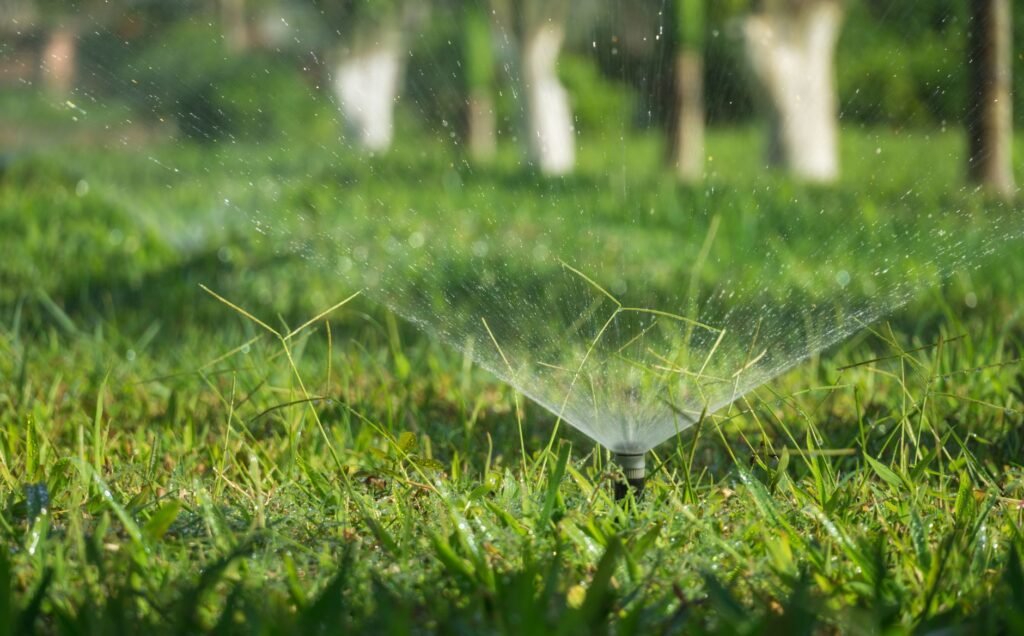
To winterize sprinklers, shut off the water supply to the system, set the controller to its off or rain mode, then get the water out of the pipes, valves and backflow preventer. That happens by manual drain, automatic drain or a compressed air blowout. The blowout is the most thorough and the riskiest, so many homeowners hire it out.
Shutting off the water and setting the controller
Every method starts the same way. Find the valve that feeds the irrigation system and close it. Colorado State University Extension notes that a stop and waste valve or some kind of drain should sit between the water supply and the backflow device. In cold climates it is often in the basement or in a small box in the yard.
Leave the controller plugged in. CSU says outright not to unplug it for winter. Switch it to its off or rain setting instead, so the schedule and clock survive but no zone tries to run on empty pipes.
Do this before your area’s first hard freeze. Your local extension office or water utility usually announces a reasonable window each fall.
Manual, automatic and blowout drains compared
How your system was installed decides which method applies. Many homes have a mix, such as automatic drains on the zone lines and manual drains on the main line.
| Method | How the water leaves | Who usually does it | Weak spot |
|---|---|---|---|
| Manual drain | You open drain valves at the ends and low points of the pipes | Homeowner | Only works if pipes slope toward the drains |
| Automatic drain | Valves open on their own when line pressure drops after the water is shut off | Mostly automatic | Water can stay trapped between valves and in the backflow device |
| Compressed air blowout | Air is pushed through each zone until the heads spray only mist | Often a pro | Too much pressure or heat can damage parts, and it is a safety risk |
CSU goes further and says not to trust manual or automatic drain valves at all, and that systems with electric valves have to be blown out, since there is no other way to clear the water sitting on top of the valve diaphragm. Its guide to preparing a sprinkler system for winter walks through the full process.
Draining a system that has manual valves
- Close the supply valve to the irrigation system.
- Walk the yard and find the manual drain valves, usually at the far ends and low points of each line. Many sit in small valve boxes or under a cap.
- Open each one and let the water run out until it stops.
- Drain the backflow preventer as well, opening its test cocks and valves so trapped water can escape.
- Close the drain valves again once the lines are empty, unless your installer’s instructions say to leave them open for winter.
If your system uses automatic drains, the shutoff and pressure drop do most of this for you. Still drain the section between the shutoff and the backflow device, which the automatic valves cannot reach.
Why the blowout step is so often left to a pro
A blowout uses an air compressor connected to the system to push water out zone by zone. Done well, it clears lines that neither drain method can. Done badly, it cracks fittings, damages sprinkler heads and can send debris or a loose part flying. CSU’s guide carries a caution to wear proper eye protection.
The right air pressure and volume depend on your pipe and heads, and running air through a line that is already dry lets friction heat build up. Irrigation contractors bring a compressor sized for the job and know how to cycle the zones. If you do it yourself, follow the pressure limits in your sprinkler manufacturer’s instructions and stay well clear of the heads.
Protecting the backflow preventer and exposed pipes
The backflow preventer is the brass assembly that usually sits above ground near the house, and it is the part most often split by frost. CSU recommends leaving the valves on it half open over winter to help keep it from freezing and cracking.
Wrap an above ground unit and its pipes down to the soil with insulation, then cover it with plastic to keep the insulation dry. Some water utilities require backflow devices to be tested on a schedule, so check with yours before spring startup.
Frequently asked questions
When should I winterize my sprinkler system?
Do it after your last fall watering and before the first hard freeze in your area. Exact timing varies by region and year, so watch the forecast and check your local extension office or water utility, which often posts a recommended window. Waiting until pipes freeze risks cracked lines and valves.
Can I winterize sprinklers without an air compressor?
Systems with manual or automatic drain valves can be drained without one, though some extension services, including Colorado State University, recommend a blowout because drains can leave water behind. If your system has electric valves or you are unsure how it was installed, a contractor with the right compressor is the safer route.
Do I need to turn off the sprinkler controller for winter?
Set it to off or rain mode rather than unplugging it. Colorado State University Extension advises keeping the controller powered through winter, which preserves its clock and programs. Only the watering schedule needs to stop, since running zones on empty or frozen pipes can damage them.
How do you turn on a sprinkler system after winter?
Wait until the risk of hard freezes has passed. Close any drain valves and the backflow device's test cocks and ball valves, then turn the water supply on and open the ball valves slowly, which Colorado State University Extension says prevents damaging water hammer. Run each zone to check heads and lines for leaks before switching the controller back on.
What happens if you don't winterize your sprinklers?
Water left in the lines can freeze, and ice takes up about one eleventh more space than water. Colorado State University Extension warns that this expansion can burst pipes and fittings, crack valves and split sprinkler heads and pump cases. The damage often stays hidden until spring startup, when leaks and costly repairs turn up.