Twist each leaf off so the base comes away whole, leave it dry on a shelf until the wound calluses, then rest it on top of dry succulent mix rather than pushing it in. A leaf missing part of that base will never grow, however patient you are and however carefully you treat it.
The base has to come off whole or nothing happens
Get this one detail right and the rest is housekeeping. New growth on a succulent leaf starts at the meristem tissue sitting right where the leaf joined the stem, and that tissue is a thin layer on the very bottom of the leaf. Snip the leaf off with scissors and you cut past it. Tug at an angle and it stays behind on the stem.
The removal that works is a gentle side to side wiggle, rocking the leaf left and right until it releases with a small clean pop. Hold the stem still with your other hand. A good leaf shows a smooth rounded base with no torn edge and no pale strip left behind on the parent plant. A leaf with a ragged base goes in the compost, not on the tray, because months will pass with nothing happening and then it rots.
Take leaves from the lower part of the rosette, where they are mature and fully swollen, and skip the tight young ones at the center. Pull more than you need. Even with clean removal, some leaves in any batch simply do nothing, and a share of duds in every batch is ordinary, not a verdict on your technique.
Dry the wound before it touches anything damp
A fresh base is an open wound on a water filled organ, and wet soil against it means rot rather than roots. Lay the leaves in a single layer somewhere with bright indirect light and moving air, and leave them until the cut end seals over into a dull, slightly firm patch. Depending on humidity that usually takes a few days.
The callused end is what you are waiting for. Test it with a fingertip. If the base still feels moist or looks glassy, give it longer. Leaves lose very little water during this wait because their whole design is water storage, so there is no rush and no penalty for leaving them an extra day or two.
Lay them on the surface, do not plant them
- Fill a shallow tray with a gritty succulent mix and level it off without packing it down.
- Set the callused leaves flat on the surface, base end resting on the mix, the rest of the leaf simply lying there.
- Park the tray where light is bright but filtered. Direct midday sun cooks a bare leaf, and deep shade stalls it.
- Leave the mix dry until you see pink root threads reaching down from the base.
- Once roots appear, mist around them every few days, or water the tray lightly and let it dry fully between times.
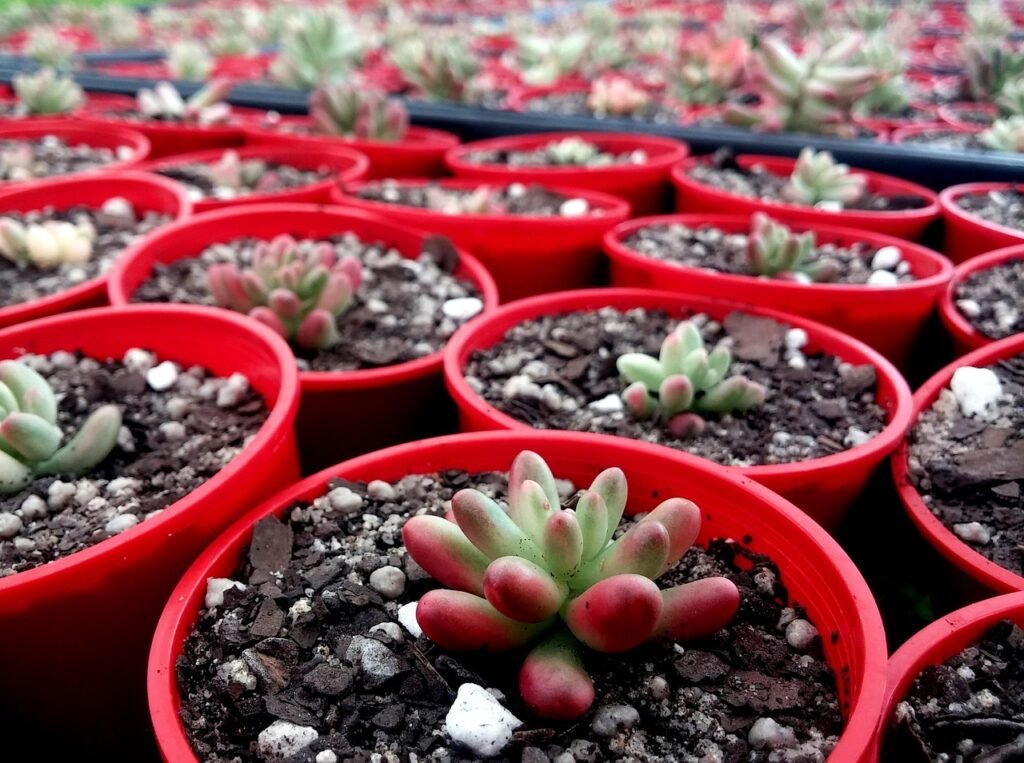
Burying the base is the habit borrowed from stem cuttings, and it works against you here. Contact with the surface is all the leaf needs, and leaving it exposed lets the base keep drying between waterings. Expect roots in a couple of weeks and a pup somewhere behind them, though the spread between leaves in one tray can be wide.
Which succulents actually work from a leaf
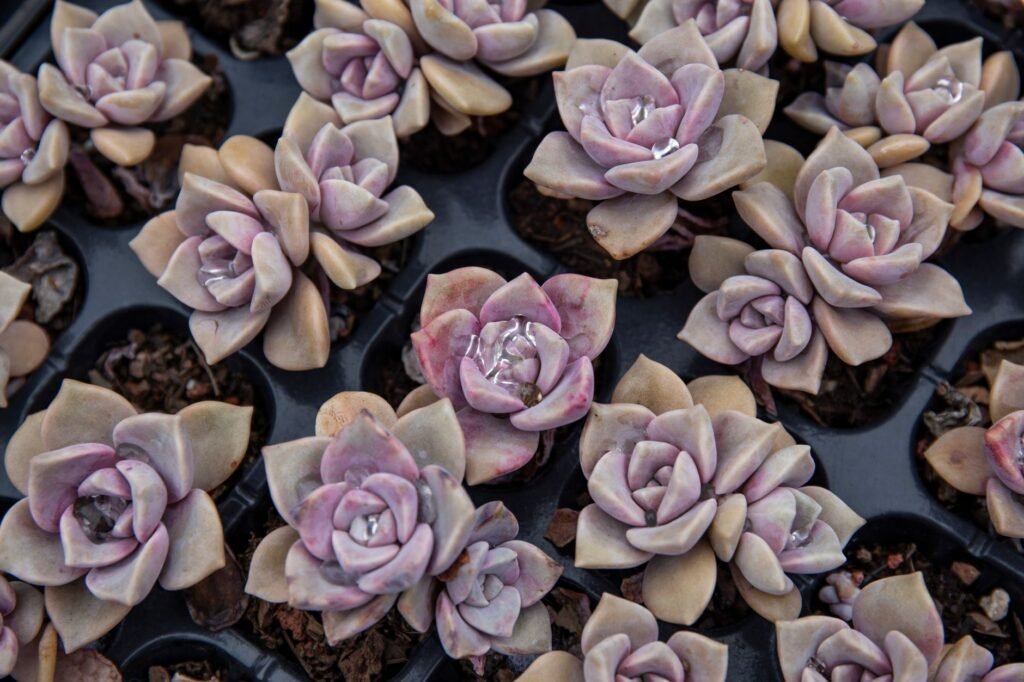
The plump rosette types are the reliable group. Echeveria, graptopetalum, sedum, pachyphytum and the graptoveria style crosses all regrow readily from a single detached leaf, which is why they dominate every photo of this technique. Their leaves snap off cleanly and carry enough stored water to support a pup for weeks.
Plenty of others will not. Aeonium leaves rarely produce anything and are propagated from stem cuttings instead. Haworthia and aloe need a leaf pulled with part of the base attached and still often fail, so division of offsets is the sensible route. True cacti do not have leaves to work with at all, and agave and most thin leaved succulents behave the same way. If a plant resists after two honest attempts, take a stem cutting or divide it instead of blaming your technique.
Frequently asked questions
Why has my leaf grown roots but no little plant?
Root threads appear before any pup does, and the gap between the two varies, so a rooted leaf showing nothing else is usually just early. Give it bright light and occasional moisture at the root tips. A leaf that roots and then shrivels with no pup had a damaged base.
Should I use rooting hormone on succulent leaves?
Hormone powder is not what holds this method back. Succulent leaves fail because the base tore, the cut stayed wet, or the light was too dim, and hormone fixes none of those. Powder on a fresh wound can even keep moisture against the base when you want it drying out.
What do I do with the shriveled mother leaf?
Leave it attached until it dries to paper and detaches at a touch. The pup is drawing water and stored energy out of it, and pulling it off early can rip the pup loose with it. Once it releases on its own, discard it and pot the pup.