
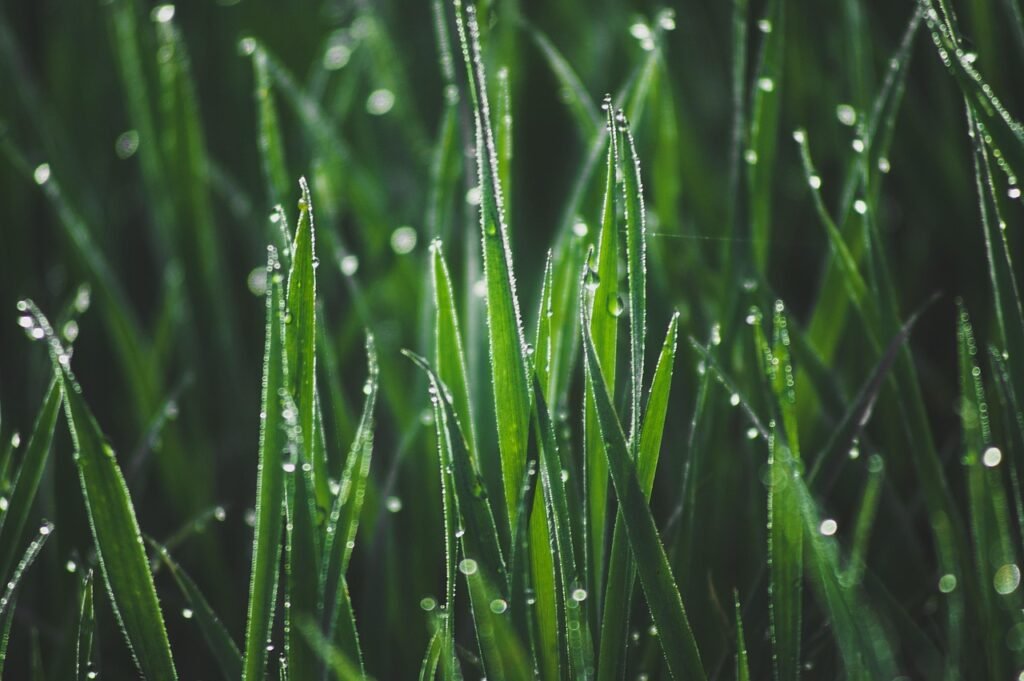
Most lawn grasses show their first blades somewhere between five days and three weeks, and the species decides where you land in that window. Ryegrass is the quick one, fescue and bluegrass sit further back, and zoysia is the slowest of the common choices by a wide margin.
Germination time is set by the species, not the season
Every range below assumes moisture held steady and ground that has reached the right warmth for that grass. Miss either condition and the seed simply waits, which is why two neighbors sowing the same bag on the same weekend can end up a week apart.
| Grass | Typical first blades |
|---|---|
| Annual and perennial ryegrass | Around five to ten days |
| Tall fescue | Roughly one to two weeks |
| Kentucky bluegrass | Two to three weeks, sometimes longer |
| Bermuda | One to three weeks in genuinely warm soil |
| Zoysia | Two to four weeks, the slowest of the group |
Bagged mixes are usually a blend, and that changes what you see. The ryegrass in a blend comes up first and makes the lawn look finished while the bluegrass is still underground. People reseed the bare looking patches at that point and end up with a lawn that is mostly the fast species, so check the label and give the slow component its full window.
Soil temperature tells you more than the date does
Seed responds to the warmth around it, not to the month on the calendar. Cool season grasses such as fescue, ryegrass and bluegrass germinate in soil that has warmed past early spring chill but has not hit peak summer heat. The warm season group, bermuda and zoysia among them, wants genuinely warm ground and simply sits dormant in soil that feels cold to the hand.
A cheap soil thermometer pushed a couple of inches into the ground first thing in the morning settles the argument. The same bag of seed sown two weeks apart can differ by a week in emergence purely because the ground warmed in between. Air temperature misleads, since soil lags behind it and holds its own pace through a warm spell.
What the seed is doing before anything shows
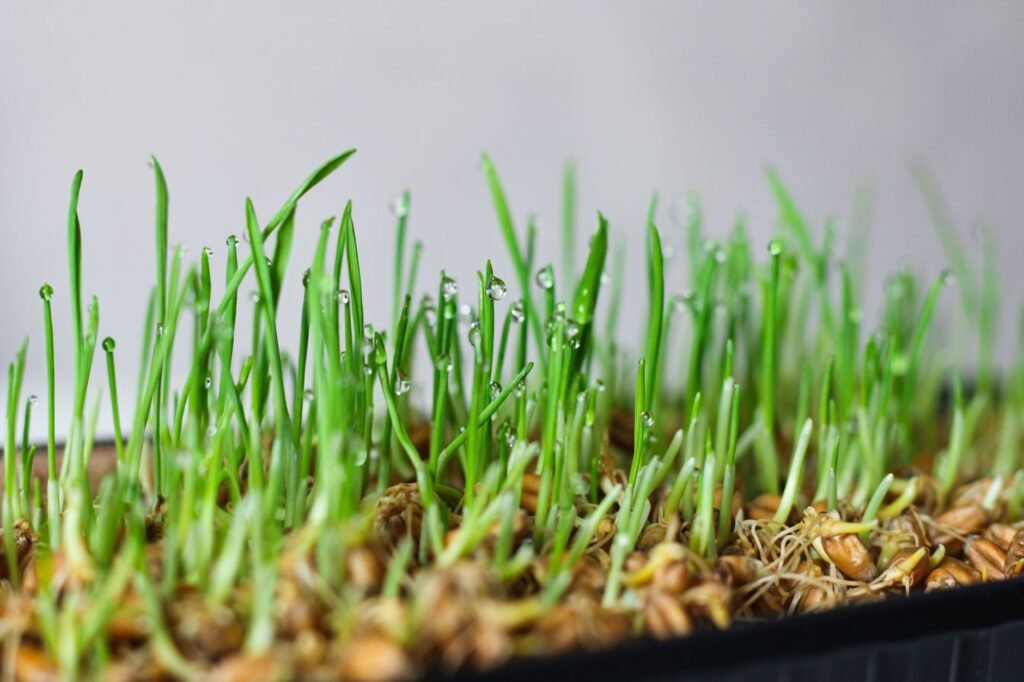
Nothing visible happens for the first stretch, and that silence is where people lose patience. The seed has to take up water and hold it steadily, which triggers the chemistry that breaks dormancy. A root emerges first and pushes down before any green appears above the surface, so a seedbed that looks dead can be several days into the process already.
That order explains the single biggest failure. If the surface dries out completely after the seed has swollen but before the root is anchored, the seed dies, and no amount of later watering brings it back. Keeping the top layer consistently damp through that blind period matters more than any amount of fertilizer.
The four things that stall a new lawn
- Sowing too deep. Grass seed needs light contact with soil and a dusting over it, not burial, so raking it in hard is a common mistake.
- Drying out between waterings, which kills swollen seed outright rather than merely delaying it.
- Cold ground, which puts the seed on hold. It waits rather than dies, and comes up when the soil finally warms.
- Poor seed to soil contact on hard, crusted ground, where the seed sits on top and never gets the steady moisture it needs.
Birds take a share as well, and a light straw cover or a thin layer of compost cuts that loss while helping the surface hold moisture. Heavy rain is the other thief, since it floats seed off a slope and piles it in one strip at the bottom.
Expect the full lawn to look patchy for a while even when everything goes right. Seeds do not all emerge at once, and a stand that looks thin in week two usually fills in through the following weeks as the slower seed catches up.
Frequently asked questions
Do I need to water new grass seed every day?
Judge it by color rather than by schedule. While you wait for sprouts, the seedbed should look dark and damp at all times, which in breezy or sunny conditions can mean several short passes with a sprinkler. Once blades appear, stretch the gap between waterings and soak each time.
Does old grass seed still germinate?
Germination rates drop as seed ages, and storage conditions matter more than the printed date. Seed kept somewhere cool and dry holds up far better than a bag that spent a summer in a hot shed. Expect thinner coverage from old seed and sow more heavily to compensate.
Can I walk on the lawn once the seed has sprouted?
Keep traffic off until the new grass has been mowed a couple of times. Young seedlings anchor with one thin root and a footstep tears them loose or presses them into soft soil. Pets and shortcuts across the yard undo more new lawn than most people expect.