
Scratch up the top of the soil, spread seed at the rate printed on the bag using two passes at right angles, rake it in so it sits barely under the surface, then keep that surface damp until the seedlings appear. Getting the season right matters more than any part of the technique.
Contact with soil is what decides the outcome
Seed resting on packed ground has almost no chance. It dries between waterings, it blows into the low spots, and birds work it over at their leisure. What you want is for each grain to be nestled against damp earth on most of its sides, which is a different goal from burying it.
Rake the surface first until the crust breaks and you have a loose, crumbly quarter inch of texture to work with. After spreading, drag the back of a leaf rake lightly across the area so seed drops into those crevices, then firm it down by walking across or rolling. If the ground is genuinely poor, spread a thin screening of compost, thin enough that you can still see soil through it. A heavy blanket of bagged topsoil dumped on top is the classic way to smother a seeding.
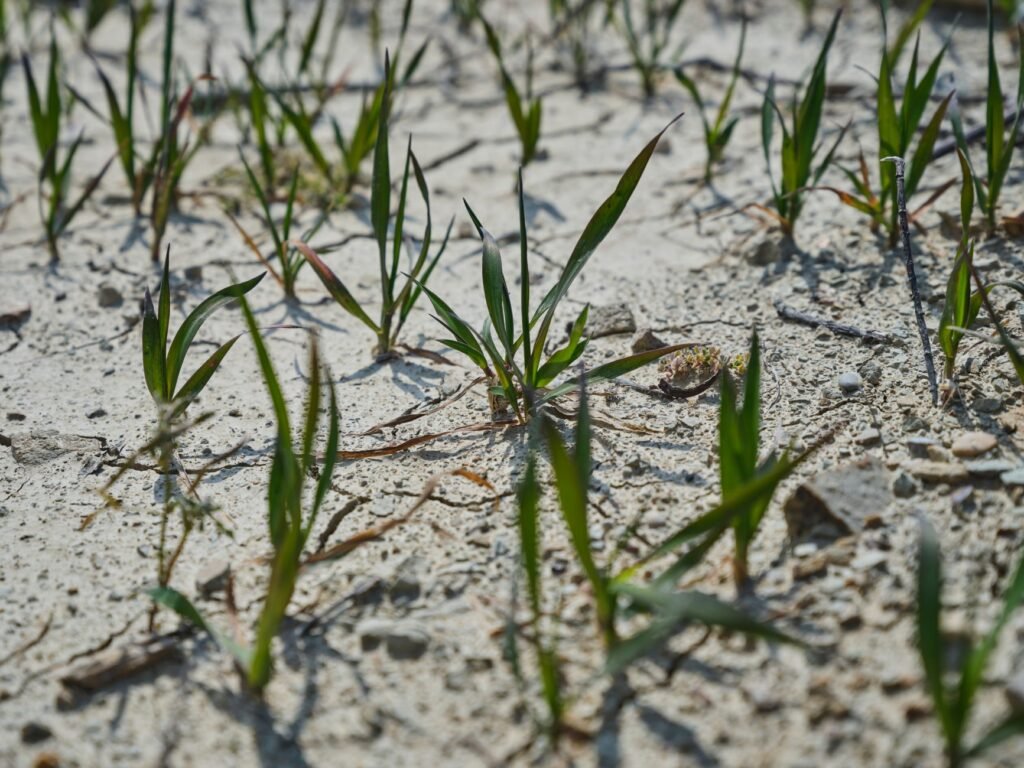
Timing depends on which half of the country you live in
Lawn grasses split into two groups that want opposite conditions, and sowing at the wrong end of the year is the single most common reason a bag of seed disappoints.
| Group | Common types | Best window |
|---|---|---|
| Cool season | Tall fescue, perennial ryegrass, Kentucky bluegrass, fine fescues | Late summer into early fall, with early spring as a weaker second choice |
| Warm season | Bermuda, zoysia, centipede, bahia | Late spring into early summer, once the ground has warmed and stays warm |
Fall works so well for the northern group because the soil holds summer warmth while the air cools and the rain returns, and because the weeds that would race a seedling are winding down. The southern group wants the opposite, sown as the ground heats up so it can establish before its own dormant season arrives.
Spreading it evenly, without leaving stripes
Uneven spreading shows up months later as pale strips and thick ribbons, and by then you cannot fix it without starting over. The way around it is to never try to cover the area in one pass.
- Set the spreader to half the labeled rate for your situation, since bare ground and thin overseeding call for different amounts.
- Walk the perimeter first so you have a border to turn around in.
- Cover the middle in parallel lines, then cover it again walking perpendicular to those lines.
- Shut the hopper every time you stop or turn, because a standing spreader dumps a pile.
- Fill and empty the hopper on a driveway, never over the area you are seeding.
Water changes as the seedlings arrive
Before anything sprouts, the job is keeping that top layer from ever drying out, which usually means short sessions more than once a day in warm weather. A seed that swells and then dries is a seed you have lost, and no amount of soaking later brings it back. A light mulch of clean straw or a seeding blanket cuts how often you have to stand there with a hose.
Once green shows, flip the approach. Water less often but longer each time, so moisture reaches deeper and the roots follow it down instead of loitering at the surface. Stay off the area while it is soft, and leave the first mowing until the new grass is taller than the height you plan to keep it, cutting no more than the top third with a sharp blade.
One trap deserves its own warning. Most crabgrass preventers work by stopping seeds from establishing, and they cannot tell your lawn seed apart from a weed. Read the label before anything goes down, look for a product specifically cleared for use around new seeding, or simply keep the two jobs in separate seasons.
Frequently asked questions
Do I need to cover grass seed with topsoil?
No. A light raking plus firming the surface gives the contact you need, and a thin screening of compost is optional. Bagged topsoil poured over the area buries the seed too deep, and most lawn grasses cannot push through much more than a quarter inch of cover.
Can I use crabgrass preventer at the same time?
Usually not. Standard pre-emergent products stop seeds from establishing and treat your lawn seed the same as a weed. Either choose a product whose label specifically clears it for use around new seeding, or schedule the two tasks in different parts of the year.
How long does grass seed take to sprout?
It varies by type, from about a week for the quickest ryegrass to several weeks for bluegrass, with soil temperature driving the pace more than anything else. Blends come up in waves rather than all at once, so thin patches early on are normal.