
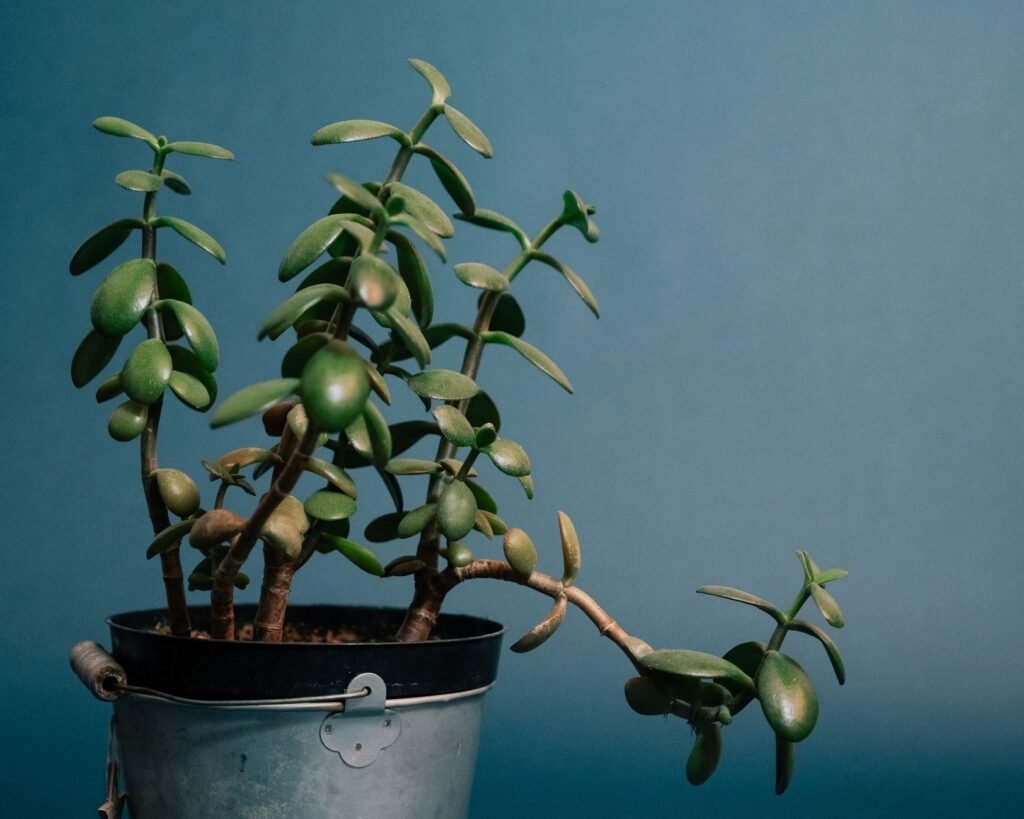
A jade leaf will root and produce a plant, but it is the slowest route there is. Twist a whole leaf off cleanly, let the wound harden into a scar, and rest it on dry gritty mix. If you want a plant of any size this year, take a branch instead.
Be honest about the speed before you start
Both methods work and they are not remotely equal. A leaf has to build roots, then a tiny rosette, then grow that rosette into something recognizable, and each of those stages takes its own stretch of time. A branch cutting arrives with a stem and foliage already made, so it only needs roots before it carries on growing.
| Single leaf | Branch cutting | |
|---|---|---|
| Material needed | One leaf, no pruning damage | A whole branch off the parent |
| Time to a usable plant | A year or more, often longer | A season, sometimes less |
| Failure rate | Higher, mostly from torn bases | Low if the cut is allowed to seal |
| Best reason to choose it | You only have fallen leaves to work with | You want a real plant soon |
The leaf method earns its place in one situation, which is when leaves drop off during a move or a repot. Those are free, and throwing them away is the only true waste. Choosing them over a branch when a branch is available is choosing to wait for no reward.
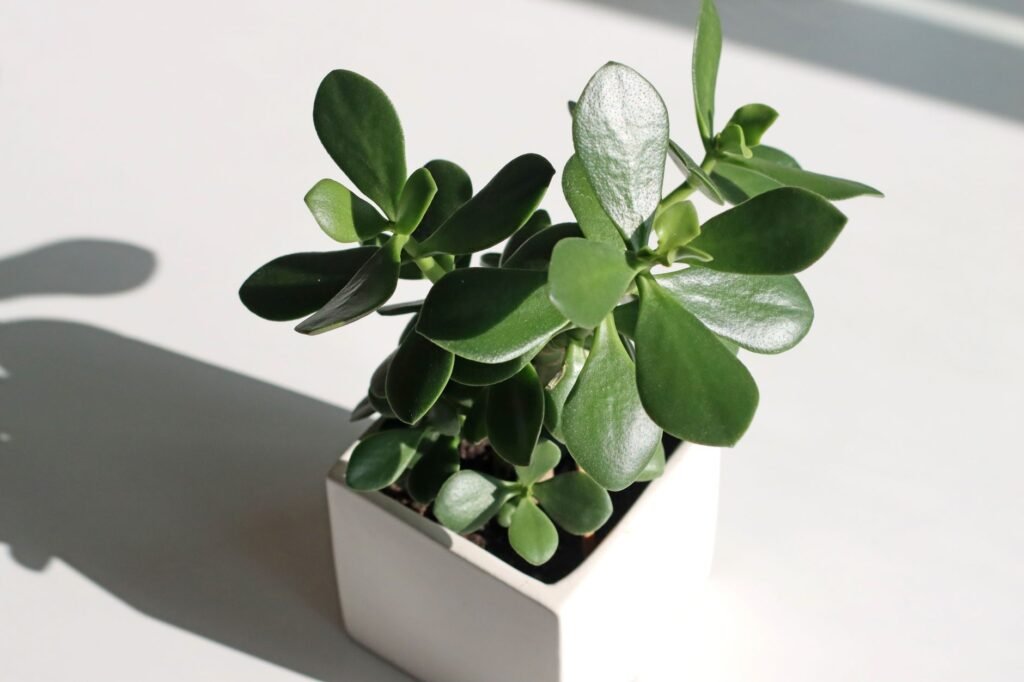
Taking a leaf off so the growth point comes with it
A jade leaf produces new tissue only from the small zone right at its base, where it met the stem. Tear that zone and you are left with a fat green object that holds water for months and does absolutely nothing.
Grip the leaf near its base, then rock it gently side to side rather than pulling outward. It will release with a small pop and the base will look rounded and whole. If the base is ragged or a strip of stem skin peeled away with it, set that leaf aside and take another. Fallen leaves found in the pot are usually fine, since a leaf that detaches on its own separates along the same clean line.
Callusing, the step nobody should rush
Lay the leaves somewhere dry, shaded and airy, and leave them untouched until the raw base has dried into a firm scar. That takes a few days in dry air and a good deal longer in a humid room, and the finished surface should feel dry and slightly leathery rather than moist.
Every skipped callus becomes the same story. Fresh succulent tissue pressed against damp soil rots from the inside, turns translucent, then goes to mush within days. No amount of careful watering afterward rescues it, which is why this pause costs nothing and saves nearly everything.
What the first year actually looks like
Set the callused leaves on top of gritty mix with the base barely touching the surface. Burying them is unnecessary and adds rot risk. Keep the tray in strong light with no direct sun on it, and give the surface a light misting only when the leaves start to look faintly deflated.
- Fine pink or white roots creep out of the base and feel for the mix.
- A cluster of miniature leaves forms at the same point, which is the new plant.
- The parent leaf slowly shrivels as the baby drains it, and this is expected rather than a problem.
- Once the shriveled leaf falls away on its own, the rosette is feeding itself and can be potted.
- From there it thickens into a trunk over seasons, not weeks.
Warmth and long bright days move all of this along, while a cool dim winter effectively pauses it. The commonest mistake past this point is watering on a schedule. Jade stores its own supply in those leaves, and a propagation tray kept steadily damp fails far more often than one kept nearly dry.
Frequently asked questions
How long does a jade leaf take to grow into a plant?
Roots and a tiny rosette usually show within a couple of months in warm bright conditions, but growing that rosette into a plant you would put on a shelf takes a year at minimum and often much longer. Winter effectively stops the clock until light returns.
Should the jade leaf be stuck into the soil or laid on top?
Laid on top with the base just grazing the surface. Burying the leaf puts callused tissue in constant contact with damp mix, which is where rot starts. Roots find their own way down once they emerge, and they do it perfectly well from a leaf resting flat.
Why is my jade leaf shriveling instead of rooting?
A slowly deflating parent leaf is normal once a rosette forms, because the baby is living off it. Shriveling with nothing growing points elsewhere, usually to a torn base with no growth zone, or to a spot too dark and cool for the leaf to get started.