
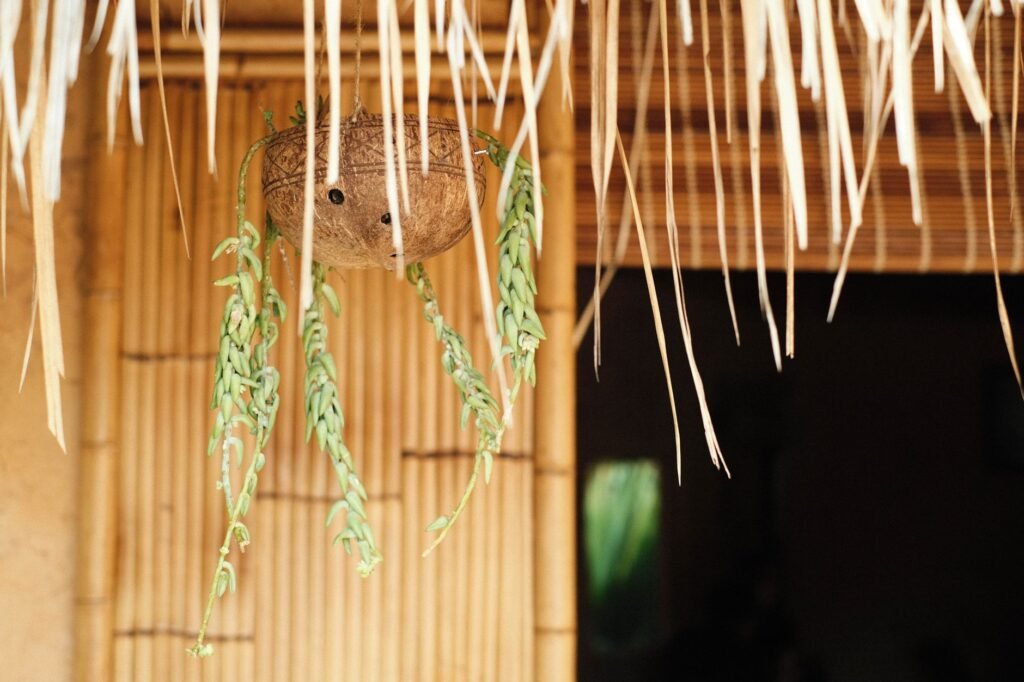
To propagate string of bananas, cut a healthy strand a few inches long, strip the leaves from the bottom inch or so, and let the cut end dry for a few days. Then press or lay it on damp, gritty succulent mix in bright indirect light. The stems root along their length, so new growth usually follows.
Making sure the plant is string of bananas
String of bananas is Curio radicans, a trailing succulent from southern Africa that was long sold under its older name, Senecio radicans. NC State Extension also lists common names such as banana vine, necklace plant and string of fishhooks, so a tag reading string of fishhooks may well be the same plant.
The leaves give it away. Each one is a small curved, pointed pod that looks like a tiny banana. String of pearls, a close relative, has round beads instead, and string of hearts is a completely different vine with flat heart shaped leaves. The steps below are for the banana shaped one.
NC State describes its stems as rooting, meaning they put out roots where they touch soil. That is why this plant is one of the easier trailing succulents to multiply.
Choosing and cutting a strand that roots well
Pick strands that look plump and firm, with leaves spaced closely along the stem. Stretched, pale strands with big gaps between leaves have been reaching for light and root more slowly.
Use clean, sharp scissors and cut a length of several inches just below a leaf. Longer pieces can be cut into sections, since each section with a few leaves can become its own plant. Gently pull the leaves off the bottom inch or so of each cutting, and keep them, because the loose leaves can sometimes root too.
Set the cuttings somewhere dry and shaded for a few days until the cut end looks sealed and slightly calloused. A fresh wet cut sitting in damp soil is the most common way these cuttings rot.
Rooting cuttings on top of soil
- Choose a small pot and pack it with a well drained, coarse or sandy cactus mix, the kind of medium NC State recommends for this plant.
- Lightly moisten the mix, damp rather than wet.
- Push the bare end of each cutting a little way into the soil, or lay the strand flat so the stem touches the surface along its length.
- Pin long strands down with a bent paper clip or floral pin to keep contact.
- Place the pot in bright, indirect light. The plant does not tolerate full sun.
- Water sparingly. NC State advises watering the plant when the top half of the soil feels dry.
Once a strand resists a light pull, it has rooted, and fresh banana shaped leaves at the tips soon follow.
Starting a strand in water instead
Some growers root string of bananas in water because they can watch the roots appear. Rest the cut end in a small glass so only the bare stem is submerged and the leaves stay dry, pour out the old water and refill the glass every few days, and stand it in bright indirect light.
Move the cutting to gritty soil once the roots are an inch or so long. Roots grown in a glass are tender, so give the new pot only light watering during its first two weeks or so while they adjust. If the stem turns soft or black at the waterline, cut above the rot, let it callus, and try again in soil.
Handling the sap around kids and pets
This plant is not harmless. NC State’s page for Curio radicans lists low severity poison characteristics, with symptoms such as loss of appetite, nausea and vomiting if eaten, and notes the sap can cause skin irritation or a rash. The toxic compounds are pyrrolizidine alkaloids.
Wear gloves if your skin is sensitive, wash your hands after taking cuttings, and keep trimmings and dropped leaves where children and pets cannot get at them. If someone chews on the plant, contact Poison Control or a veterinarian. Outdoors it survives only in USDA zones 10a to 11b, so most people keep it as a houseplant.
Frequently asked questions
How long does it take string of bananas cuttings to root?
There is no fixed schedule. Warmth and bright, indirect light speed things up, and cool rooms slow them down. Tug gently to check for resistance rather than digging the cuttings up, which can snap new roots. Fresh growth at the tips is the other sign roots have formed.
Can you propagate string of bananas from a single leaf?
A single leaf can sometimes root and sprout when laid on damp succulent mix, but it is slow and less reliable than a stem cutting. Leaves that fall off while you trim can be scattered on a spare pot. For a fuller plant quickly, use strands with several leaves.
Why is my string of bananas cutting turning mushy?
Mushy stems usually mean too much moisture. The cut may not have calloused before planting, the soil may be staying wet, or the pot may lack drainage. Trim above the soft part, let the cutting dry for a few days, and replant in gritty cactus mix watered sparingly.
How do you care for a string of bananas plant?
Give it bright, indirect light, a coarse or sandy cactus mix and a pot with drainage holes. NC State Extension advises watering only when the top half of the soil feels dry, since the plant is drought tolerant and rots if overwatered. Keep it away from frost, and shade it from harsh direct sun.
Why is my string of bananas shriveling?
Shriveled leaves usually mean a watering problem. If the soil has stayed bone dry, the plant is drawing down the water stored in its leaves, so give it a thorough soak. If the soil is wet and the stems look soft or dark, suspect root rot from overwatering and restart from healthy cuttings.