

Cut the leafy tops off, leave the carrots unwashed and whole, and keep them in the crisper drawer in a sealed bag or fully submerged in a container of water. Handled that way they stay firm for several weeks. Water storage keeps them crispest, as long as you change the water every few days.
The Greens Are Drinking Your Carrots
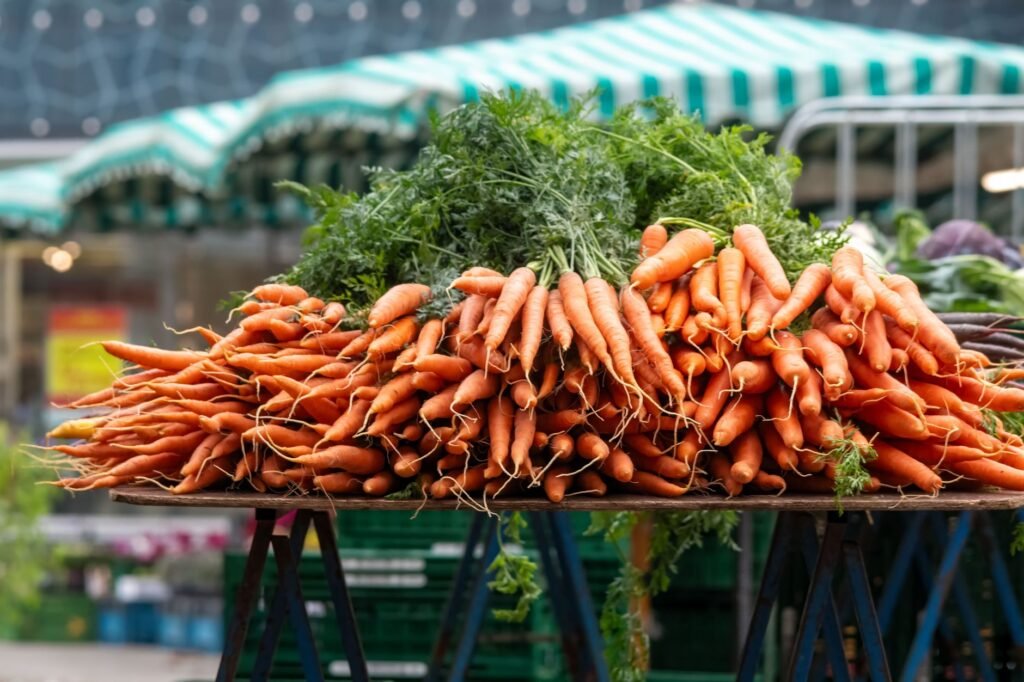
A bunch of carrots with feathery tops still attached looks like the fresher choice at the market, and it is, right up until you put it in the refrigerator. Those leaves keep breathing and releasing water vapor after harvest, and the only water source they have left is the root. Within a few days the greens look fine and the carrots underneath have gone bendy.
Snap or slice the tops off an inch or so above the shoulder before anything goes in the drawer. Carrot greens are edible on their own, so if you want them, rinse and store them separately like herbs and use them within a couple of days.
Three Ways to Hold Them in the Fridge
- Sealed bag in the crisper. Topped, unwashed carrots in a closed bag or lidded container. Easiest method, keeps them good for weeks, and they slowly soften toward the end of that window.
- Submerged in water. Carrots in a container, covered completely with cold water, lid on, refrigerated. This keeps them snappy the longest and is the only method that actively improves a carrot that arrived a bit tired. Swap the water when it turns cloudy.
- Damp towel in a container. Wrap the carrots in a lightly damp cloth or paper towel inside a container. A middle option that suits smaller quantities and cut sticks.
All three assume the carrots go in unwashed. Soil on the skin is not a problem in the refrigerator, but the film of water left behind after rinsing is, since it sits against the skin and encourages soft spots.
Bringing Bendy Carrots Back
A limp carrot has lost water from its cells, and the cell walls are still intact. Put it in cold water and it pulls that water back, which is why a carrot that would barely hold its shape can be snappable again the next morning. Cut them into sticks first if you want the effect faster.
This is also the fix for the dull, pale look that peeled carrots and baby carrots develop. The surface has dried out, and rehydrating it restores both the color and the crunch.
Where Carrot Storage Goes Sideways
Washing the whole bag at once is a common shortcut that costs you a week of shelf life. So is leaving carrots loose in the crisper drawer with nothing around them, because the drawer is ventilated and the air pulls moisture out of every exposed surface.
Storing carrots next to apples, pears, or bananas is the mistake most people have never heard of. Those fruits release ethylene gas as they ripen, and carrots respond by producing bitter compounds. The carrots do not spoil, they just taste sharply unpleasant, and there is no fixing it once it happens. Keep them in a different drawer or a closed container.
Two smaller ones round out the list. Buying pre-cut sticks and expecting them to last like whole carrots does not work, since every cut surface is an exit for water. And freezing raw carrots for snacking produces a soft, watery result on thawing, because ice crystals rupture the cell walls that gave them crunch. Blanch them first and treat frozen carrots as a cooking ingredient.
Knowing When to Toss One
Rubbery and pale is not spoiled, it is thirsty, and the water soak handles it. Whitish blush on the surface is the same story. A slightly hollow or woody core on a very large carrot is age, and it cooks up fine in stock or soup.
The real stopping points are slime, black or dark brown soft spots, visible fuzzy mold, and a sour or fermented smell when you open the container. Slime on one carrot in a bag usually means the rest need a close look, since it spreads by contact. A carrot with a small soft end and a firm body can be trimmed, but anything soft through the middle goes in the bin.