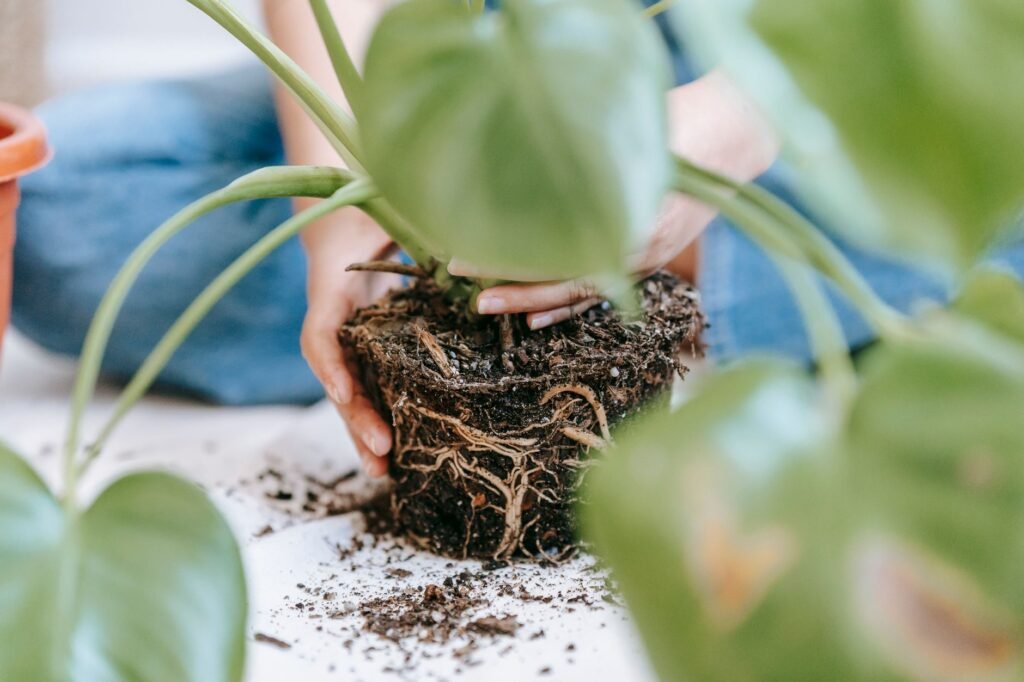
Cut a section of stem that includes at least one node, which you can identify by the brown nub of an aerial root sitting on the stem opposite a leaf stalk. Make the cut just below that nub. A leaf removed without a node cannot root, no matter how long you wait.
Find the aerial root first, then choose your cut
Look along a climbing stem and you will see short brown pegs poking out at intervals, usually on the side facing away from the light. Each one marks a node, and the node is the only place on the plant that carries the tissue capable of making roots and a new shoot. Everything else is plumbing. On a plant that has been grown flat on a shelf rather than up a pole, those pegs are often short and easy to miss, so check the stem from underneath.
Once you have located a node, decide how much stem to take with it. A small collar of stem below the node protects it during handling, so aim to cut roughly a finger width beneath rather than flush against it. Above the node, cut wherever a leaf stalk leaves a natural break.
Use a clean blade and make one decisive pass. Crushed stem tissue is slow to seal and is where rot tends to start. The sap can irritate skin, so rinse your hands and the blade afterward.
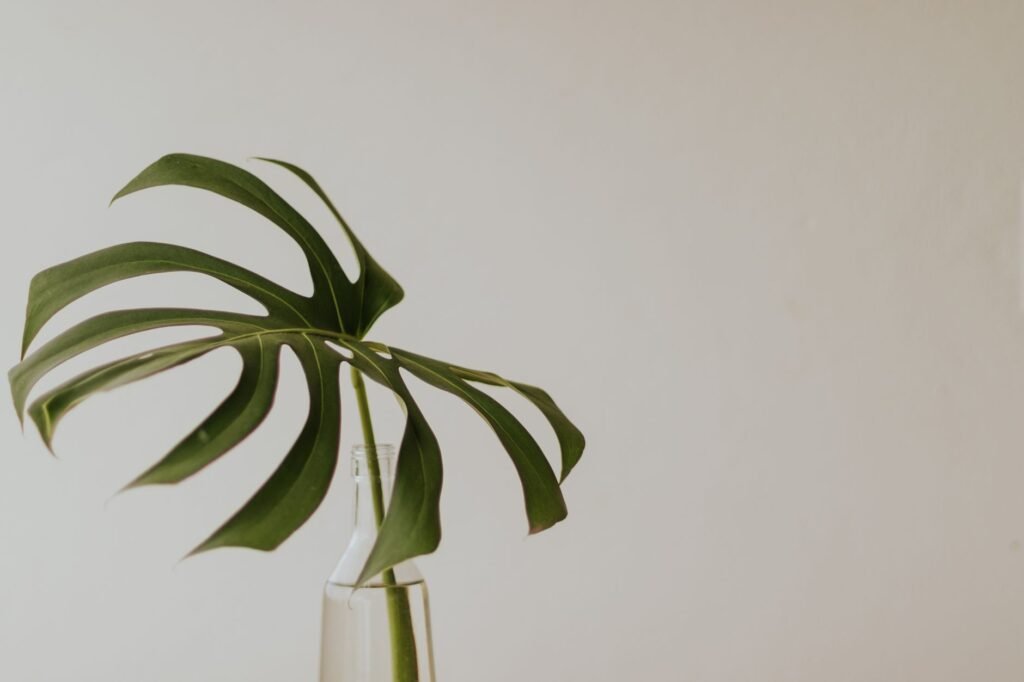
A leaf with a stalk and no node is a dead end
This is the mistake that wastes the most time. A single leaf, even with a long piece of stalk attached, holds no growing point. Put it in water and it stays glossy and convincing for weeks, sometimes months. Occasionally it will even push out a few thin roots, which makes it look like the attempt is working. It never produces a shoot, because there is nothing there to produce one from.
Before any cut, run the checklist in that order.
- Locate a brown aerial root nub on the stem.
- Confirm there is stem on both sides of it, not just a leaf stalk.
- Decide whether to include a leaf, which is optional but speeds things along.
- Cut below the node, then above your chosen leaf.
- Let the cut ends sit exposed for an hour before anything wet touches them.
Wet sticks look like nothing and still produce plants
When a plant gets leggy, the bare lengths between leaves are worth keeping rather than composting. A section of leafless stem carrying a node is what growers call a wet stick, and it will push a shoot from that node given warmth and humidity.
| Cutting type | Speed | Best use |
|---|---|---|
| Node plus one leaf | Fastest | The standard choice when you want one strong plant |
| Node plus several leaves | Fast, but fussier | Filling a pot quickly from a long vine |
| Wet stick, node only | Slow | Salvaging bare stem after pruning a leggy plant |
| Leaf with stalk only | Never roots into a plant | Nothing, skip it |
Wet sticks do best half buried in damp sphagnum moss inside a covered container, with the node facing up. Keep it warm and bright and check for mold rather than for roots, since the shoot is the first thing you will see anyway.
Air layering keeps the cutting fed while it roots
If you would rather not gamble a large stem section, root it before you sever it. Wrap a handful of moistened sphagnum around a node while it is still attached to the parent, hold it in place with plastic wrap, and tie both ends loosely enough that air still moves through.
The parent plant supplies water and energy the entire time, so there is no stress period and the success rate is higher than with a detached cutting. Open the wrap every few days and re dampen the moss if it has dried, because moss that goes bone dry stalls the process and can kill roots that had already formed. When roots have filled the bundle and are visible against the plastic, cut below the rooted node and pot the whole thing up, moss and all.
Frequently asked questions
Will my new plant have holes in its leaves?
Not straight away. Fenestration develops as a plant matures and gains size, so the first leaves off a young cutting often arrive solid or barely slotted. That is normal and not a sign the cutting failed. Give it light and room to climb and later leaves come in patterned.
Does the cutting need a leaf attached to survive?
A leaf speeds things up because it keeps producing energy while roots form, but it is not required. A leafless node section will draw on what is stored in the stem instead. The trade is time: bare stems take noticeably longer to push their first shoot.
Can I leave the cutting in water permanently?
It will live for a long while but it will not thrive. Water holds far less of what the plant needs than soil does, and growth stalls once stored reserves run down. Treat the jar as a staging step and pot the cutting up once the first roots are established.