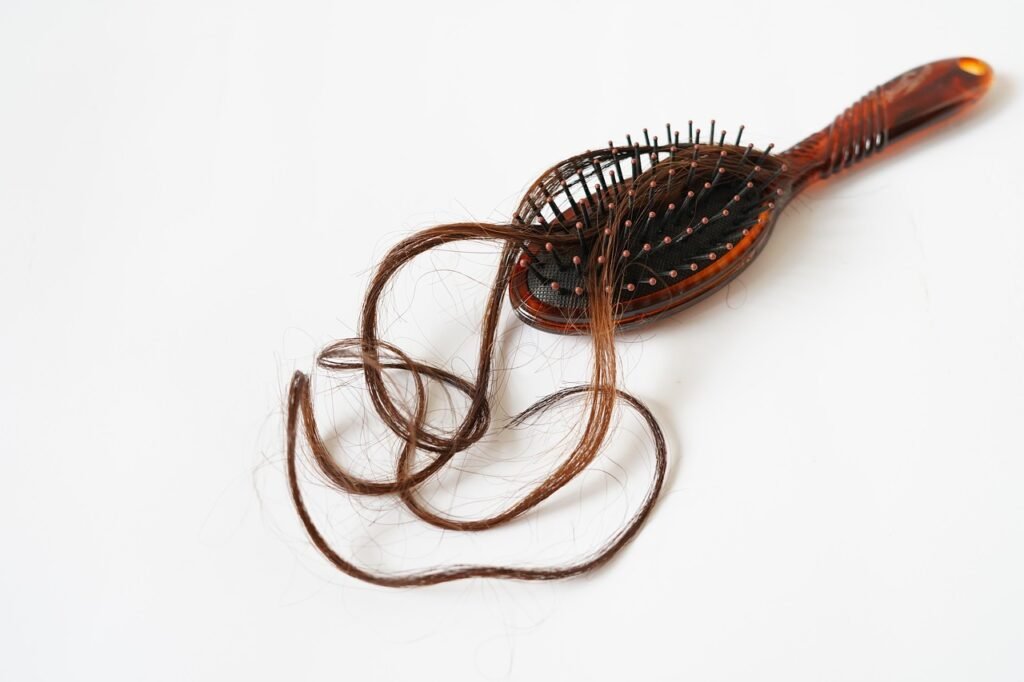
Lift the hair mat out with the pointed end of a rat tail comb, then swish the bristle tips in warm water with a squeeze of clarifying shampoo, scrub between the rows with an old toothbrush, rinse the tips only, and dry the brush bristles down. Depth is the whole trick here.
The gray fuzz is sebum, not dust
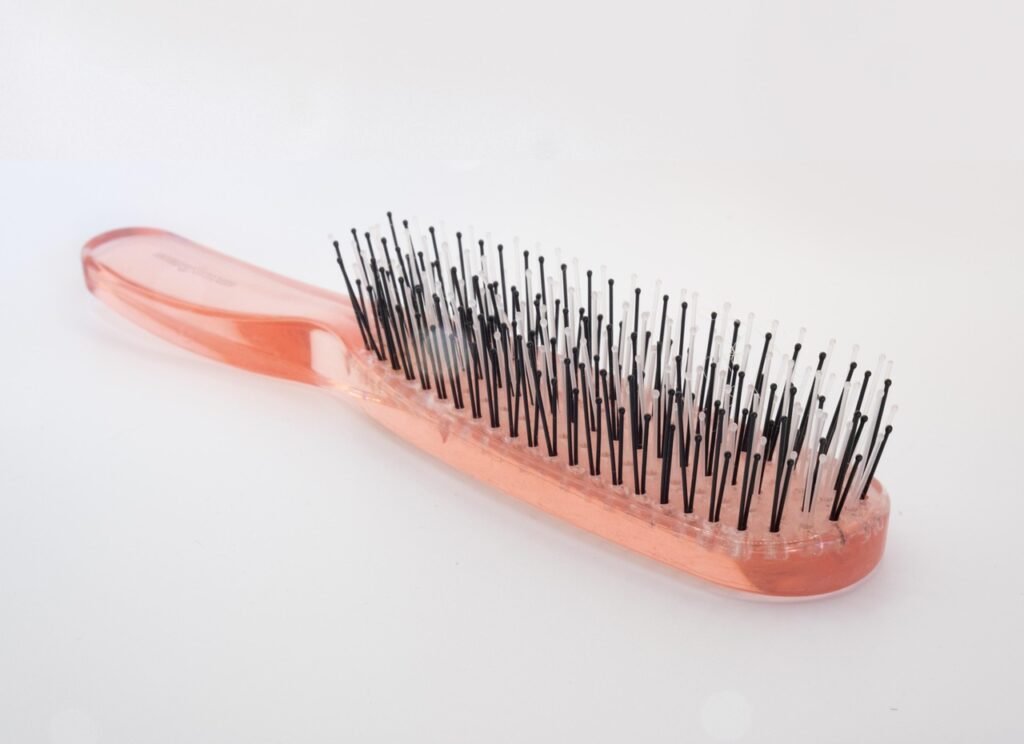
Peel back the hair wrapped around a brush and you find a pale felted layer sitting on the pad. Most people read that as household dust. It is mostly sebum, the oil your scalp makes, holding everything else in place. Shed skin flakes, broken hair fragments, dry shampoo starch and the film left by mousse and hairspray all stick to that oil and build into a mat.
Oil is why a dry rinse accomplishes nothing. Sebum does not dissolve in plain water at any temperature you can safely put a brush in. You need a surfactant, meaning soap or shampoo, which grabs the oil at one end and water at the other so the whole mess can float off. A clarifying shampoo works because it is built to strip product buildup rather than condition it.
Boar bristle and nylon do not tolerate the same soak
Boar bristle is keratin, the same protein as the hair growing out of your head. Being protein, it is porous, it takes on water, and it goes limp and splays outward when it sits in hot water too long. Nylon and polypropylene pins are solid extruded plastic and barely notice moisture at all.
The part that actually fails on either brush is the base. Most tufts are anchored in a rubber cushion pad with adhesive, and that pad has a small vent hole near the handle so it can flex. Submerge the brush and water goes straight through that hole into the hollow underside, where it has no easy way out. What comes back is loosened glue, a sour smell and sometimes mildew you can see through the vent. A wooden handle adds a second problem, since a lacquered finish clouds and lifts once water sits at the seam.
Cleaning a brush start to finish
- Slide the tail of a comb under the hair mat near one edge and lift it out in one piece. Scissors help on a badly wound brush, cut across the top of the pins, not down into the pad.
- Fill a bowl with warm, not hot, water and add a small squeeze of clarifying shampoo. A spoon of baking soda gives it mild grit for stubborn film.
- Dip only the bristle tips and swirl. Keep the pad above the waterline.
- Work an old toothbrush between the rows, moving along the rows rather than across them so you are not prying tufts sideways.
- Rinse under a slow tap with the brush held bristles down so water runs off rather than in.
- Blot with a towel and leave it bristles down on a dry towel until the base is completely dry, usually several hours to overnight depending on your room.
What helps a brush and what quietly kills one
| Move | What it does |
|---|---|
| Tip dip in warm soapy water | Breaks the sebum film where it sits, leaves the glued base dry |
| Full overnight soak | Floods the vent hole, softens tuft adhesive, breeds mildew inside the pad |
| Old toothbrush along the rows | Reaches the felted layer without levering pins out of the rubber |
| Boiling water or a dishwasher cycle | Warps plastic pins, splays boar bristle, cooks the finish off a wood handle |
| Clarifying shampoo or a little baking soda | Cuts oil and product residue, rinses clean, leaves no coating |
| Bleach or undiluted vinegar | Weakens keratin bristles, corrodes metal pin tips, no advantage on oil |
| Drying bristles down | Gravity pulls trapped water away from the cushion |
A round brush with a metal barrel deserves one extra note. The barrel is usually thin aluminum with perforations, and water that gets inside it sits there. Shake it hard, tip it, and give it longer to dry than you think it needs.