
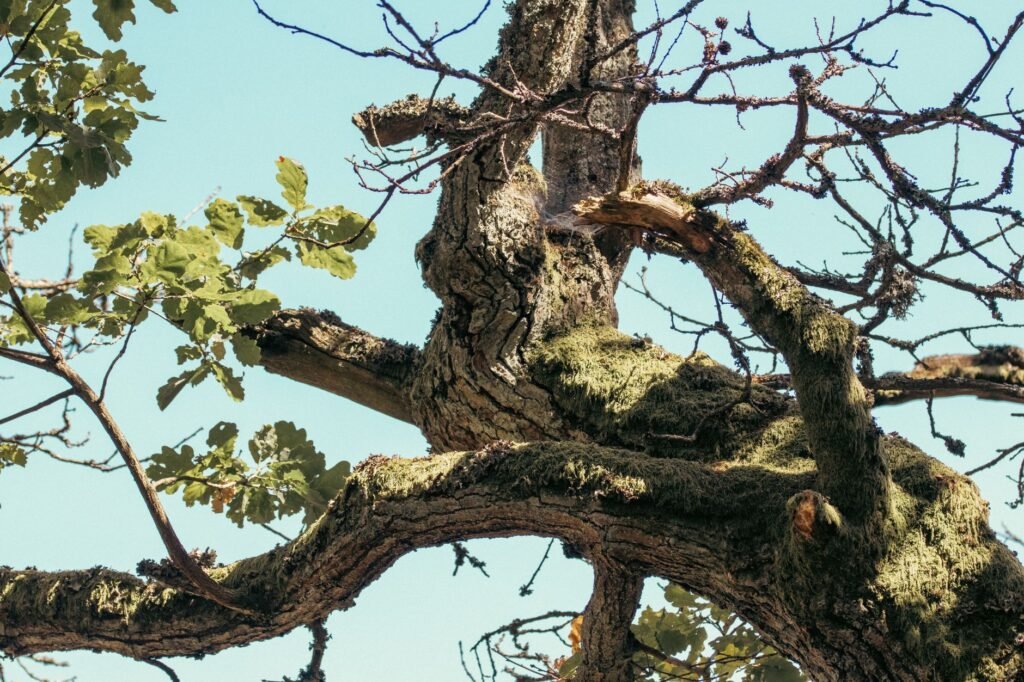
The answer is LIMB, four letters. A limb is one of the large branches growing from a tree’s trunk, and the same word covers an arm or a leg, which makes it the natural fit for a one-word clue. SECT, TWIG and STEM also take four squares, so check whether the clue leans toward religion or plants.
One word for trees and bodies
In Old English, lim meant a limb of the body, any part of an animal distinct from the head and trunk, and also the main branch of a tree. Both senses were there from the start, which is why the word moves so easily between anatomy and botany. The silent B at the end is a later arrival. It began to appear in the late 1500s for no etymological reason at all.
The tree sense also produced a familiar idiom. To go out on a limb, meaning to enter a risky situation, is recorded from 1897, and the picture needs no explaining: the farther you edge along a branch, the thinner it gets. A fill-in-the-blank clue built on that idiom wants the same four letters.
BOUGH started out as a shoulder
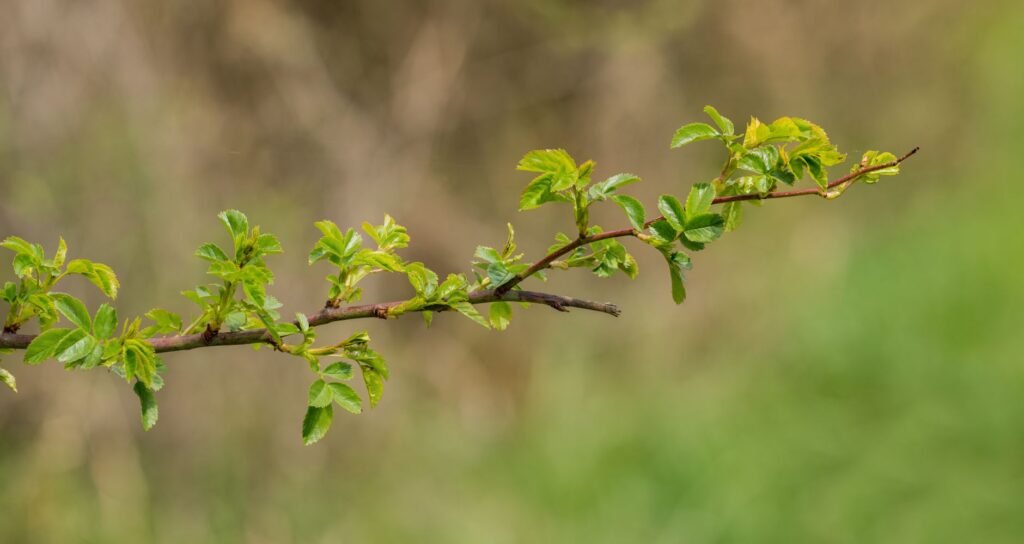
BOUGH, five letters, is the main rival when the slot runs longer. It comes from the Old English bog, meaning shoulder or arm, which was extended within Old English to cover a twig or the branch of a tree. That tree sense is peculiar to English. So both of the standard words for a big branch, limb and bough, began as parts of the body.
Size is what separates the rest. A limb or a bough is a main branch, the kind that could hold a swing. A TWIG is a small shoot at the far end of the system, and a STEM is the stalk that carries a leaf, a flower or a fruit, which is why plant clues lean toward it.
Branch fills by square count
The four-letter row is where this clue usually lands, but the other lengths turn up when the wording gets more specific.
| Letters | Answer | What points to it |
|---|---|---|
| 3 | ARM | A branch of an organization |
| 4 | LIMB | The default, a large tree branch |
| 4 | SECT | A branch of a religion |
| 4 | TWIG | A small branch |
| 4 | STEM | A plant stalk |
| 4 | SPUR | A branch line of track or road |
| 5 | BOUGH | A main branch |
| 5 | PRONG | One point of a fork |
| 5 | RAMUS | Anatomy, a branching part |
| 8 | OFFSHOOT | Something grown out of a larger body |
| 9 | AFFILIATE | A connected organization |
| 10 | DEPARTMENT | A division of a business or government |
SECT comes from following, not cutting
It is tempting to read sect as a relative of section and dissect, a piece cut away from a larger body. The Latin says otherwise. Secta came from sequi, to follow, and the idea behind it is those following someone’s way. The history did get tangled with secare, to cut, and the Protestant use from the 1570s for a separately organized religious body may carry some of that cut-off feeling, but following is the root.
For solving, the practical point is simpler. If the clue has any religious flavor, a faith, a denomination, a breakaway group, SECT is the four-letter answer, and LIMB is wrong however neatly it fits the squares.
When the branch is an office, a nerve or a paw
The business sense is younger than it feels. Branch for a local office of a company is recorded by 1817, growing out of an older sense of a component part of a system. ARM covers the same ground in three squares, and AFFILIATE and DEPARTMENT handle the longer slots.
RAMUS is the specialist’s word. It is Latin for branch, and anatomy uses it for a branching, as of nerves or blood vessels, and for a bony projection such as the one on the lower jaw. The same root sits inside ramification, which meant a branching structure in the 1670s and a consequence by 1755. Branch itself took the oddest route of all: the Late Latin branca behind it meant a claw, a paw or a footprint.
Frequently asked questions
What is a four-letter word for branch?
LIMB is the standard four-letter answer, meaning a large branch of a tree. SECT fits when the clue points to a branch of a religion, TWIG when it points to a small branch, and STEM when it points to a plant stalk. A single crossing usually decides between them.
What is the difference between a limb and a bough?
Very little in everyday use. Both mean a main branch of a tree, and both began as body words: Old English lim covered body parts as well as branches, and bough comes from a word meaning shoulder or arm. In grids, LIMB takes four squares and BOUGH takes five.
Where does out on a limb come from?
The image is a tree branch. To go out on a limb, meaning to put yourself in a risky or exposed position, is recorded from 1897, and it pictures someone edging along a branch that gets thinner the farther they go. A fill-in-the-blank clue built on the idiom wants LIMB.