
The answer is CREED, five letters. Four words fit that slot at this wording, and CREDO, ETHOS and DOGMA are all in play, so the crossings do more work here than the definition does. CREED is the one that names a stated, shared list of beliefs rather than a mood or a private rule.
Five squares, four words, and the crossing that decides
The useful thing about this logjam is that the candidates separate at the first two letters. CR gets you CREED or CREDO, ET gets you ETHOS, DO gets you DOGMA. One crossing in the opening square cuts the field in half, and a second crossing at position two usually finishes the job. If both of those squares are still blank, leave the entry alone and go solve whatever runs through it, because there is no way to reason from the definition to the right word.
The last square is the other decider. CREED and CREDO agree on their first four letters and split only at the end, which is why a setter who wants a genuinely hard entry will cross that final square with a difficult down clue. If you have CRE_O you are done. If you have CREE_ you are also done. Anything less than that and you are choosing between two words that mean almost the same thing.
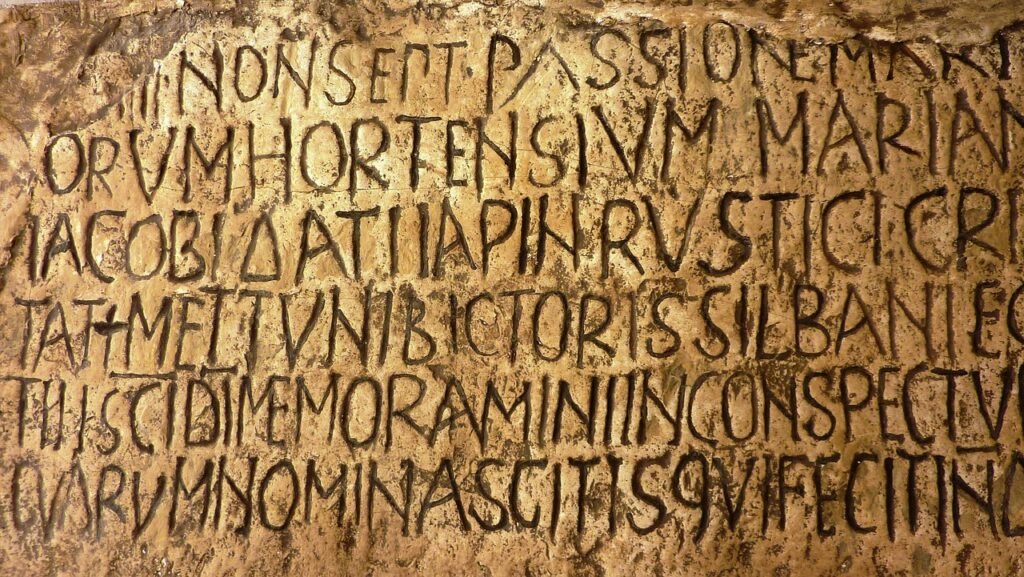
Creed and credo split from the same Latin verb
Both come from credo, Latin for I believe, which is credere conjugated for a single speaker. The Latin texts of the Nicene Creed and the Apostles’ Creed open with that word, which is how the noun credo reached English: people named the statement after the word it started with. CREED arrived earlier and by a different route, through Old English creda, but it is the same root wearing different clothes.
English then handed them separate jobs. A creed is public and collective. It is the thing a congregation says out loud together, or, in looser use, the set of principles a movement signs up to. A credo is personal and short, closer to a motto than to a document, so clues about what a single person lives by tend to want it. If your clue reads words to live by rather than set of beliefs, expect CREDO or MOTTO instead, and both of those have already been taken apart elsewhere on the site.
Dogma carries a weight the others do not
DOGMA comes from Greek and started out meaning something closer to an opinion or a decree. In English it narrowed to doctrine laid down by an authority, and then picked up a sour edge, since calling a person dogmatic is not a compliment. Constructors know this, so the wording leans on it. Rigid teaching, article of faith, or anything mentioning church authority points at DOGMA rather than CREED.
ETHOS is looser still and is really the odd one out. It names the character or guiding spirit of a group, not a list of propositions anyone could write down and recite. A company can have an ethos without a single person ever stating it. When a puzzle uses set of beliefs for ETHOS it is stretching, and the wording normally softens to guiding spirit, or attaches the word to a school, a team or a newsroom.
What the longer and shorter slots want
Get the square count down, then work the list:
| Letters | Answer | What triggers it |
|---|---|---|
| 3 | ISM | Suffix wording, or a very tight corner |
| 5 | CREED | A shared, stated set of beliefs |
| 5 | CREDO | One person’s guiding principle |
| 5 | DOGMA | Doctrine handed down by authority |
| 5 | ETHOS | Spirit or character of a group |
| 8 | IDEOLOGY | Political or systematic wording |
ISM is the one that trips people. Puzzles treat the suffix as a standalone entry, on the logic that every doctrine with a name ending in ism is a set of beliefs, and three squares rarely leave another option.
Creed outside the church
The word travels a long way past religion in American usage. The formula race, creed or color, which survives in old hiring notices and in civil rights language, uses creed to mean religion specifically. Writers reach for the American creed when they mean shared civic commitments. Bands and ad campaigns have borrowed it because it sounds heavier than belief.
For solving, that spread is good news. A clue can arrive dressed as politics, sport or marketing and still be asking for the same five letters. When the wording names a group and what that group stands for, and the slot is five long, pencil CREED in and wait for the crossings to back it.