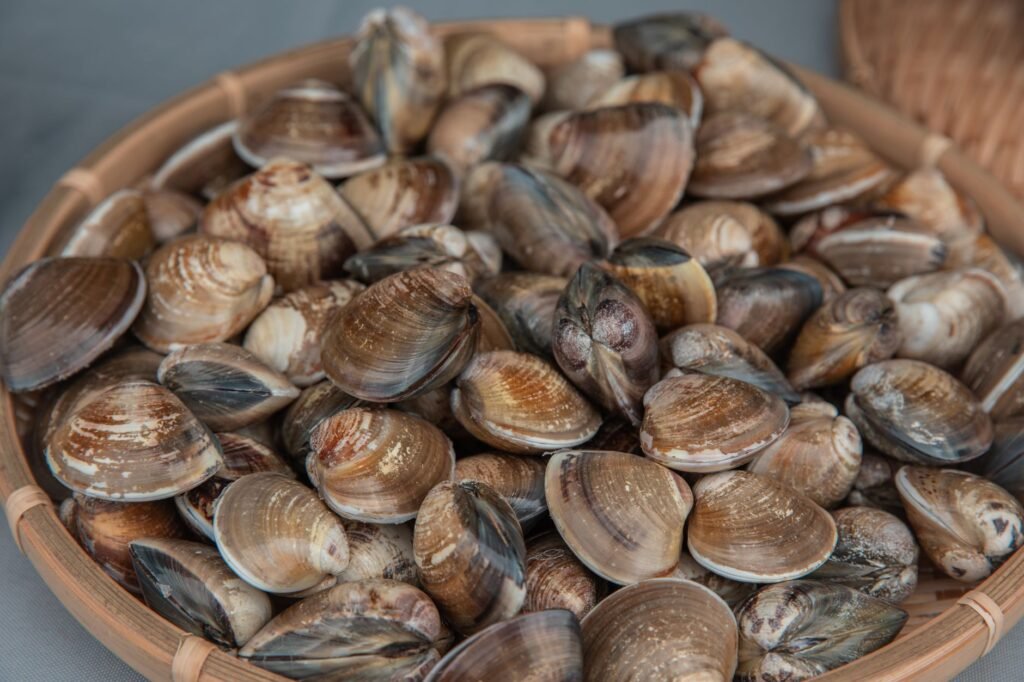
The answer is LITTLENECK, ten letters. A quahog is the hard shell clam of the American Atlantic coast, and littleneck is the trade name for the smallest and youngest grade of it. Every size on a raw bar menu is the same animal at a different age.
One species, four names, sold by size
The hard clam of the eastern seaboard is Mercenaria mercenaria, and the fishery sells it under names that describe nothing except how big it has grown. Smallest first: littleneck, then topneck, then cherrystone, then chowder clam, which at that stage is often just called a quahog. Nothing about the animal changes but its age and the weight of its shell. A chowder clam is a littleneck that nobody got around to digging.
That is unusual for seafood. Most of the counter is sorted by species, so a shopper learning that a shrimp and a prawn are different creatures is learning something about biology. A shopper learning the clam grades is learning a pricing system instead, which is why the names feel so precise and turn out to mean so little about the animal.
Why the smallest one costs the most
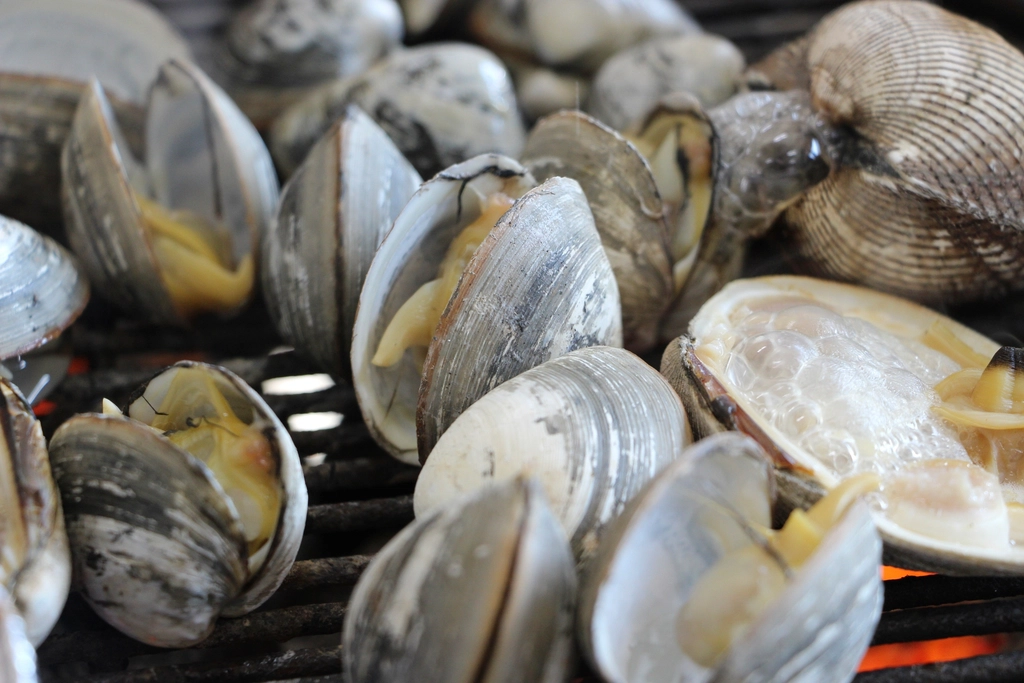
The price ladder runs backwards from most food. Littlenecks are smaller, so you need more of them, and they still cost more per clam than the big ones do. Texture is the reason. A young hard clam is tender enough to eat raw, which is the thing a raw bar is actually selling, while an older clam has spent years building the muscle needed to work a heavier shell.
So cherrystones get grilled, baked or stuffed, where heat and a topping hide the chew, and chowder clams get minced into soup, the one preparation in which toughness stops mattering at all. Read the grade names on a menu and you are reading the kitchen’s plan for each size before you order.
Where the names came from
Littleneck takes its name from Little Neck Bay on the north shore of Long Island, once a serious source of small clams. Cherrystone is traced to Cherrystone Creek on Virginia’s Eastern Shore, the same naming habit applied several hundred miles south.
Quahog itself is a loanword from Narragansett, which puts it in the small set of Algonquian words that entered American English straight from the northeast coast, alongside moose, squash, raccoon and hickory. The shell had a use beyond the plate too. The purple section of a quahog shell supplied the darker beads of wampum, so the animal carried value on this coast long before anybody was selling it on ice.

Reading the clue against the slot
Enumeration does the sorting here, since the candidates are long and no two of them share a length.
| Letters | Answer | What the clue is asking for |
|---|---|---|
| 4 | CLAM | The general word |
| 6 | QUAHOG | The clue reverses and gives the size |
| 7 | TOPNECK | The grade between the two famous ones |
| 7 | STEAMER | A soft shell clam, separate species |
| 7 | CHOWDER | Where the biggest grade ends up |
| 10 | LITTLENECK | Smallest and youngest grade |
| 11 | CHERRYSTONE | One size up from littleneck |
A clue reading young quahog, small hard clam or half shell order is aiming at LITTLENECK. A clue naming a bay or a creek may be aiming at the namesake instead. And STEAMER is the trap worth remembering: it is a soft shell clam of a different species, so it never belongs on this size ladder even though it shares the menu with everything on it.