

Photo: rawpixel · CC0
Yes, but only during the deeper stretches of sleep, which is why it seems to come and go. A dozing cat keeps enough muscle tone that nothing flutters. Once the cat drops into properly deep sleep and the body goes slack, the soft tissue in the airway can start to vibrate.
Cat sleep is not one thing
Cats rest an enormous amount of the day, but most of that is a light doze with ears still tracking the room. Muscle tone stays up, breathing stays quiet, and the cat can be alert in an instant. That state produces no snoring at all.
Deeper sleep is a different arrangement. The body goes floppy, the head loses its careful poise, and the airway tissue loses the tone that was holding it in shape. That is the window in which a cat snores, and it is a smaller share of the day than owners assume.
Signs your cat is in the stage where it happens
- Paws twitching, or claws flexing against a blanket.
- Whiskers flicking, or eyelids moving with the eyes rolling underneath.
- A completely slack body, often with the head tipped at an angle it would never hold awake.
- Slow to react if you walk into the room.
Owners often notice the snoring starting a few minutes after those signs appear, then stopping when the cat shifts.
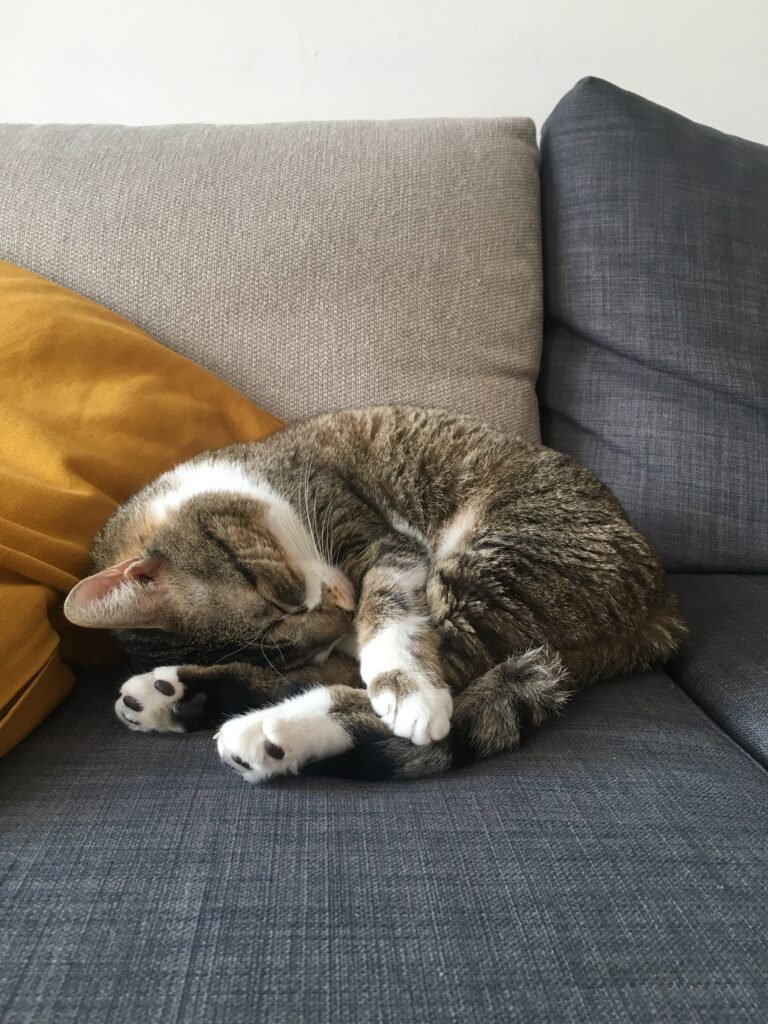
Where a cat sleeps matters as much as how. A cat pressed into the corner of a soft bed with its face against the side has effectively built a wall around its own nose, while cats sleeping flat with the neck extended tend to be the quiet ones. This is also why the same cat can seem to snore only in one room of the house, which owners sometimes read as a problem with the room rather than with the shape of the bed in it.
Position decides a lot of it
| Position | Typical result |
|---|---|
| Curled tight, nose tucked under a paw | Muffled, sometimes snuffly |
| Chin folded onto chest | Loudest for many cats |
| Flat on one side, neck extended | Usually quiet |
| Belly up, head tipped back | Often noisy, and only happens when relaxed |
Gently shifting a snoring cat usually stops the sound, which is the simplest confirmation that position is doing the work rather than anything else.
When sleep noise stops being ordinary
Ordinary sleep snoring is soft, position dependent, and vanishes the moment the cat wakes. Talk to your vet if the noisy breathing carries on while your cat is awake, if it started recently and keeps getting louder, or if it arrives with sneezing, discharge, or a drop in appetite or energy.
Filming a stretch of it on your phone helps more than describing it, since your vet can hear the pattern and where in the breath the noise falls.