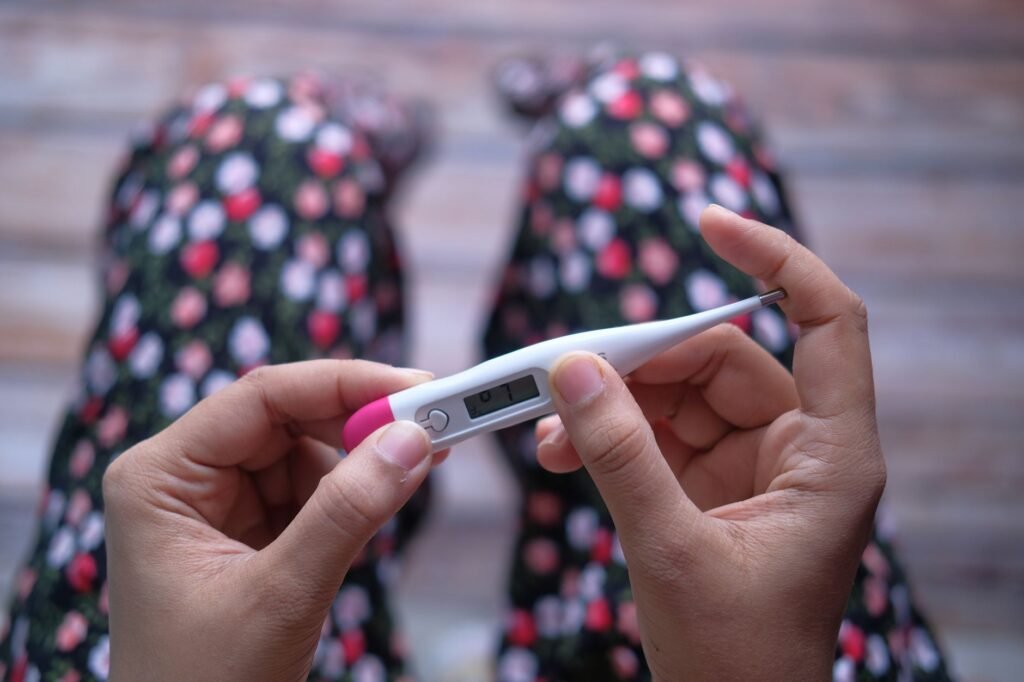
Yes, 97.9 degrees Fahrenheit is a normal body temperature for most people. Normal is a range rather than a single number, and readings from roughly 97 to 99 degrees are common in healthy adults depending on the time of day, the thermometer used, and where on the body it was measured.
Where 98.6 actually came from
The famous 98.6 figure traces back to Carl Reinhold August Wunderlich, a German physician who collected enormous numbers of readings in the nineteenth century and published an average. It was careful work for its time, taken with long glass thermometers under the arm.
Later analyses using modern instruments have generally landed slightly lower, and researchers have noted that average body temperature appears to have drifted down over the past century. The practical takeaway is not a new magic number. It is that a single fixed target was never a good description of how bodies work.

Why the same person gets different numbers
Measurement site changes the reading more than most people expect, and so does the clock. Comparing this morning’s forehead scan to last night’s oral reading is not a fair comparison.
| Where you measure | How it usually compares |
|---|---|
| Under the arm | Tends to read lowest, often about a degree under an oral reading |
| Mouth | The common reference point for adults |
| Ear or forehead | Fast but sensitive to technique, sweat, and room temperature |
| Rectal | Tends to read highest and is the standard for infants |
Time of day matters too. Temperature generally bottoms out in the early morning and peaks in the late afternoon. A 97.9 at seven in the morning and a 98.9 at six in the evening can both be perfectly ordinary for the same person.
Get a cleaner reading
- Wait at least fifteen minutes after eating, drinking, smoking, or exercising.
- Use the same thermometer and the same site each time so the numbers are comparable.
- Follow the device instructions exactly. Forehead scanners in particular have a specific distance and sweep.
- Write down the number and the time. A trend tells you far more than one isolated reading.
When a number is worth a call
This is general information, not medical advice, and a thermometer cannot diagnose anything. Still, there are widely recognized moments to contact a clinician rather than keep watching the display. A temperature at or above 100.4 degrees Fahrenheit that lasts, a reading that keeps climbing, or a low reading paired with shivering, confusion, or unusual drowsiness all warrant a call.
Any fever in a newborn is treated as urgent. The same goes for a raised temperature in someone with a weakened immune system, a recent surgery, or a chronic condition their doctor is already watching. And if the person feels genuinely unwell, that matters regardless of what the number says. Symptoms beat digits every time.