
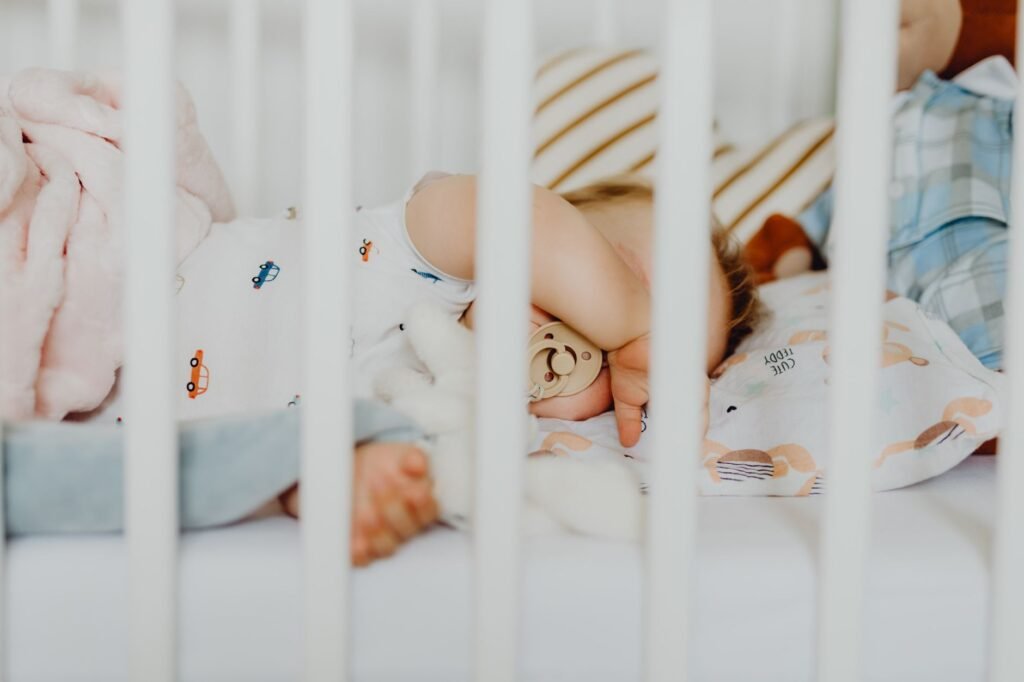
Occasional snoring, especially during a cold, is common and usually nothing. The pattern that changes the conversation is snoring most nights, for weeks, with no cold to explain it. Frequency and duration are what your pediatrician will ask about, so those are the things worth tracking.
Frequency is the thing to watch

| Pattern | How it is usually read |
|---|---|
| Noisy for a few nights with a cold | Common, watch it clear |
| Occasional snores, otherwise quiet | Common |
| Every night for several weeks, no cold | Mention at an appointment |
| Loud, nightly, with pauses or gasping | Call the pediatrician |
| Noisy breathing while awake too | Call the pediatrician |
Volume alone is a poor guide. A tiny airway can produce a startling noise over something minor, and quiet breathing is not automatic reassurance either.
Keep a two week tally
- Mark each night simply: quiet, some noise, or loud most of the night.
- Note any cold, teething stretch, or house change such as new heating running.
- Note feeding, since babies who tire during feeds are worth flagging.
- Record one short video on a loud night.
Two weeks of crude notes beats a month of trying to remember. Parents consistently underestimate how often it happened when asked in the moment at an appointment.
It helps to separate loudness from persistence in your own head. A cold can produce a week of dramatic noise that means very little, while a soft but relentless snore every night for two months is the version that gets a closer look. Parents naturally react to volume, because volume is what wakes them, and the questions a pediatrician asks are almost entirely about how long and how often. Framing your notes that way from the start makes the appointment much more productive, so write dates rather than impressions.
What does not belong in the response
Nothing about snoring changes safe sleep practice. Babies go down on their back, on a firm flat surface, with no pillows, wedges, positioners, or loose bedding. Products sold to prop a baby up for congestion or reflux are not part of safe infant sleep, and elevating a crib mattress is not something to do on your own initiative.
Nor should anything go into a baby’s nose, saline included, without your pediatrician saying so first. The safe home response to baby snoring is observation, not intervention.
The conversation to have
Raise it at a well visit if the snoring is regular, and call sooner if you see pauses in breathing, gasping, breathing that looks like effort with the chest pulling in, poor feeding, or poor weight gain. Bluish color around the lips needs emergency care immediately.
Your pediatrician may simply note it and watch, or may look further. Either way, that judgment belongs with them rather than with a checklist you apply at home.