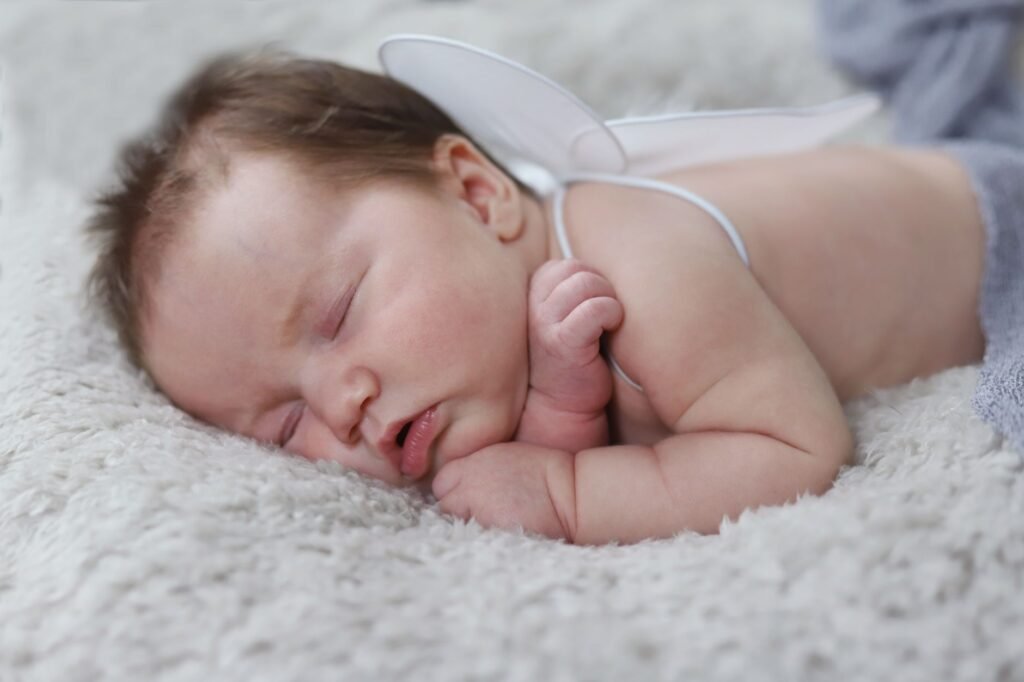
Some noisy breathing in the early weeks is common, and most of it eases as the airway grows. Newborns breathe mainly through the nose, and their nasal passages are extremely narrow, so small amounts of congestion produce sound. Snoring that is loud, constant, or getting worse should be reported to your pediatrician.
How the noise typically changes over time

| Stage | What parents commonly describe |
|---|---|
| First days | Snuffly, wet sounding breathing that often clears quickly |
| First weeks | Intermittent rattles and whistles, worse in dry rooms |
| Two to three months | Noise easing as the baby grows, unless a cold intervenes |
| Later infancy | Noise mostly tied to colds rather than constant |
This is a pattern, not a schedule. Babies differ, and the direction of travel matters more than where you are on any particular week.
Why newborns are so noisy in the first place
Newborns do most of their breathing through the nose rather than the mouth, which means the nose has to do all the work and has almost no room to spare. Add the long stretches of active sleep that newborns spend, when muscle tone is at its lowest, and noisy breathing becomes close to standard equipment.
This is also why newborn snoring so often sounds nasal, high and snuffly rather than the deep throat rattle of an adult. It is happening in a different part of the airway.
Newborn breathing is also naturally irregular in a way that surprises first time parents. The rate speeds up and slows down, and brief pauses followed by a few quicker breaths are commonly described in healthy newborns. Knowing that in advance does not mean ignoring pauses, and any that look long or leave your baby gasping should still be reported.
What safe sleep means for noisy newborns
Standard safe sleep guidance is that babies go down on their back, on a firm flat surface, with nothing else in the sleep space. None of that changes because your baby snores. Wedges, positioners, and extra bedding marketed for congestion or reflux are not part of safe infant sleep, and should not be added on your own judgment.
If the noise worries you enough that you are considering changing anything about how your baby sleeps, that is the moment to call your pediatrician instead.
What to report and when
- Noisy breathing that is constant rather than coming and going.
- Any pause in breathing, gasping, or a struggle to draw breath.
- Chest or ribs pulling in with each breath, or flaring nostrils.
- Difficulty feeding, or tiring partway through a feed.
- Fever in a newborn, or a baby who is unusually floppy or hard to rouse.
Bluish color around the lips or face needs emergency help immediately. For anything else on the list, call your pediatrician, and bring a video if you have one.