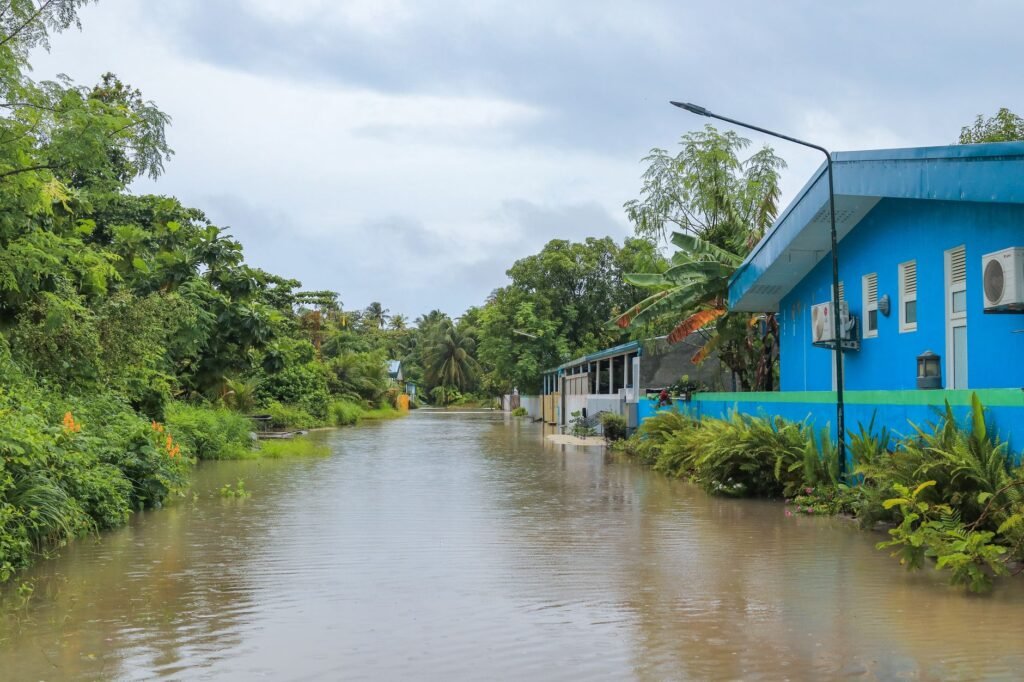
No. Thrash is an original screenplay by Tommy Wirkola, and the Category 5 storm at the center of it does not exist. Hurricane Henry was written for the film, which was shot in Australia rather than in South Carolina. What does survive a fact check is the mechanism underneath the premise: storm surge is real, and bull sharks genuinely do move into flooded fresh water.
Eighty-six minutes of invented weather
| Question | Answer |
|---|---|
| Based on a true story? | No, original screenplay |
| Based on a book? | No |
| Written and directed by | Tommy Wirkola |
| Produced by | Adam McKay, Kevin Messick, Tommy Wirkola |
| Lead cast | Phoebe Dynevor, Whitney Peak, Djimon Hounsou |
| Runtime | 86 minutes |
| Released | April 10, 2026 |
| Platform | Netflix |
| Filmed in | Melbourne, Australia |
Storm surge is the real mechanism
The film needs sea water standing in a downtown street, and that part is not a stretch. Storm surge is the wall of ocean a hurricane pushes ashore, and it is the reason coastal towns drown rather than merely flood. Hurricane Hugo produced the highest storm tide heights ever recorded along the United States East Coast when it came ashore in 1989, reaching 19.8 feet above mean sea level at Bulls Bay in South Carolina. Water at that depth turns streets into channels connected directly to the sea.
The production did bring in expertise on this. Climate scientist Chris Gloninger has been described as a consultant on the film, and has spoken publicly about infrastructure being built on the assumption that the climate holds still. That is a real argument, made by a real specialist, attached to an invented storm.
Bull sharks really do leave the sea
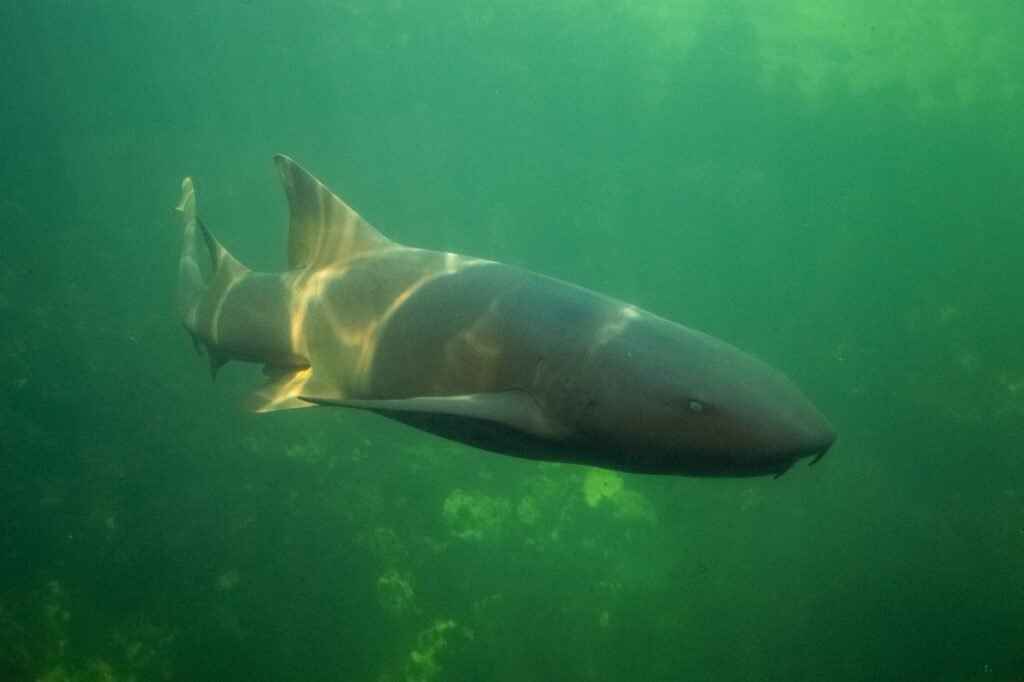
The species in the film is the one that makes the premise defensible. Bull sharks are euryhaline, meaning they can shift between salt water and fresh water without difficulty, which almost no other shark manages. They have been recorded roughly 700 miles up the Mississippi as far as Alton, Illinois, about 2,500 miles up the Amazon to Iquitos in Peru, and they live in Lake Nicaragua.
The clearest illustration is a golf course. Six bull sharks were left in a lake at Carbrook in Queensland after the Logan and Albert rivers flooded in 1996, and they stayed there until 2013, when further flooding reconnected the lake to the river system. A shark in fresh water is therefore not the invented part of this movie. A shark hunting people through a flooded main street in the middle of a Category 5 landfall is.
The flooded highway shark photo is a fake
Anyone searching this question will eventually hit the photograph of a shark cruising down a submerged highway, and it is worth knowing that it is a composite. It first circulated in August 2011 and was attributed to Puerto Rico after Hurricane Irene, and it has since been relabeled for flooding in Houston in 2015 and 2017 and for Daytona Beach after Hurricane Matthew in 2016. The shark itself was photographed off South Africa by Thomas Peschak, trailing a kayak. Snopes, The Washington Post and the Toronto Star have all debunked it. The image is probably doing more work than the film is in convincing people this has happened somewhere.
Hurricane Hugo is the local memory it borrows
South Carolina has taken four hurricanes at Category 3 or above in the modern record, in 1893, 1954, 1959 and 1989, and Hugo is the one still in living memory. It crossed the coast just north of Charleston at Sullivan’s Island around midnight on September 22, 1989, as a Category 4 with estimated sustained winds of 135 to 140 miles per hour, killed 49 people and caused around seven billion dollars in damage. Commentators comparing Henry to a genuine storm have generally landed on Hugo. That comparison comes from writers covering the film, not from a claim the film makes about itself.
How to tell a disaster premise from a disaster record
- Check the storm’s name. Real hurricane names are on public lists kept by meteorological agencies. A name with no entry anywhere is invented.
- Check where it filmed. A disaster supposedly reconstructed in a specific town is rarely shot on another continent.
- Separate the science from the plot. A consultant confirming that surge and euryhaline sharks are real is not confirming that any of this occurred.
- Distrust the viral photo. The single most shared piece of evidence for sharks in floodwater has been a known fake for well over a decade.