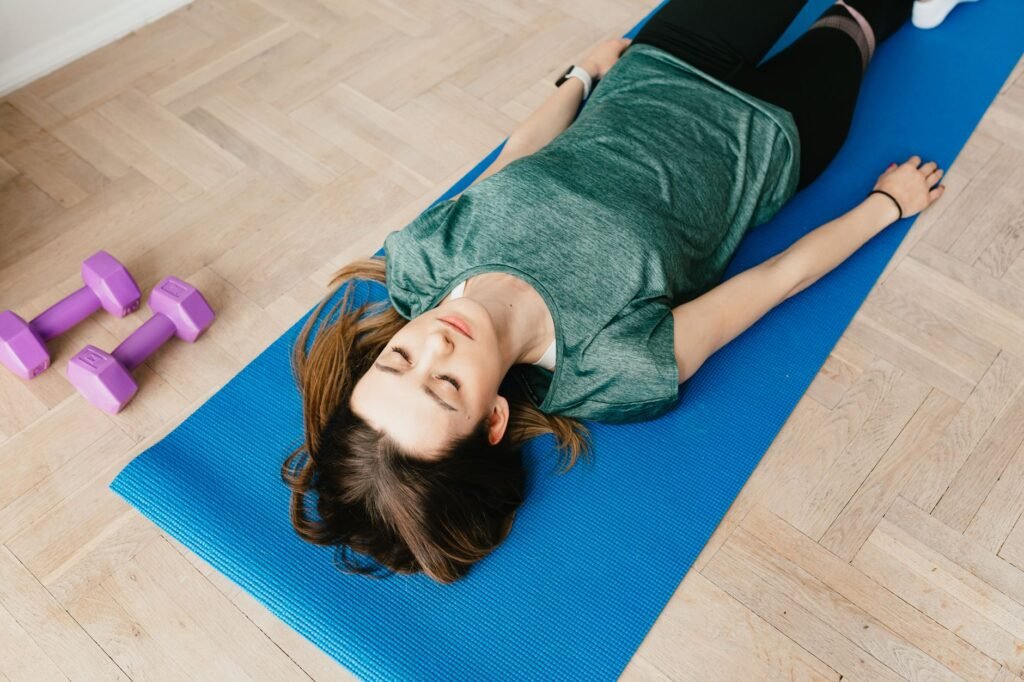
Yes, and in some circumstances it is the smarter choice. The question is usually not whether reclining counts, but whether you are meditating or quietly falling asleep. Those are different activities with different benefits, and the setup you choose decides which one you get.
Times when you are already lying down anyway
Most people who ask this are not comparing two equal options. They are lying down for a reason and wondering whether practice is still possible. Usually it is.
| Situation | What tends to work |
|---|---|
| Recovering from illness | Five minutes of following the breath, no goal beyond noticing it |
| Ongoing back pain | Knees bent, feet flat, attention on the parts that feel neutral rather than the sore ones |
| Late pregnancy | Left side with a pillow between the knees, slow counted breathing |
| After hard exercise | Body scan while the heart rate comes down |
| Awake at 3am | Counting exhalations, with no attempt to force sleep |
Bedtime practice and attention practice are not the same goal
This is the distinction that clears up most of the confusion. If you lie in bed, close your eyes and follow a calm recording, you are using meditation techniques as a wind down routine. That is a perfectly good use of them. Your aim is to stop thinking and drop off.
Attention training aims at the opposite. You stay awake, you notice when the mind wanders, and you bring it back. The returning is the exercise. If you drift off, you never get the repetitions.
Neither one is better. They just answer different needs, and trying to get both from a single bedtime session in bed usually means getting neither well.
How to tell which one actually happened
After a reclining session, check three things. Can you remember roughly what you paid attention to? Do you know approximately how much time passed? Did you notice the mind wandering and come back at least a few times? Three yeses mean you meditated. Three blanks mean you dozed, which is not a crime but is worth counting honestly.
Adjustments that shift a session toward staying awake
- Change the surface. Floor rather than mattress. Firm beats soft every time here.
- Change the time. Practice at a point in the day when you are not already tired, then keep bed for sleep.
- Shorten it. Ten alert minutes beat thirty foggy ones.
- Add a little tone. Knees up, or arms resting palms down with a slight sense of contact, gives the body something to register.
- Pick a stronger anchor. Sound in the room, or the contact points between your body and the floor, holds attention better than a vague instruction to relax.
If you have been lying down for medical reasons and any position leaves you short of breath or dizzy, that is a question for a clinician rather than a posture problem to solve on your own.