The answer is BAN, three letters. To bar someone is to prohibit or exclude them, and BAN is the shortest standard fill for that verb sense. Bar carries an unusual number of meanings, though, so ROD, PUB, RAIL, ESTOP and SALOON are all live depending on your square count.
Every bar started as a rod across a door
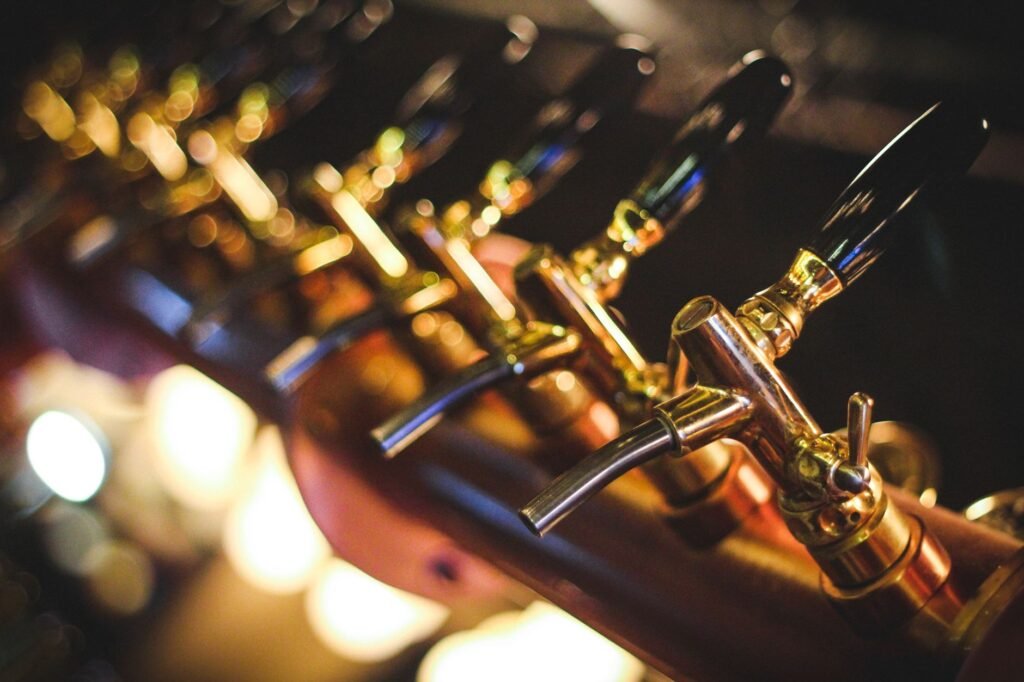
The oldest English sense of bar, from the late 1100s, is a stake or rod of iron used to fasten a door or gate. Nearly every other meaning grew out of that one object. By about 1300 the verb meant to fasten a gate with a bar, and by the 1570s it had widened to obstruct or prevent, the sense BAN answers. The drinking bar, recorded from the 1590s, is named for the barrier or counter over which drinks and food were served. The legal profession has been called the bar since the 1550s, after a railing that separated benchers from the hall in the Inns of Court.
The pattern continues outdoors and on paper. A bank of sand across a harbor or river mouth has been a bar since the 1580s, which is how SHOAL answers this clue. In music, bar lines are the vertical strokes that divide the staff, and a bar is the segment between two of them, also called a MEASURE. Even a broad band of color can be a bar, which is where STRIPE comes in.

Bar answers grouped by sense and length
Find the sense, then match the squares:
| Letters | Answer | Sense of bar |
|---|---|---|
| 3 | BAN | Prohibit, the shortest verb |
| 3 | ROD | A straight length of metal or wood |
| 3 | PUB | A drinking place, short form |
| 4 | RAIL | A horizontal bar or railing |
| 5 | ESTOP | The legal verb for barring |
| 5 | SHOAL | A sandbar in the water |
| 6 | SALOON | A drinking bar, often in Western settings |
| 6 | TAVERN | The older word for a drinking place |
| 6 | STRIPE | A band of color |
| 6 | EXCEPT | Bar as a preposition |
| 7 | CANTINA | A drinking bar with a Spanish name |
| 7 | MEASURE | The musical sense |
| 8 | PROHIBIT | The long, formal verb |
Three squares are where this clue is cruelest, since BAN, ROD and PUB all fit. Fortunately B, R and P open the three words and A, O and U follow, so a single crossing decides between them. Five squares are just as friendly, because ESTOP and SHOAL share nothing in the same position either. Six squares are harder, with four candidates. SALOON and TAVERN share the A in the second square and the N at the end, while SALOON and STRIPE both start with S, so the third square is the one to solve: L, V, R and C separate all four.
ESTOP is the courtroom version
ESTOP is rarely heard outside a courtroom, but it is a familiar crossword fill. In law it means to bar, prevent or preclude, and it has been used that way since the 1530s. It came through Anglo-French estopper, to stop, bar or hinder, from Old French estoper, to plug or stop up, and ultimately from Latin stuppa, tow, a coarse fiber. Its noun, estoppel, names a judicial device by which a court may prevent a person from making certain assertions or from going back on their word.
The legal flavor is your signal. When the clue reads Bar, legally, or mentions a court or a lawyer, the five-square answer is ESTOP rather than SHOAL or a word for a tavern, and third-person or past-tense wording can stretch it to ESTOPS or ESTOPPED. A clue that names a metal, such as Gold bar, wants INGOT instead.
Bar none and the one meaning with no rod in it
Bar also works as a preposition meaning except or other than, and the phrase bar none, without exception, keeps that sense in daily use. That is why EXCEPT is a legitimate six-letter answer even though it looks nothing like the other fills. When the clue treats bar as part of a phrase, the way all bar one does, rather than as a noun or a verb, try EXCEPT before anything else.
The one true outsider is the unit of pressure. The bar is defined as 100,000 pascals, slightly less than average atmospheric pressure at sea level, and it was introduced along with the millibar by the Norwegian meteorologist Vilhelm Bjerknes. Its name comes from the Greek baros, weight, so it shares nothing with the rod across the door except its spelling.
Frequently asked questions
What is the answer to the Bar crossword clue?
BAN is the standard three-letter answer for the verb sense. ROD and PUB also fit three squares, RAIL fits four, ESTOP and SHOAL fit five, SALOON, TAVERN and STRIPE fit six, and CANTINA and MEASURE fit seven. Count the squares first.
Why is ESTOP an answer for Bar?
Estop is a legal verb meaning to bar, prevent or preclude, in use since the 1530s. It comes from Old French estoper, to plug or stop up. Clues that mention law or courts often point to it when the slot has five squares.
Why is a drinking place called a bar?
The sense dates from the 1590s and refers to the barrier or counter over which drinks and food were served. It grew out of the oldest meaning of bar, a rod of iron used to fasten a door or gate, which English has used since the late 1100s.