
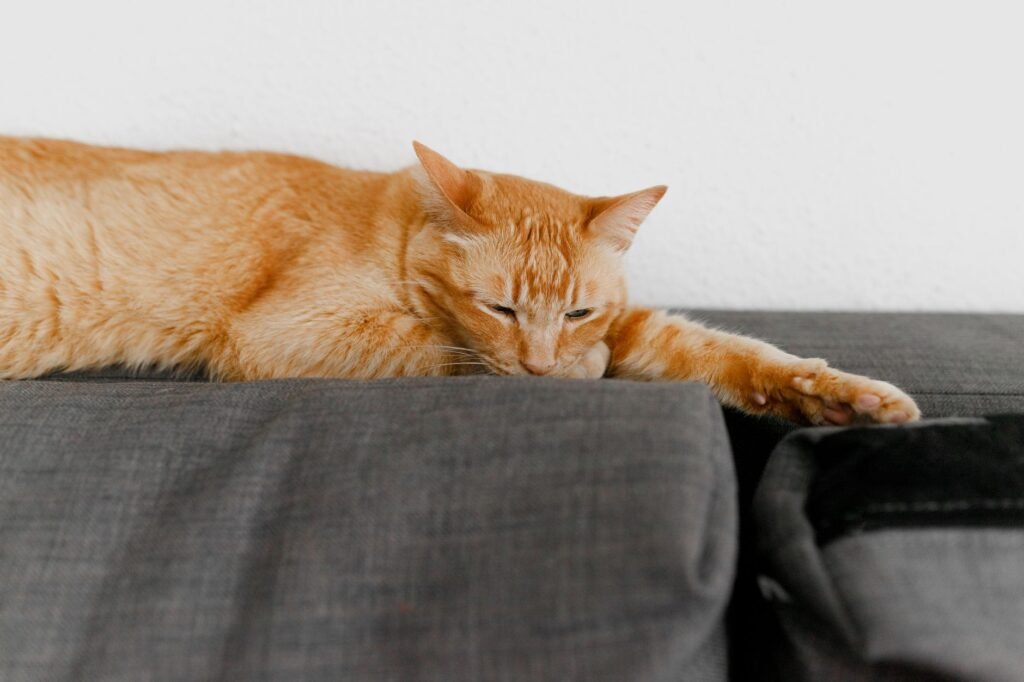
The answer is LAZE, four letters. LOLL, LOAF and IDLE fit the same four squares, so this is a clue a crossing has to settle rather than the definition. LAZE is the strongest first guess because lounging suggests ease and comfort, and laze is the verb built directly from lazy.
Two of these verbs were made by trimming
LAZE is a back-formation, a verb created by cutting down a longer word that already existed, and LOAF apparently is one too. Laze appeared in the 1590s, clipped from lazy, an adjective recorded from the 1540s whose origin nobody has pinned down. Loaf is American and much younger. It is recorded from 1835, apparently shortened from loafer, which had turned up in 1830.
Where loafer came from is less settled. It is often explained as a shortened form of land loper, a partial translation of the German Landläufer, a vagabond, though the Oxford English Dictionary finds that connection not very probable. In grids, LOAF suits clues about shirking work better than clues about a comfortable afternoon.

Let the second square choose
Because all four verbs share a length, the grid does the choosing. Look at the second square first. An A there means LAZE. An O means LOLL or LOAF, and those two split again at the third square, L against A, and at the last, L against F. IDLE is the only candidate that starts with I, so a letter in the first square rules it in or out on its own.
For Lounge around, a single well-placed letter settles more than any debate over whether lounging sounds like lazing or lolling. If the entry is still empty, solve the crossing entry that runs through its second square and let that letter do the work.
Lounge clues by length and ending
Check the tense and number of the clue, then the length.
| Letters | Answer | What points to it |
|---|---|---|
| 3 | LIE | A clue that is just Lounge |
| 4 | LAZE | The default for Lounge around |
| 4 | LOLL | Sprawling or drooping |
| 4 | LOAF | Avoiding work |
| 4 | IDLE | Plain inactivity |
| 5 | LOLLS | Lounges around |
| 6 | LAZING | Lounging around |
| 6 | LOAFED | Lounged around |
| 6 | REPOSE | A formal clue about resting |
| 6 | SPRAWL | British grids, for Lounge alone |
| 6 | BARHOP | Wordplay, going from lounge to lounge |
LOLL describes a posture, not a schedule
LOLL is the oldest of the three L words. It goes back to the mid-1300s, to a Middle English verb meaning to lounge idly or hang loosely, possibly related to a Middle Dutch word for dozing or mumbling, or perhaps imitating a rocking, swinging motion. From the 1610s it was used specifically of the tongue, the sense behind a panting dog’s lolling tongue.
That physical sense is the useful clue. LOLL is about how a body sits or hangs, so wording about sprawling, drooping or reclining points to it. LOAF is about time and effort, and LAZE is the pleasant one, a whole afternoon spent comfortably doing nothing. IDLE is the neutral member and the oldest word of the four: the Old English idel meant empty, vain or useless, and by 1916 a motor could idle too, running steadily without transmitting power.
A question mark can send you to a bar
Lounge is also a noun, and that opens the door to wordplay. The verb came first, around 1500, as a Scottish word for lolling or resting lazily, of uncertain origin; one proposal links it to the French s’allonger, another to lungis, an obsolete word for a slow, lazy person. The noun followed, meaning the act of lounging in 1806, a couch long enough to lie on at full length by 1830, and a comfortable room made for lounging by 1881. A bar with soft seating is a lounge too, so a clue that plays on going around the lounges can want BARHOP, six letters, meaning to go to a succession of bars or nightclubs with a brief stay at each.
A clue like that normally flags itself with a question mark. Without one, stay with the four-letter verbs and let the crossings choose between them.
Frequently asked questions
Is the answer LAZE or LOLL?
Both fit four squares, and they split at the second letter, A for LAZE and O for LOLL. LAZE suits a relaxed, comfortable reading of lounge, while LOLL leans toward posture, sprawling or drooping. LOAF shares the O with LOLL and is the version about avoiding work.
What does loll mean?
To loll is to lounge idly or hang loosely, a sense that goes back to the mid-1300s. Since the 1610s it has also been used of the tongue, as when a dog's tongue lolls from its mouth. In crosswords it answers clues such as Lounge and Lounge around.
Why would BARHOP answer Lounge around?
Only as wordplay. A lounge can also be a bar, so going around the lounges means moving from one bar to the next, which is exactly what barhop means. A clue built on that kind of pun normally carries a question mark to warn you the definition is not literal.