
The answer is DOLT, four letters. It is a plain word for a stupid person, and OAF, IDIOT, DOOFUS and NITWIT answer the same clue in other slots. Watch for a question mark, though: written as Bone head?, the clue stops insulting anyone and asks for OSTEO.
Bonehead came out of baseball
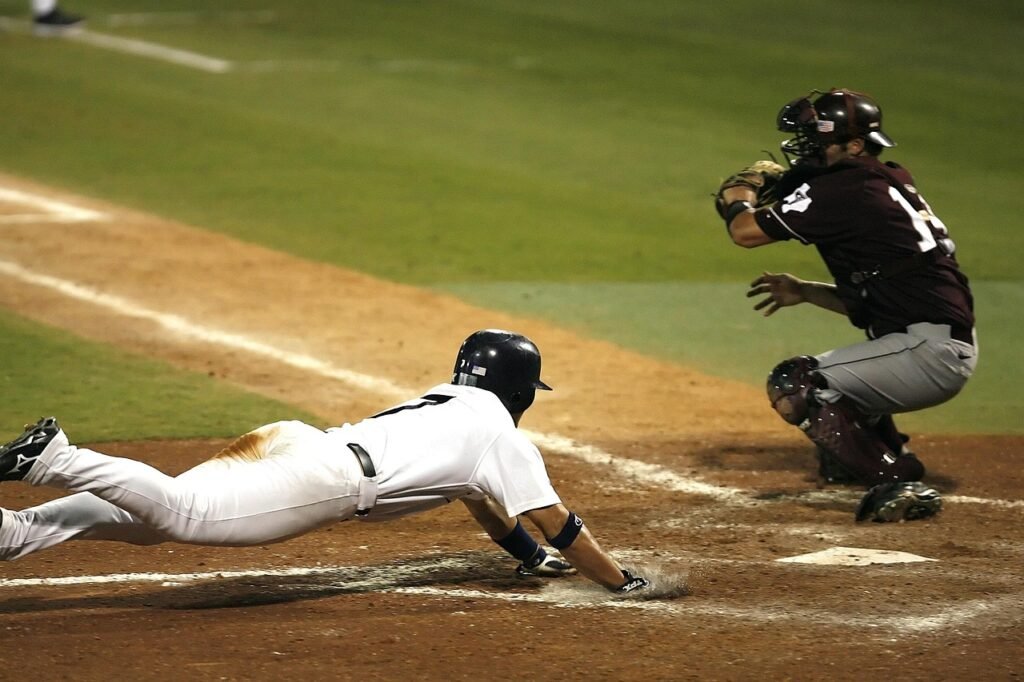
Bonehead is a twentieth-century word. The noun, meaning a stupid person, is dated to 1904 and began as baseball slang, while the adjective bone-headed turns up a year earlier, in 1903. An early citation comes from a Wisconsin newspaper in May 1904, which reported that a pitcher had been fined $20 for calling an umpire a bonehead. The word is built like blockhead and meathead, a head made of something dense.
Etymologists say it was popularized by 1908, and that year also produced the play that pinned it on one player for good.

The 19-year-old who wore the name for life
On September 23, 1908, the New York Giants and the Chicago Cubs were tied in the bottom of the ninth at the Polo Grounds. Fred Merkle, a 19-year-old first baseman filling in for an injured regular, was on first base when a teammate’s hit appeared to drive in the winning run. Instead of running on to second, Merkle headed for the clubhouse. Umpire Hank O’Day called him out on a force play and, unable to clear the crowd from the field, declared the game a tie.
The Society for American Baseball Research, in its biography of Merkle, notes that the tie arguably cost the Giants the 1908 pennant and that he became known by epithets including Bonehead, Leather Skull and Ivory Pate. The name stuck. After Game 8 of the 1912 World Series, New York headlines read “Bonehead Merkle Does It Again.”
Bonehead fills by length
Find your slot length below, then weigh the trigger in the right-hand column:
| Letters | Answer | What triggers it |
|---|---|---|
| 3 | OAF | Clumsy as well as dim |
| 3 | SAP | Gullible rather than slow |
| 4 | DOLT | The default four |
| 4 | DOPE | Informal |
| 4 | CLOD | Dull and heavy |
| 4 | TWIT | Silly more than slow |
| 4 | BOOB | Informal |
| 5 | IDIOT | The blunt five |
| 5 | DUNCE | A slow learner |
| 5 | SCHMO | American slang |
| 5 | OSTEO | Only for Bone head? with a question mark |
| 6 | NITWIT | American slang from about 1914 |
| 6 | DOOFUS | Informal |
| 9 | NUMBSKULL | Numb plus skull, from 1717 |
Dolt, dunce and idiot all had earlier lives
DOLT dates to the 1540s and possibly grew out of dold, dull or foolish, influenced by forms of the Middle English verb dullen, to make or become dazed or stupid. A dolt, in other words, is a dulled person. DUNCE has a stranger history. It comes from the name of John Duns Scotus, the Scottish philosopher and theologian who died in 1308 and whose followers held sway in the universities until the Reformation.
When humanist scholars turned against the style of medieval argument he stood for, a Duns man became an insult, first for philosophical opponents in the 1520s and by the 1570s for any slow student; the dunce’s cap is on record from 1792. IDIOT goes back to Greek idiotes, a private person, someone lacking professional skill as opposed to those in public affairs. Both words reached their modern meaning by extension from much narrower ones.
When Bone head gets a question mark
A question mark changes the job. Written as Bone head?, the clue is a pun, and the answer is what sits at the head of bone words: OSTEO, the combining form from Greek osteon, bone, as in osteoporosis. Before a vowel the form shortens to OSTE, and both versions have appeared as answers to that exact wording in published puzzles. Standard crossword practice uses the question mark to flag wordplay rather than a straight definition.
Without a question mark, ignore the pun and count squares. Four points to DOLT, DOPE, CLOD, TWIT or BOOB, so solve a crossing before choosing. DOLT and DOPE share their first two letters, which makes the third square, L or P, the tiebreaker.