The answer is GORGE, five letters. It shares its length with GULCH, GULLY and CHASM, so a five-square Ravine slot is unusually crowded, and three of those four candidates start with G. A six-square slot points to CANYON or ARROYO, and three squares take GAP.
A ravine is named for a robbery
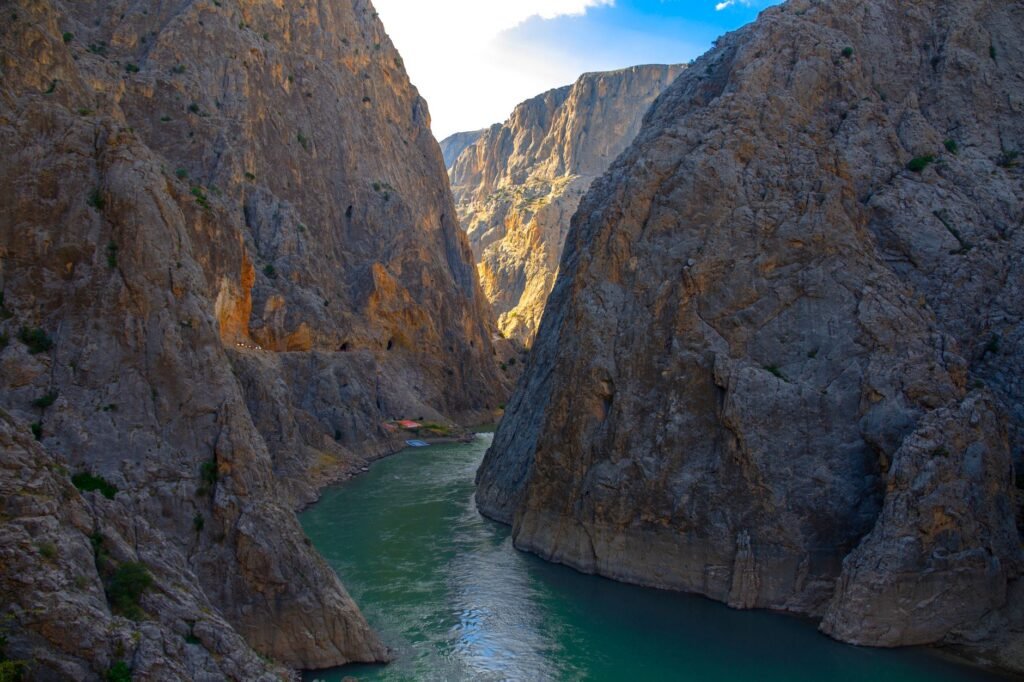
Ravine reached English in 1760 meaning a long, deep gorge worn by a stream or torrent. It came from French, where ravine meant a violent rush of water and the gully such a torrent cuts, and behind that from Old French words for pillaging and for sweeping down. The root is Latin rapina, an act of robbery or plundering, the same source as the English word rapine, with the sense nudged along by Latin rapidus, rapid.
English had in fact taken the word once before, in Middle English, as ravin or ravine meaning booty or robbery. The landscape sense is the one that lasted, and it fits what running water does to a slope: it carries soil and rock away, storm after storm, until a channel becomes a steep-sided cut.
Three answers that began in the throat
GORGE is the clearest case. In Old French gorge meant the throat and also a narrow passage, from Late Latin gurges, gullet or whirlpool, and French had already stretched it to a deep, narrow valley before English took that sense over. The same throat gives English the verb gorge, to eat greedily, recorded around 1300.
GULLY, first recorded in the 1650s as a channel worn in the earth by running water, probably comes from Middle English golet, a water channel, which ties it to gullet and ultimately to Latin gula, throat. GULCH, dated to 1832, is less certain. One suggestion traces it to a dialect verb gulsh and Middle English gulchen, to gush forth or to drink greedily. GORGE certainly began as a throat, GULLY probably did, and GULCH may have begun as a gulp.
Separating GORGE, GULCH and GULLY
With three G words at five letters, the first square tells you almost nothing. The second square is the real test: O means GORGE, U means one of the other two. GULCH and GULLY then agree through GUL and split at the fourth square, C against L, and again at the fifth, H against Y. CHASM, the fourth candidate, breaks from the pack at the very first square.
Meaning helps a little. Merriam-Webster defines a ravine as a small, narrow, steep-sided valley larger than a gully and smaller than a canyon, usually worn by running water. A gully is the rain-cut channel, and gully-washer has been American slang for a heavy rainstorm since at least 1887. Puzzles do not always honor those size differences, so trust the letters first.
Spanish and Arabic words for dry country
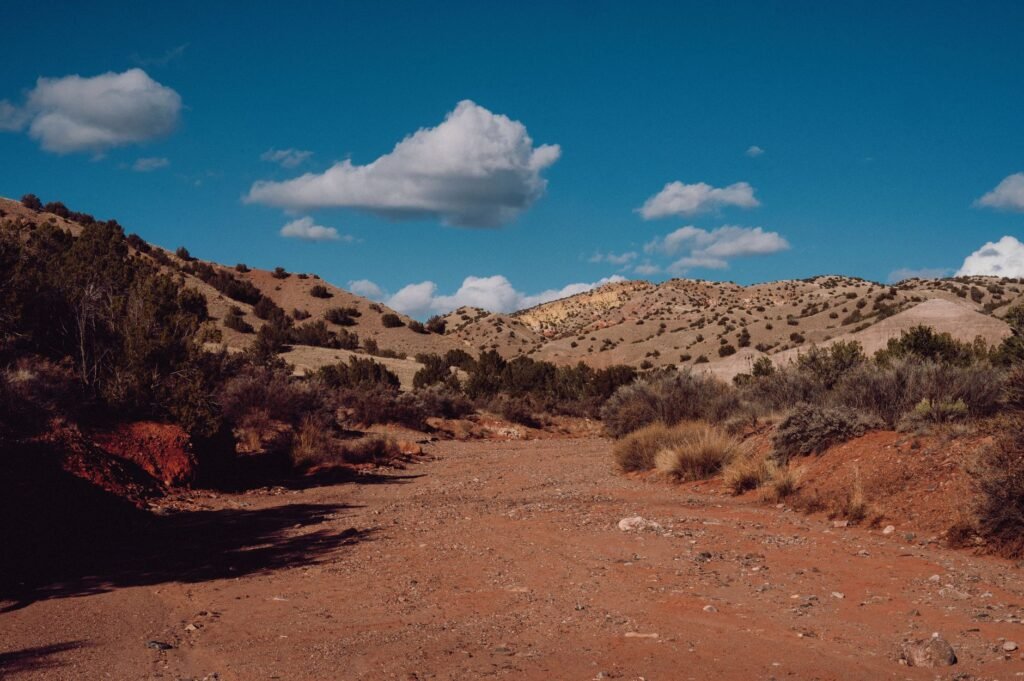
Two of the six-letter fills came into English through the American West. CANYON is dated to 1834, from Mexican Spanish cañon, a pipe or tube and by extension a deep hollow, which goes back to Latin canna, reed. One etymology dictionary adds that this sense was peculiar to the United States, rare in Mexico and unknown in Spain. ARROYO, recorded in 1845 as a California word, means a watercourse or dry stream bed; in Spanish it is a rivulet or small stream.
WADI, at four letters, is the Arabic counterpart, a channel that stays dry except in the rainy season. English has used it since 1839, from an Arabic word tied to a verb meaning it flowed, and it is the source of the Guadal at the start of Spanish river names. COULEE, from French coulée, a flow, is a North American word from areas explored by French trappers, and western wording can point to it.
Ravine answers by square count
Find your length in the first column, then match the clue’s wording to the last one:
| Letters | Answer | What triggers it |
|---|---|---|
| 3 | GAP | Short slot, any break in the land |
| 4 | WADI | Desert or Middle Eastern wording |
| 4 | DELL | Loose fit, really a small valley |
| 4 | VALE | Poetic wording |
| 5 | GORGE | The default five |
| 5 | GULCH | Rugged, Western flavor |
| 5 | GULLY | A smaller, rain cut channel |
| 5 | CHASM | Depth or a split in the rock |
| 6 | CANYON | Large scale, steep walls |
| 6 | ARROYO | Dry creek bed, Southwest |
| 6 | COULEE | Western wording |
| 6 | VALLEY | Loose fit, broad lowland |
| 8 | BARRANCA | Spanish loan, deep ravine |