The answer is DEKES, five letters. The singular version of this clue, hockey feint, wants DEKE in four. It is one of the tidiest entries in the sports corner of a grid because the definition and the fill map onto each other exactly: a deke is a feint, performed on skates, and no other word does that job in hockey.
Why the plural in the clue matters
This clue is a clean demonstration of a rule that will save you squares all over a puzzle. The answer always matches the grammatical form of the clue. Feints is plural, so the entry is plural: DEKES. Change the clue to hockey feint and the entry loses its S. The same rule covers tense and person, which is why a clue reading fakes out, on the ice also produces DEKES, that time as a third person verb rather than a plural noun. If your crossings give you a final S and the clue is singular, you have taken a wrong turn somewhere else in the grid.
Deke is a clipped word, not a coinage
Deke is generally traced back to decoy, shortened down in Canadian hockey usage until only the first syllable survived. That origin explains the meaning precisely. A decoy shows you something false so you commit to the wrong thing, and that is exactly what the move does. The word works as both noun and verb, and the phrasal form, to deke someone out, is common enough that setters use it as an alternative wording for the same entry.
What a deke looks like on the ice
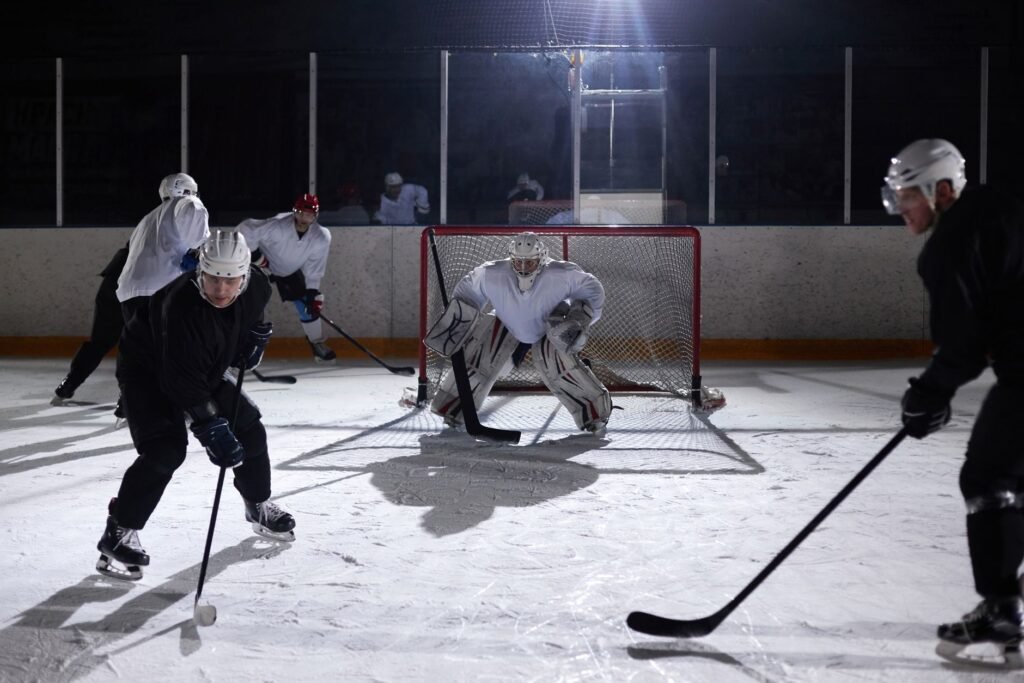
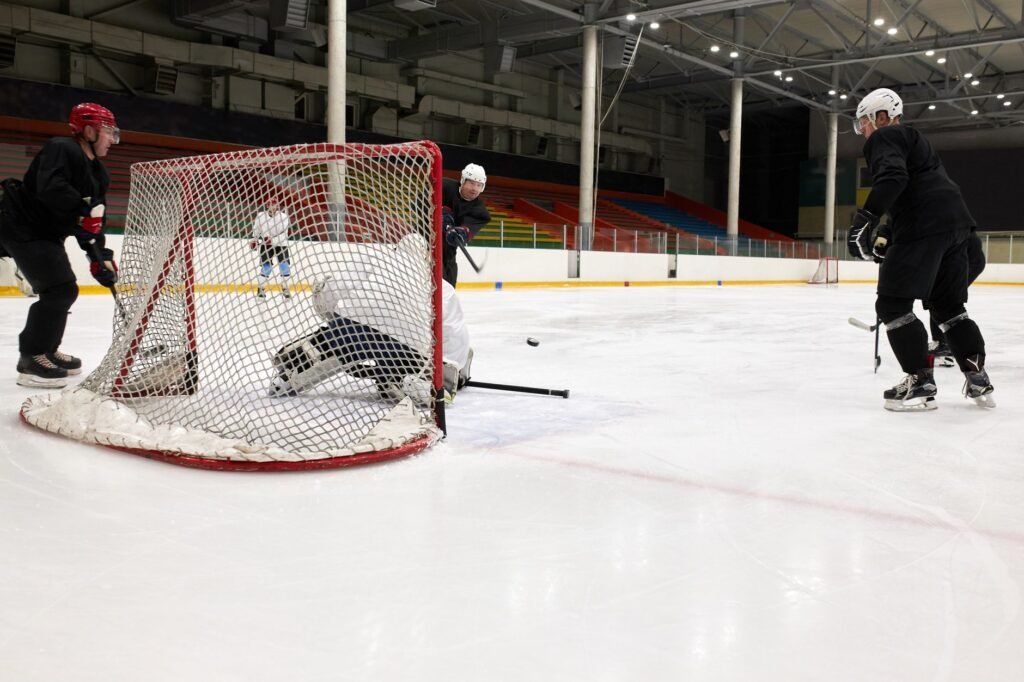
The puck carrier shows the defender or the goaltender one intention and executes another. The classic version is the forehand to backhand move used in shootouts: the shooter approaches on one side, draws the puck across the front of the net, and relies on the goalie having already pushed a pad out toward where the puck was going to be. Shoulder drops and head fakes do the same work with body language instead of the puck. The most economical version of all is the fake shot, a full windup that stops short, because a defender who has committed to blocking a shot has taken himself out of the play for a full second.
Other rink vocabulary that fills short slots
Hockey earns its keep in grids because the sport is full of short, vowel friendly words. ICING is the rule against shooting the puck from your own half all the way across the opposing goal line untouched. CREASE is the marked area in front of the net. ASST turns up as the abbreviation for an assist. ORR, three letters, is the Boston defenseman Bobby Orr, and ESPO is the standard grid shorthand for Phil Esposito. ZAMBONI covers the ice resurfacer. If the sports corner of your puzzle is refusing to open, running through this short list is often quicker than working the crossings.
What these entries have in common is that they are short and they are specific. A sport with a long vocabulary of three, four and five letter terms is a gift to a constructor trying to close an awkward corner, and hockey supplies more of them per page of rulebook than most games do. That is also why the same handful of names keeps reappearing: a surname of three or four letters attached to a genuinely famous player is a rare and reusable object, so once it enters the crossword vocabulary it tends to stay there for decades.
If five squares will not take DEKES
| Letters | Answer | What triggers it |
|---|---|---|
| 4 | DEKE | Singular hockey feint |
| 4 | FAKE | Generic sports wording, no sport named |
| 4 | JUKE | Football or basketball in the clue |
| 5 | DEKES | Plural or third person, hockey named |
| 5 | FAKES | Plural, sport unspecified |
| 5 | JUKES | Plural, gridiron or court sport |
The sport named in the clue is doing real work here, so do not treat these as interchangeable. A clue that says hockey has ruled out the juke family deliberately, and one that names no sport at all is usually steering you toward the plainer fake words.
Frequently asked questions
What is the four letter answer for hockey feint?
DEKE. The singular clue takes the singular entry, and the plural clue, hockey feints, adds the S to give DEKES.
Is JUKE ever right for a hockey clue?
Very rarely. Juke belongs to football and basketball, so a setter who names hockey in the clue is pointing at the deke family on purpose.
What does deking actually mean in hockey?
It means faking out an opponent with the puck or the body so they commit the wrong way. The word is a shortened form of decoy, which describes the tactic exactly.