The answer is FEN, three letters. BOG shares those three squares and appears almost as frequently, so if one of them fights a crossing, try the other before you doubt the rest of your grid. MIRE, SWAMP, MORASS and SLOUGH cover the longer slots.
Four wetland words that are not synonyms
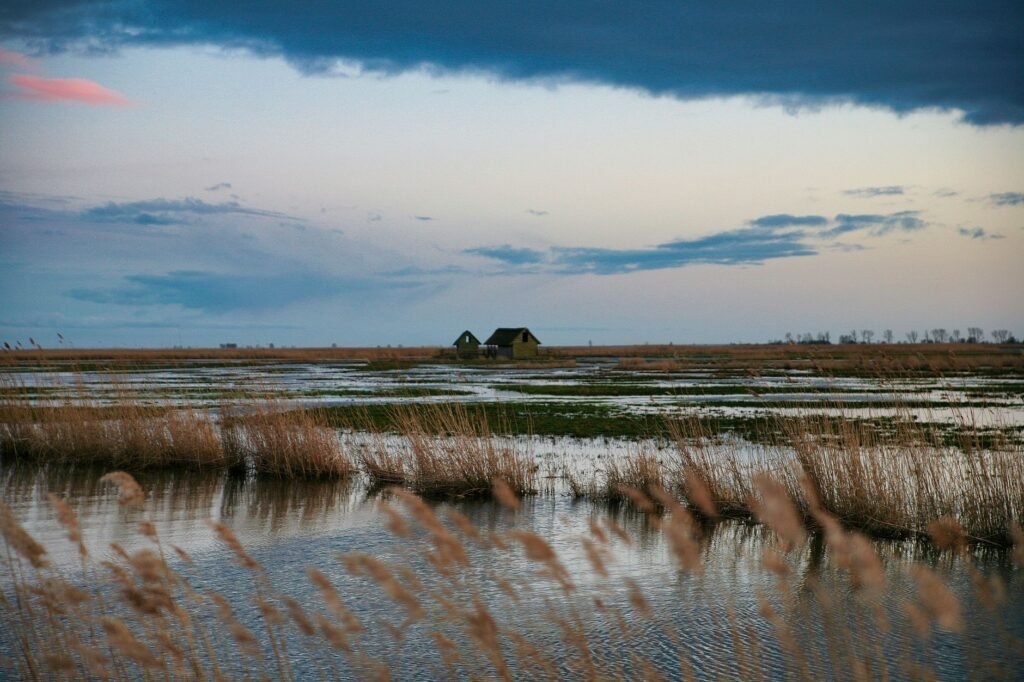
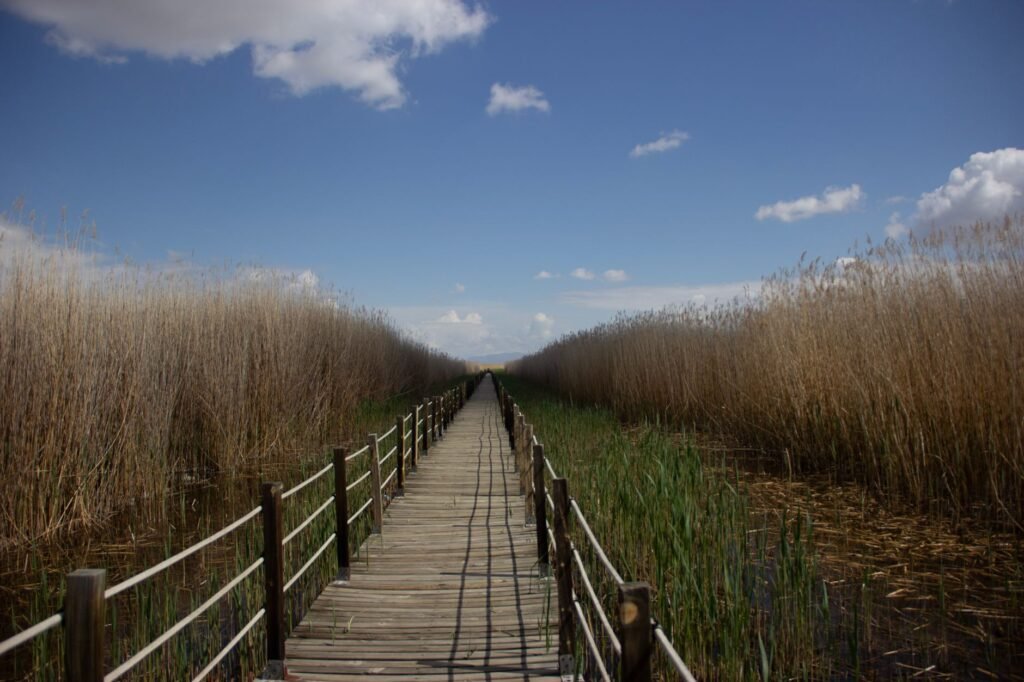
Ecologists separate wetlands by two things: where the water comes from, and what grows there. A marsh is dominated by soft stemmed plants, so reeds, grasses, sedges and cattails, with no tree canopy. A swamp is the wooded version, which is why cypress and mangrove landscapes are swamps rather than marshes.
The fen and bog split runs on water source instead. A fen is fed by groundwater or by streams that have already run over rock and soil, so the water arrives carrying dissolved minerals and the ground stays close to neutral. A bog gets its water from rainfall alone, which brings almost nothing dissolved with it, so bogs turn acidic and low in nutrients. That chemistry is why bogs accumulate peat and why the plants that thrive in them are specialists.
Wetland words, shortest to longest
Count the squares and read down:
| Letters | Answer | What triggers it |
|---|---|---|
| 3 | FEN | The default, often with a British surface |
| 3 | BOG | Peat, acid ground, or getting stuck |
| 4 | MIRE | Deep mud, often figurative |
| 4 | MOOR | British upland, boggy rather than marshy |
| 5 | SWAMP | Wetland with trees in it |
| 6 | MORASS | A tangle, usually figurative |
| 6 | SLOUGH | A backwater or muddy channel |
| 7 | WETLAND | The umbrella term |
| 8 | QUAGMIRE | Soft ground that swallows what steps on it |
The two words that are mostly used figuratively
MORASS and QUAGMIRE are real physical terms that have been almost entirely taken over by their metaphorical uses. Almost nobody points at wet ground and calls it a morass, but people call a badly run project one all the time. A setter who wants QUAGMIRE will usually write a clue about a mess or a situation nobody can get out of, not a clue about ducks.
MIRE sits in between, because it still gets used literally for deep mud while also living on in the phrase about being mired in something. If the clue has any hint of being stuck or bogged down, these three move up the list ahead of the plain landscape words.
BOG made the same journey without losing its literal life. The ground sense is still completely current, and so is the phrase about a project bogging down, which means BOG can answer a landscape clue and a delay clue without the setter having to signal anything unusual.
Slough is two words wearing one spelling
SLOUGH is the entry most likely to make you doubt yourself, because the spelling covers two unrelated words. One is the wetland noun, a muddy inlet or backwater, which is the one a marsh clue wants. The other is the verb meaning to shed, as a snake sloughs its skin, and it rhymes with rough. Crossword grids do not carry pronunciation, so both are available to a constructor and only the clue tells you which is meant.
Place names the grid may want instead
If your slot is long and the clue has a capital letter or a geographic hint, the answer may be a named location instead of a general term. The Everglades in southern Florida are the best known American example and are often described as a river of grass, because the water moves slowly across a vast shallow plain of sawgrass rather than sitting still. In eastern England, the flat drained farmland north of Cambridge is still called the Fens, which is the reason FEN reads as slightly British to American solvers even though the word is perfectly ordinary in both countries.
One more caution on the short slot. If you have three squares and neither FEN nor BOG will accept its crossings, check whether the clue is a name. Marsh is a surname, and it is the kind of thing a Saturday grid will use without warning you.
Frequently asked questions
Is the three letter answer for Marsh FEN or BOG?
Both are standard and both fit. FEN is the more common fill for a plain marsh clue, while BOG is favored when the clue mentions peat, acidity, or being stuck.
What is the difference between a marsh and a swamp?
A marsh is dominated by soft stemmed plants such as reeds, grasses and cattails, with no tree canopy. A swamp is a wetland with trees, which is why cypress and mangrove landscapes count as swamps.
What fits Marsh at six letters?
MORASS and SLOUGH both fit six squares. MORASS is usually clued figuratively as a mess, while SLOUGH points to a muddy backwater or channel.