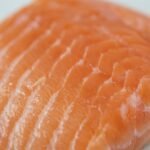

The answer is OPAH, four letters. Opah is the standard name for a large, round, brightly colored ocean fish, and NOAA Fisheries lists moonfish as its other name, so the clue simply swaps one name for another. During 2026 alone, Moonfish led to OPAH in the New York Times, the LA Times and USA Today.
The first fish found to run warm all the way through
In May 2015 the journal Science published research from NOAA Fisheries showing that the opah circulates heated blood throughout its body, the first fish known to do so. A few other fish, tuna and some sharks among them, warm certain parts of their bodies such as muscles, but their internal organs, hearts included, cool off quickly when they dive into cold depths. The opah keeps its core warm as well.
The heat comes from its large, red pectoral fins, which it flaps constantly like wings as it swims. Blood vessels carrying warm blood into the gills wind around the vessels carrying cold blood back to the body core, so heat is handed over instead of being lost to the water, and fatty tissue around the gills, heart and muscles adds insulation. The team, whose lead author was NOAA fisheries biologist Nicholas Wegner, found an average muscle temperature about 5 degrees Celsius above the surrounding water, roughly 9 degrees Fahrenheit, while the fish swam about 150 to 1,000 feet below the surface.
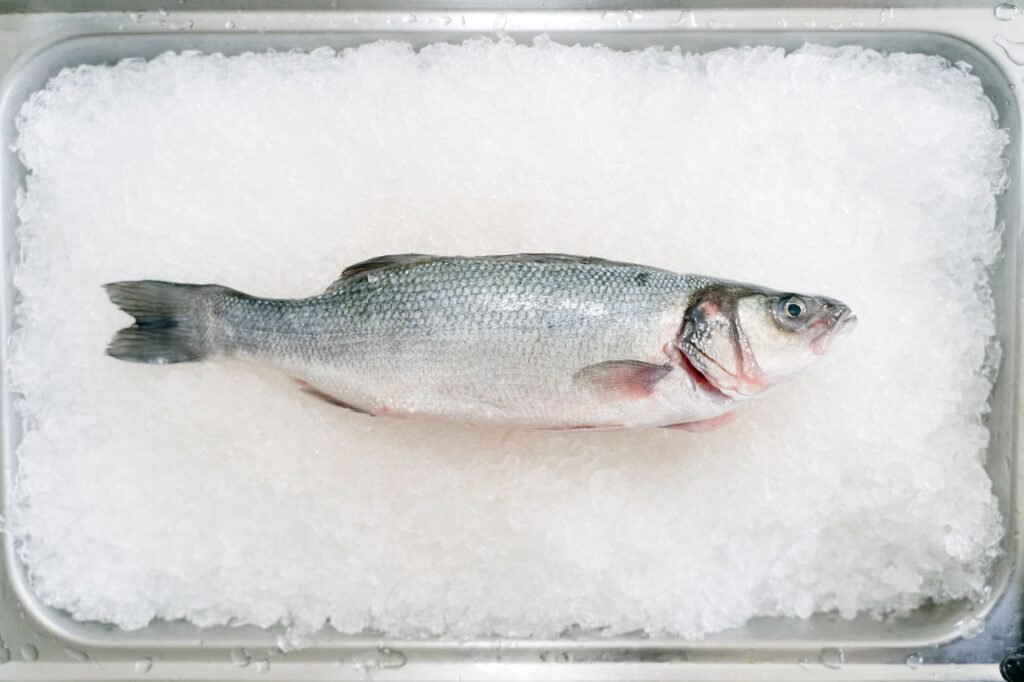
What an opah looks like up close
NOAA describes a round, flat body that is silvery gray, shading to rose red toward the belly and dotted with white spots, with red fins, a red mouth and large eyes ringed in gold. Adults average about 100 pounds and 3 feet across, roughly the size of a large automobile tire. They hunt smaller fish, squid and krill at middle depths in the open ocean.
That mix of color and shape gives clue writers plenty to work with. Recent grids have described it as a brightly hued fish, a colorful food fish and a shimmery sushi fish, and the New York Times once went with a sea creature also known as a redfin ocean pan. Several puzzles skip the looks and go straight for the science with only known warm-blooded fish. Every one of those lands on the same four squares.
Moonfish wordings sorted by length
The fish barely changes from grid to grid, but the wording does, and one neighboring clue needs a different fish entirely:
| Letters | Answer | What the clue says |
|---|---|---|
| 4 | OPAH | Moonfish, the plain version |
| 4 | OPAH | Moonfish or sunfish |
| 4 | OPAH | Kingfish, in some British grids |
| 4 | OPAH | Only known warm-blooded fish |
| 5 | OPAHS | Any plural wording |
| 4 | MOLA | Ocean sunfish, a different fish |
Why sunfish can point two ways
The opah’s list of common names includes sunfish, and reference sources add a warning not to confuse it with the ocean sunfish. That warning is worth taking in a grid. The ocean sunfish is a separate fish whose English name refers to its habit of basking at the surface, and in Catalan, Dutch, French, German, Italian, Spanish and several other languages its common name means moon fish.
So the two names cross over in both directions. In crosswords the ocean sunfish is usually MOLA, which is Latin for millstone, a nod to its gray color, rough texture and rounded body. OPAH and MOLA do not overlap anywhere, O against M up front and H against A at the tail, so any crossing settles which fish you have. When the clue names the moonfish, even with sunfish alongside it, write OPAH; when it says ocean sunfish, switch.
Where opah is caught and eaten
NOAA Fisheries notes that in Hawaii opah are caught on longlines set deep below the surface to target bigeye tuna, and that off California they are taken incidentally by the drift gillnet fishery that targets swordfish. The agency suggests it as a substitute in tuna or swordfish recipes.
The Hawaiian connection feeds the clues too. One recent Universal puzzle asked for a fish in Hawaiian (not Greek!) cuisine, which reads oddly until you notice that dropping the H leaves OPA.