
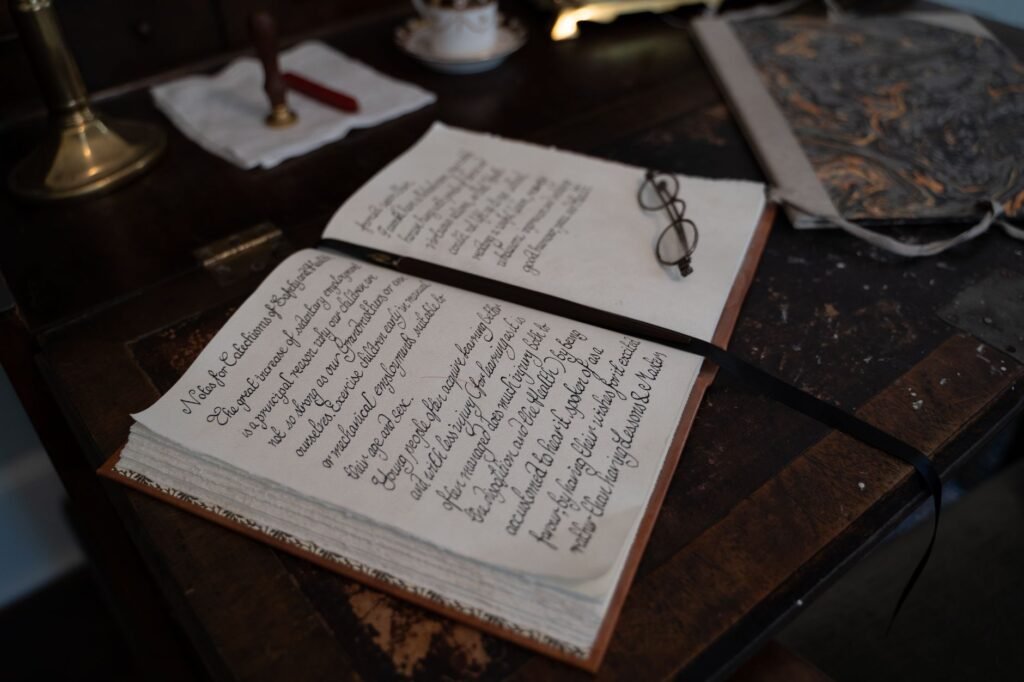
The answer is BARD, four letters. Nothing else has held that slot as reliably for a bare poet clue, and crosswords have leaned on it since they began. At five squares the answer is usually ODIST, and beyond that the clue is normally asking for a specific poet rather than for the word itself.
Bard was a job before it was a compliment
A bard was originally a professional poet in the Celtic world, attached to a court or a family and paid to compose verse that preserved lineage and praised the patron. The role was formal and trained rather than romantic. The word later loosened into a general term for any poet, and loosened again into the slightly grand register it now carries, which is why calling a living writer a bard sounds like a joke.
Capitalized, the Bard means Shakespeare specifically, and English grids rely on that shorthand heavily. A clue reading The Bard is almost never asking for a general word.
The bardic tradition was strongest in Ireland, Wales and Scotland, and Wales still holds an annual festival at which a chair is awarded for poetry written in Welsh. That unbroken line is the reason the word never quite became a historical term.
Odist is a word that lives in grids
ODIST means a writer of odes and it exists almost entirely for the convenience of puzzle constructors. It is a legitimate formation and appears in dictionaries, but you will go a long way in ordinary reading without meeting it. Learn it anyway, because five letters with a D in the middle and a poetry clue is a pattern you will see again.
The same applies to RHYMER and VERSIFIER, both of which are real and both of which carry a faint dismissiveness. Calling someone a versifier suggests they produce verse rather than poetry, and a setter with an ear will sometimes signal that through the clue.

When the slot is longer than four
Count first, then decide whether the clue wants the category word or a person:
| Letters | Answer | What triggers it |
|---|---|---|
| 3 | POE | Edgar Allan Poe, the shortest usable name |
| 4 | BARD | The default for the bare clue |
| 4 | OVID | The Roman, a grid regular |
| 4 | NASH | Ogden Nash, for light verse clues |
| 5 | ODIST | The clue mentions odes |
| 5 | KEATS | English Romantic |
| 5 | YEATS | Irish, often clued by nationality |
| 5 | AUDEN | Twentieth century, English born |
| 5 | DANTE | Italian, the Divine Comedy |
| 6 | RHYMER | A slightly dismissive term |
| 8 | LAUREATE | The clue mentions an official post |
| 9 | VERSIFIER | Long slot, mildly disparaging |
KEATS, YEATS and DANTE are five letters each and two of them differ by a single letter, so a poetry clue with five squares deserves a crossing before you write anything at all.
What the laureate title actually is
If the clue mentions an official appointment, the answer is LAUREATE at eight squares. In the United States the post is held at the Library of Congress and the full title is Poet Laureate Consultant in Poetry, which is longer than any grid will ever want. The United Kingdom has its own long running Poet Laureate appointment. Laureate traces back to the laurel wreath awarded as a mark of honor in the classical world, the same root sitting behind the laurels people rest on.
Reading the clue for a nationality hint
The most efficient signal in a poet clue is a nationality or a period, because it cuts a list of hundreds to a handful. Roman sends you to OVID, VIRGIL, HORACE and CATULLUS. Irish sends you to YEATS and HEANEY. Japanese sends you to BASHO and to the haiku vocabulary around it. Spanish sends you to LORCA. If a clue gives you a nationality and a square count together it has effectively told you the answer, and the only remaining work is recognizing the name when you see it spelled out by the crossings.
A period hint does the same job. Romantic sends you to KEATS, BYRON and SHELLEY. Beat sends you to GINSBERG and CORSO. The two groups share no members, and mixing them up costs you a whole corner.
Frequently asked questions
What is the usual four letter answer for Poet?
BARD, which is the standard fill for a bare poet clue. OVID and NASH also fit four squares when the clue points at a specific writer.
What does ODIST mean in crosswords?
ODIST means a writer of odes. It is a real dictionary word that appears far more often in grids than in ordinary reading, so it is worth memorizing as a five letter option.
When does a Poet clue want LAUREATE?
When the clue mentions an official appointment or a national post, and when you have eight squares. The word comes from the classical laurel wreath awarded as an honor.