The answer is AGATE, five letters. Agate is a banded form of chalcedony, the fine-grained branch of the quartz family, and it is the standard five-letter fill for this clue. Four squares suggest ONYX or SARD, six take JASPER, and eight take AMETHYST.
One mineral, two very different looks
Quartz is a crystalline form of silica, and gemologists generally divide it into two groups. The transparent crystalline varieties grow as crystals large enough to see and cut: amethyst, citrine, smoky quartz, rose quartz and colorless rock crystal. The chalcedonies are microcrystalline, built from crystals too small to see, and they range from translucent to opaque: carnelian, sard, chrysoprase, onyx, agate and jasper.
Crossword clues use quartz variety for both groups without saying which, and the two groups produce very different word shapes. The crystalline side supplies long names such as AMETHYST and CAIRNGORM, while the chalcedony side supplies most of the short fills, including AGATE, ONYX, SARD and JASPER. The length of the slot is often a hint about the family.
Agate took its name from a Sicilian river
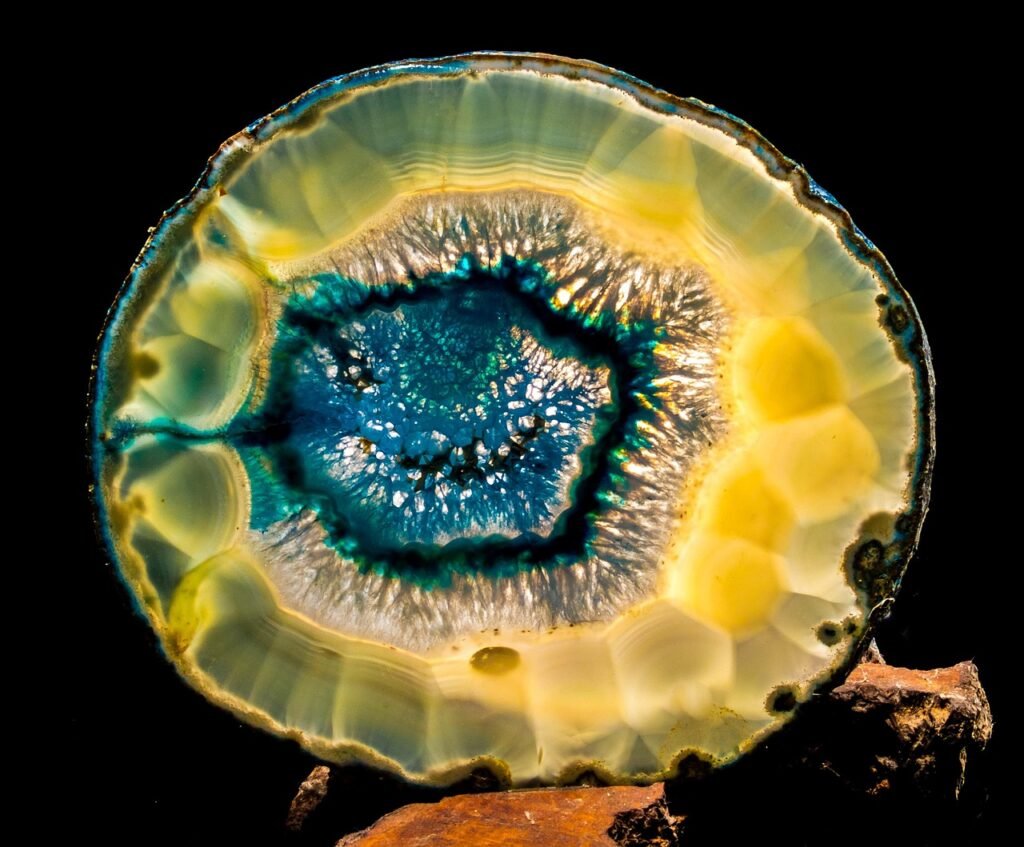
The Greek naturalist Theophrastus wrote about agate more than two thousand years ago, and the stone was named for the River Achates in Sicily, where it was found. Agate is a banded variety of fibrous chalcedony, with alternating bands of different colors. In many agates those bands follow the walls of the cavity the stone formed in, which gives the curved, concentric pattern people picture.
ONYX is the traditional name for agate whose bands run in straight, level lines instead. That banding is the practical difference, and it is a handy one for a solver: both are chalcedony, both are banded, and a clue that stresses layers can mean either. The square count, five against four, separates them faster than any mineralogy.
The purple one was meant to keep you sober
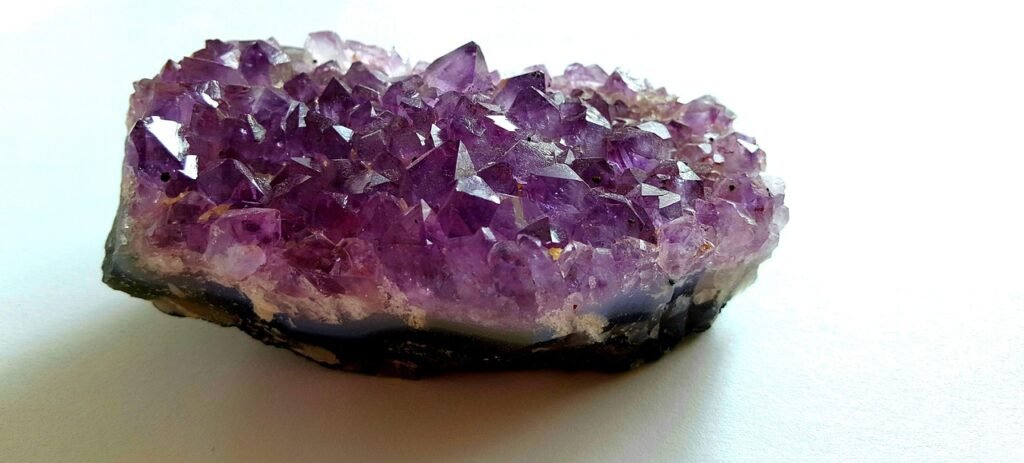
AMETHYST takes eight squares. Its Greek source, amethystos, means not drunken, from a-, not, and a verb meaning to make drunk that comes from methys, wine. The stone had a reputation in the ancient world for preventing drunkenness, perhaps suggested by its wine-like color.
CAIRNGORM, at nine, is a variety of smoky quartz found in the Cairngorm Mountains of Scotland. Smoky quartz gets its color when natural gamma radiation from the surrounding rock activates color centers around aluminum impurities in the crystal. TIGERSEYE, another nine, is golden to red-brown and owes its silky shimmer to quartz grown together with altered mineral fibers.
Quartz fills sorted by square count
Find your square count below, from ONYX at four to TIGERSEYE at nine:
| Letters | Answer | What triggers it |
|---|---|---|
| 4 | ONYX | Straight, parallel banding |
| 4 | SARD | Reddish brown to dark chalcedony |
| 5 | AGATE | The default banded stone |
| 5 | PRASE | Leek green |
| 6 | JASPER | Opaque, often red from iron |
| 8 | AMETHYST | Purple crystal |
| 9 | CAIRNGORM | Smoky quartz from the Scottish mountains |
| 9 | CARNELIAN | Orange to red chalcedony |
| 9 | TIGERSEYE | Golden with a silky shimmer |
JASPER, alone at six, is the odd one in the chalcedony group: an opaque stone made mostly of very fine-grained quartz or chalcedony, with other minerals supplying its colors, and its common reddish tone comes from iron. PRASE, at five, is leek green, named after the Greek word for leek, and it becomes the fallback when AGATE will not fit a five-square slot.
OPAL fits four squares but is not quartz
Some answer databases list OPAL against Quartz variety, and the appeal is obvious: four letters, two vowels, a gemstone made of silica. Mineralogically it does not belong. Opal is a hydrated, amorphous form of silica, and because it lacks a crystal structure it is classed as a mineraloid rather than a mineral, unlike the crystalline forms of silica such as quartz.
Treat OPAL as a last resort. If your four squares resist ONYX and SARD, test it against the crossings before assuming a mistake elsewhere. SARD deserves a moment of its own: it is the darker, generally harder relative of carnelian, both colored by iron oxide, and Pliny the Elder said its name came from the city of Sardis in Lydia.