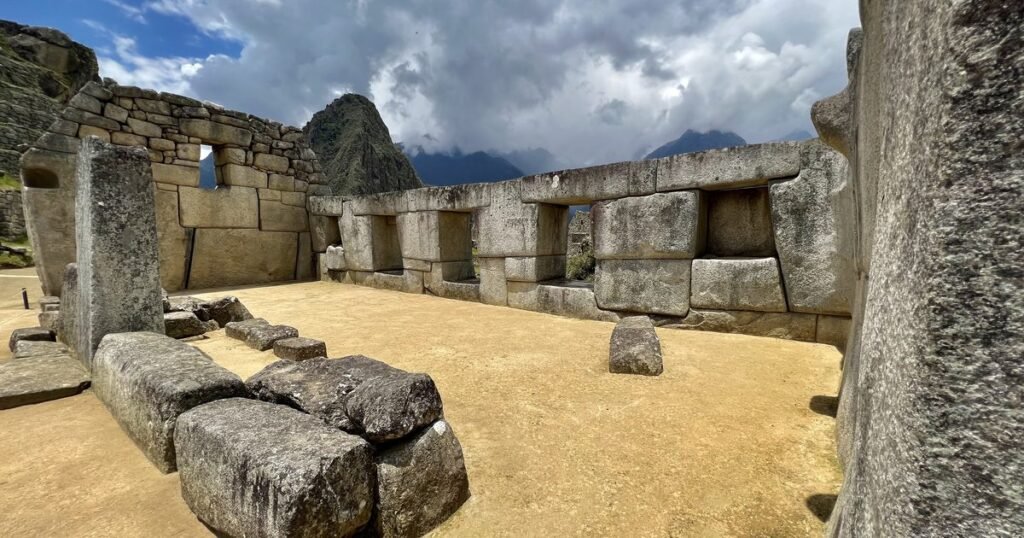
INCA, four letters, answers the Quechua speaker crossword clue. Quechua was the working language of the Inca state and is still spoken across the Andes today. Longer slots take ANDEAN at six or PERUVIAN at eight, depending on whether the surface reads historical or modern.
An office language before it was a mother tongue
Quechua did not spread the way most languages do. It traveled as an instrument of administration. The Inca state, which called itself Tawantinsuyu, governed a strip of the Andes running from what is now Colombia down into central Chile, and it needed one language in which officials, tax records and orders could move. Quechua already existed in the central Andes before the Inca rose, but the empire carried it across a span it would never have reached on its own.
There was no alphabet involved. Record keeping ran on khipu, bundles of knotted cords that encoded numbers reliably and probably a good deal more that nobody has fully recovered. An empire of that size was administered through knotted string and trained memory rather than through writing.
What kept the language alive afterward was the same practicality that spread it. Spanish colonial administrators and missionaries found a functioning regional lingua franca already in place and kept using it, compiling grammars and dictionaries to preach with. Languages attached to defeated states usually shrink quickly. This one was too useful to the new authorities to abandon, and it is still spoken by millions while the empire itself lasted barely a century.
The English words that came out of the Andes
A surprising number of ordinary English nouns passed through Quechua on their way in, nearly all of them via Spanish. Condor, puma, llama, alpaca, vicuna, coca, quinoa, guano and pampa all belong to that group. So does jerky, which traces back to charqui, meaning dried meat.
This matters at the grid, because a clue that mentions Andean origin is often pointing at one of those loanwords rather than at the people. Quinine is a related case, taken from the bark of the cinchona tree and named through the same channel. When the surface reads like a vocabulary question instead of a history question, count the squares and work down that list first.
Slot lengths and what fits them
Read the row that matches your square count, then check the right hand column against the tone of the clue.
| Squares | Answer | Why the clue chose it |
|---|---|---|
| 4 | INCA | The default, covering people and empire at once |
| 5 | LLAMA | When the clue is after a loanword, not a people |
| 6 | ANDEAN | Geographic framing rather than historical |
| 6 | AYMARA | The neighboring language, when the clue distances itself |
| 6 | KICHWA | The Ecuadorian spelling, uncommon |
| 8 | PERUVIAN | Modern framing in a long slot |
| 8 | BOLIVIAN | Same framing, rarer still |

Which half of the clue you were handed
Surfaces pointing at INCA name a place or a monument: Cuzco native, Machu Picchu builder, Andean of old. The phrase of old is close to a guarantee, because it tells you the constructor wants the historical people and not a present day nationality. A surface naming a modern country wants the demonym instead.
Watch whether you were asked for a person or for a modifier. A clue seeking the adjective can want INCAN at five letters, which solvers who have already written INCA will resist for longer than they should. And if the clue asks for the language itself rather than a speaker of it, the answer is QUECHUA at seven, sitting right there in the clue you were reading.