SAGE, four letters, answers the pungent herb crossword clue. It is resinous, faintly bitter and unmistakable in cooking, which suits the word pungent exactly. THYME and BASIL fill five-letter slots, OREGANO fills seven, and ROSEMARY or MARJORAM cover the longest openings in the grid.
Sage belongs to the family that runs your spice rack
Common sage is Salvia officinalis, and Salvia is the largest genus in Lamiaceae, the mint family. Look at what else is in there: mint itself, basil, thyme, oregano, marjoram, savory, lemon balm, lavender and rosemary. An unreasonable share of everything in a kitchen herb cabinet comes from one branch of the plant kingdom.
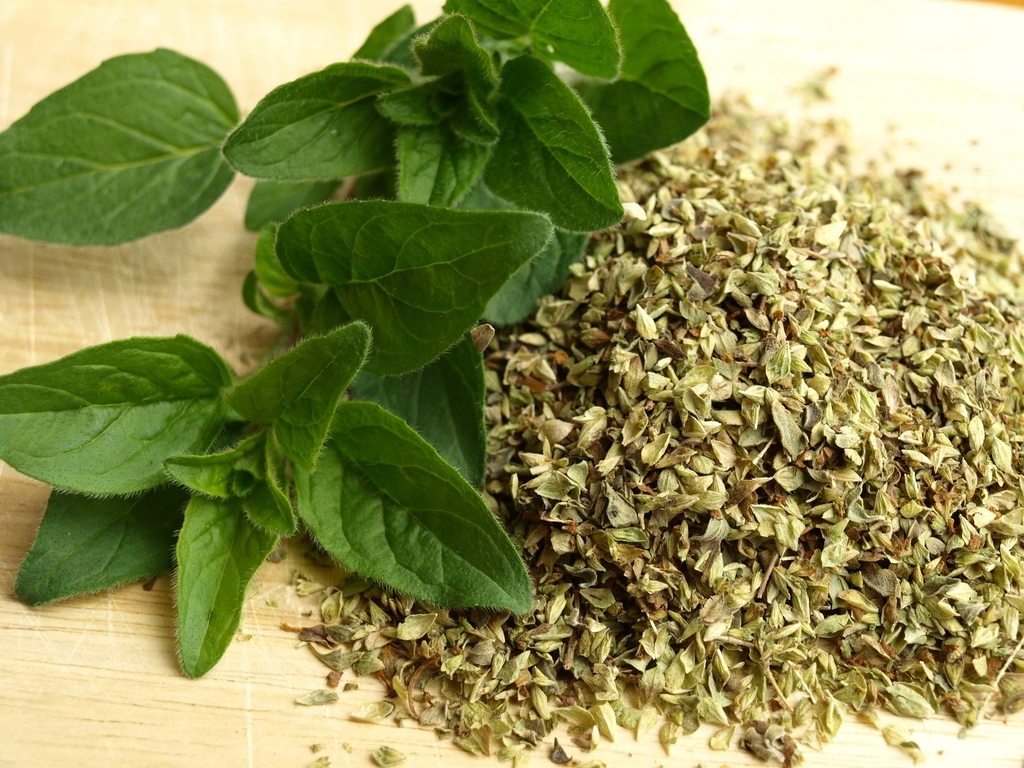
That concentration is not a coincidence. Members of the family store their aromatic oils in tiny glands sitting on the leaf surface rather than locked inside the tissue, which is why brushing past one releases scent immediately and why a leaf rubbed between two fingers smells like the finished dish. Plants that advertise themselves that cheaply were always going to be the ones people cooked with. The family also shares a physical tell: the stems are square in cross-section, and you can feel the corners by rolling one between your fingers.
Rosemary is the recent surprise. It spent a long time in its own genus as Rosmarinus officinalis, and then genetic work showed it sat squarely inside Salvia, so it was folded in and is now written Salvia rosmarinus. Botanically speaking, rosemary is a sage.

Two plant families, two behaviors in the kitchen
Not everything on the crossword herb list belongs to that family, and the split explains why the answers behave so differently once you leave the grid. Parsley, dill, cilantro, chervil and fennel come from Apiaceae, the carrot family, and chives are an onion. Those are the soft, leafy, high-moisture herbs.
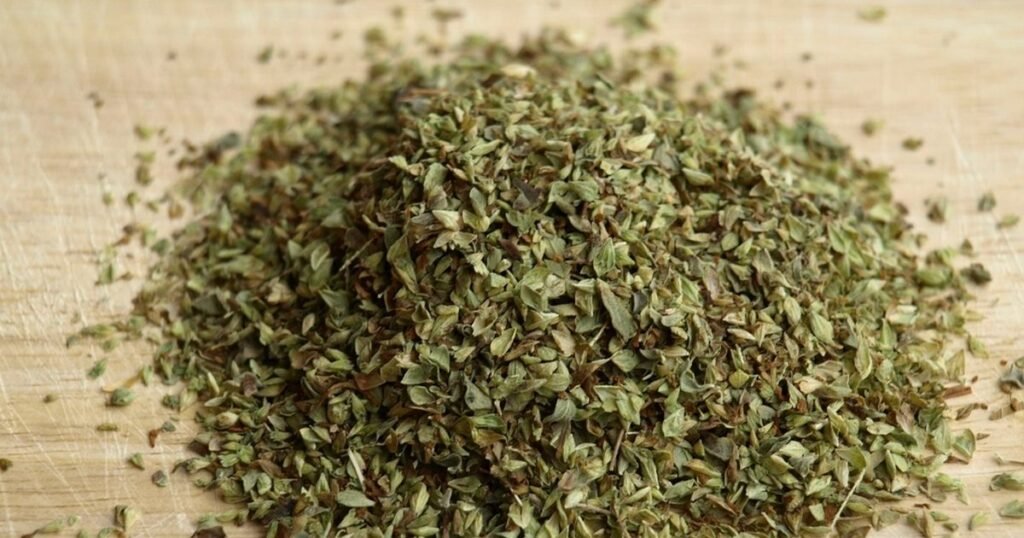
The practical difference shows up in a jar. The woody Mediterranean members, sage and rosemary and thyme and oregano, keep most of their character when dried, because their aromatic compounds are relatively stable and their leaves are tough and low in water to begin with. The soft ones give up almost everything. Dried basil, dried parsley and dried cilantro are faint ghosts of the fresh leaf, which is why recipes that want them nearly always specify fresh and why dried herbs go into a pot early while fresh ones go in at the very end.
Answers by square count
Herb entries cluster between four and eight squares. Find your row, then glance at the note on the right, because several of these have a second life the clue may be exploiting.
| Length | Fill | Note |
|---|---|---|
| 4 | SAGE | The default, also a wise person |
| 4 | DILL | Sharp, tied to pickles |
| 4 | MINT | Also a coin factory and a condition grade |
| 5 | THYME | A homophone of time |
| 5 | BASIL | Also a man’s given name |
| 6 | SAVORY | Also an ordinary adjective about food |
| 7 | OREGANO | Strong, associated with Italian cooking |
| 8 | ROSEMARY | Also a woman’s given name |
| 8 | MARJORAM | The milder relative of oregano |
The double meanings constructors are hiding
Look again at that right hand column. Nearly every short herb carries a second sense, and that is not luck. Constructors favor this category because it lets them write a surface that reads as cooking and answers as something else, or the reverse.
The standard late-week move is to clue a herb entirely from its non-herb side. Wise one, coin factory, homophone of a fourth dimension, a name from a Fawlty Towers cast list. A solver who has locked onto the culinary reading will sit on the wrong four letters for a long time. The reverse also happens: a plain herb clue drops into a corner whose crossings were built around the other meaning.
So if the crossings will not accept your herb, do not assume the crossings are wrong. Reread the clue and ask what else the word could be doing, because with this particular category the answer is usually something.