
The answer is CREDO, five letters. It is Latin for I believe, the opening word of the creed recited in church, and it now names any short statement of principle a person actually runs their life by. MOTTO and ETHOS are the same length and fit the same definition.
Credo is a verb doing a noun’s job
In Latin, credo is not a thing but an action: the first person singular of credere, to believe. It became a noun in English through liturgy. The creed spoken in Latin services opens with that word, so the text as a whole came to be called the Credo, and from there the word loosened into general use for any declared set of beliefs.
Creed reached English by the same root, through Old English, and it stayed close to religion. Credo drifted the other way, toward the secular and the personal. A company publishes a credo. A congregation recites a creed. The split is untidy and fairly recent, but puzzles follow it: a surface mentioning faith usually wants CREED, while a surface mentioning somebody’s rules for living wants CREDO.
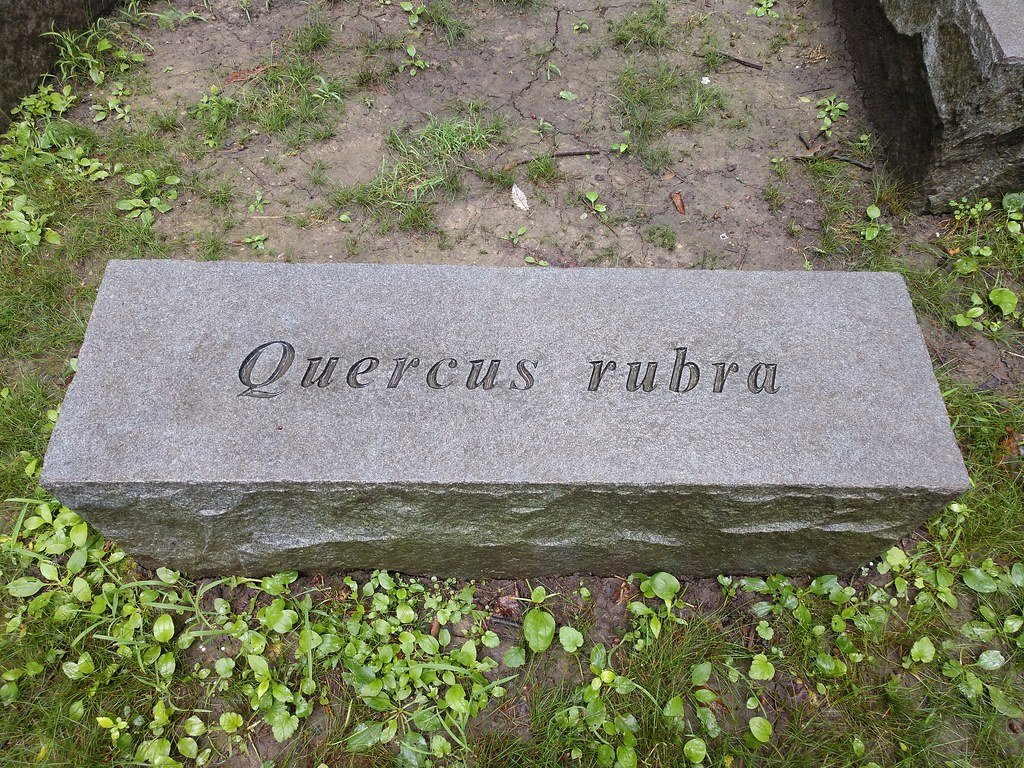
Where Latin mottoes still live in American life
This clue pulls hard toward Latin, because the mottoes still circulating in American life are mostly Latin and mostly fixed. Four places keep them alive.
- Money. E pluribus unum appears on the coinage, and the reverse of the Great Seal supplies Annuit coeptis and Novus ordo seclorum.
- The armed services. Semper fidelis for the Marine Corps, Semper paratus for the Coast Guard.
- University seals. Veritas at Harvard, Lux et veritas at Yale, Mens et manus at MIT.
- State mottoes. Excelsior for New York, and Eureka for California, which is Greek rather than Latin and is the one that trips people up.
If the surface names a seal, a coin, a service branch or a campus, the puzzle is pointing at a fixed phrase rather than a common noun.
Why those phrases are so short
A motto has to survive being carved, stamped, cast and embroidered, which rules out anything with a subordinate clause. Latin suits the job because it drops articles and can carry a full sentence in two or three words. Semper fidelis needs two where always faithful to the corps needs five.
That pressure also explains why mottoes outlast the institutions that adopt them. A phrase small enough to fit on a coin is small enough to be copied onto everything else, and past a certain point it stops being read as language at all and starts working as a mark.
Picking between the five letter candidates
Five of the plausible answers are the same length, so the definition cannot settle it and the surface has to.
| Letters | Answer | What the surface will mention |
|---|---|---|
| 5 | CREDO | Belief, conviction, a personal rule |
| 5 | MOTTO | A seal, a state, a school, a crest |
| 5 | ETHOS | Character, culture, an organisation |
| 5 | TENET | One principle among several, doctrine |
| 5 | MAXIM | A saying with advice packed inside |
| 4 | RULE | Terse slots |
| 6 | DICTUM | A pronouncement, handed down |
| 7 | PRECEPT | Instruction carrying moral weight |
| 9 | PRINCIPLE | The long, plain option |
The useful habit is reading the noun the clue attaches itself to rather than the definition. Crest, seal, state and school attach to MOTTO. Company, team and culture attach to ETHOS. Faith and conviction attach to CREDO. A plural clue thins the field on its own, since MOTTOES, MAXIMS and TENETS take a plural comfortably while CREDO rarely does.