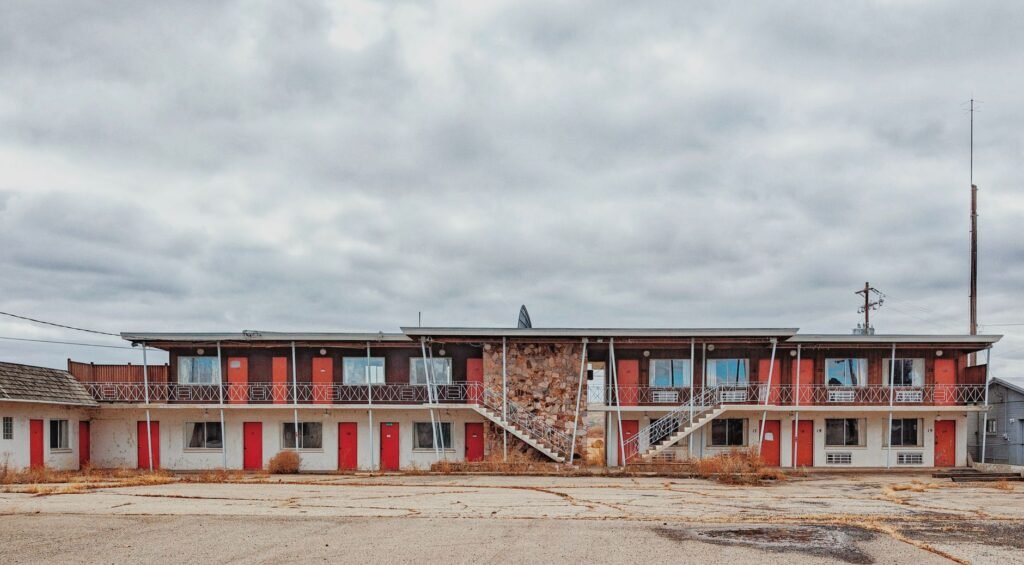
The main difference is layout, since a motel’s rooms open directly onto an outdoor parking lot or walkway, while a hotel’s rooms open onto interior hallways reached through a lobby. Motels were built for drivers making a stop, so they are usually smaller, simpler and close to highways, while hotels offer more services.
Motel started as short for motor hotel
The word explains the origin. Motel is a blend of motor and hotel, coined for lodging built around the car. The Milestone Mo-Tel in San Luis Obispo, California, which opened in 1925 on the route between Los Angeles and San Francisco, is widely credited as the first to use the name.
Before that, drivers on long trips often camped or stayed in basic auto camps with shared bathrooms. As highways spread across the country, roadside lodging with parking at the door became a fixture of American travel. Hotels are much older and grew up in city centers, near train stations and in resort towns, where guests arrived on foot or by rail.
Hotel and motel features side by side
| Feature | Motel | Hotel |
|---|---|---|
| Room access | Door opens outside, onto parking or a walkway | Door opens onto an indoor hallway |
| Building | Usually one or two stories | Often several stories with elevators |
| Parking | A few steps from your door | Garage, lot or valet, away from the room |
| Location | Highways, interchanges, small towns | Downtowns, airports, resorts, suburbs |
| Services | Front office, sometimes a pool or breakfast | Often restaurants, gyms, room service, meeting space |
| Typical stay | A night or two on the road | Anything from one night to weeks |
Treat these as tendencies rather than strict definitions. The name on the sign does not always match the building, so read the listing and look at the photos before you book.
Room doors that face the parking lot
The exterior corridor is the defining motel trait, and it cuts both ways. Parking a few steps from your door makes it easy to unload bags, kids or a pet, and you can come and go without crossing a lobby. On a road trip, that convenience is the whole point.
The trade-off is exposure. Anyone in the lot can walk up to your door, noise from cars and other guests carries, and nothing stands between your room and the outside. Many travelers prefer an interior corridor for that reason, especially when staying alone.
Newer roadside chains often split the difference, with interior hallways and a small lobby while keeping the easy highway location and simple amenities of a classic motel.
Amenities, staffing and service levels
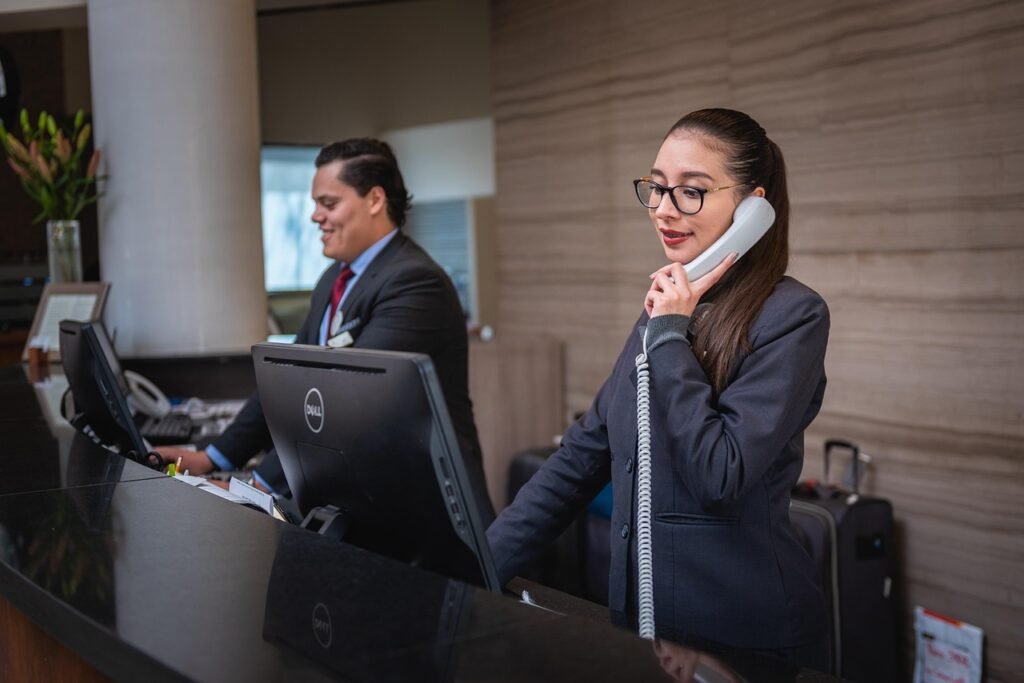
Hotels range from basic to luxury, but most offer more on site. Depending on the property, that can mean a front desk staffed around the clock, restaurants and bars, fitness rooms, pools, business centers, room service, concierge help and meeting space.
Motels keep things simple. You usually get a bed, a bathroom, a TV, and perhaps a small fridge, a coffee maker, a pool or a basic breakfast. The office at a small independent motel may keep limited hours, so check what happens if you arrive late.
Rates for both swing with location, season and local events, so compare current prices on the property’s own site or a booking site rather than assuming one type always costs less.
Motor inns, extended stay and other labels in between
Several lodging types sit between the two classic forms.
- Motor inns and motor lodges, an older name for larger motels, often with two floors and a restaurant or pool.
- Inns, a loose label used by everything from small historic lodgings to chain hotels.
- Extended stay hotels, with kitchens or kitchenettes for guests staying a week or longer.
- Boutique hotels, smaller properties focused on design and personal service, including some restored roadside motels.
- Resorts, which bundle lodging with recreation such as beaches, golf or ski access.
When booking, look past the name and check the listing for interior or exterior corridors, parking, and front desk hours. Those details tell you more about the stay than the word on the sign.
Frequently asked questions
Are motels safe to stay in?
Many are, but safety depends on the property. Rooms that open onto a parking lot are more exposed, so read recent reviews, ask for a room near the office or on an upper floor, and use every lock. Choose a well lit property and park close to your door.
Is an inn a hotel or a motel?
It can be either. Inn is a loose label used by small historic lodgings, bed and breakfasts and large chain hotels alike. Check the listing for whether rooms open onto indoor hallways or outdoor walkways, and what services are on site, rather than going by the name.
Can you stay at a motel for a long time?
Some motels welcome longer stays and offer weekly rates, while others cap how many nights a guest can book. Extended stay hotels are built for longer visits, with kitchens and laundry. Policies vary by property, so ask the front office directly before you plan a long stay.