
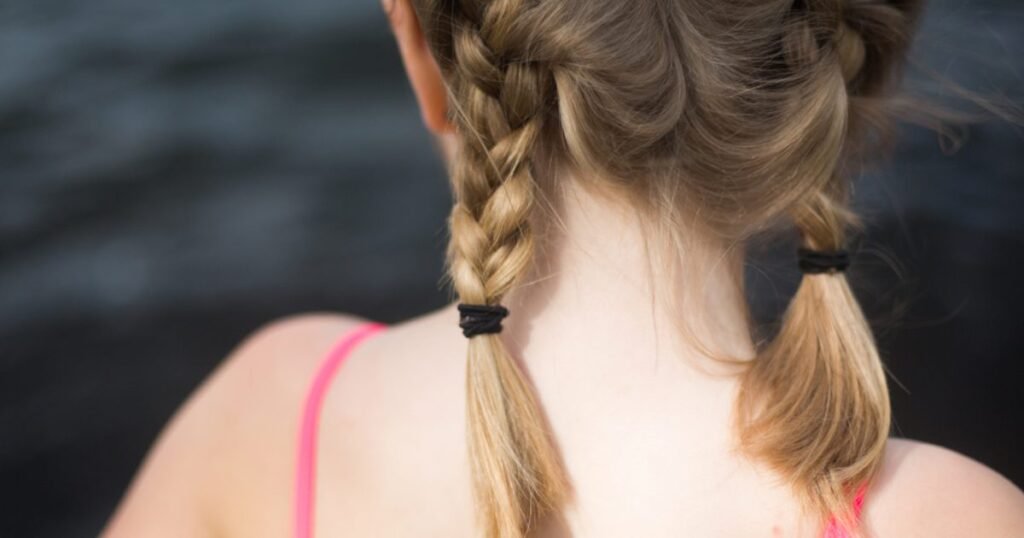
Pick the style from your dress neckline first and your hair texture second. Length comes a distant third. A look that argues with the neckline reads wrong in every photograph taken that night, no matter how cleanly it was executed.
Match the neckline before you pick anything else
| Neckline | Works | Avoid |
|---|---|---|
| Halter or high neck | Updo, high ponytail, sleek bun | Loose waves worn down |
| Strapless | Anything, this is the flexible one | Nothing in particular |
| Off the shoulder | Half up, side sweep, low bun | Very high updos |
| Deep V | Hair down or half up | Tightly slicked back looks |
| Illusion or lace | Updo, so the detail is visible | Hair covering the neckline |
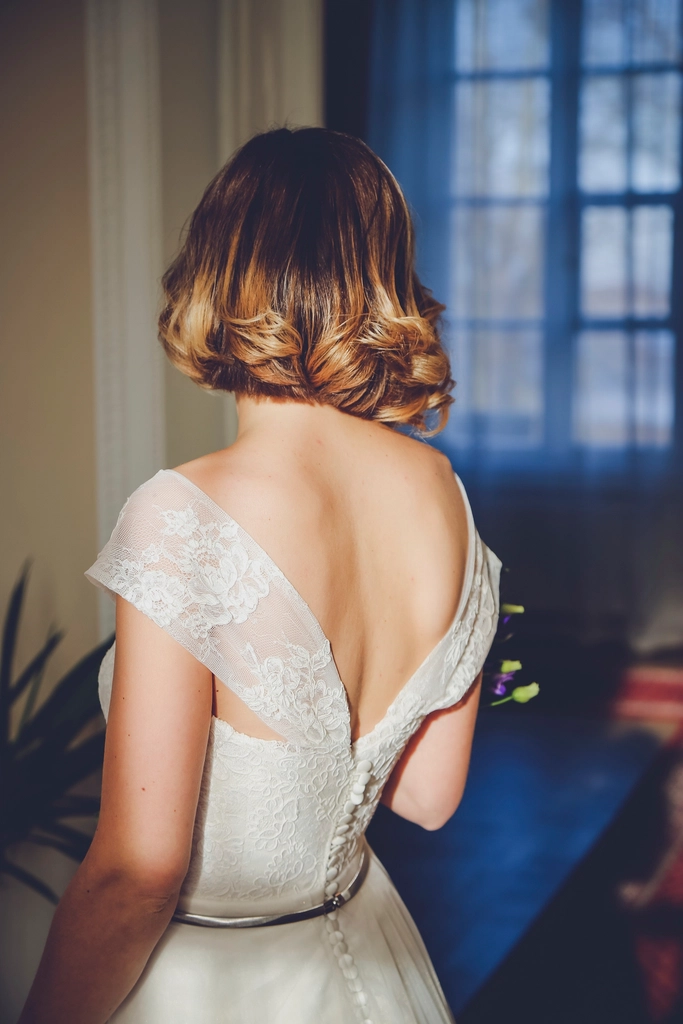
Texture decides more than length does
Two people with identical hair length get completely different results from the same tutorial, and the variable is texture.
- Fine and straight. Curl drops fast and pins slide. Work in smaller sections than the tutorial shows and add grip with a light texture spray before you start.
- Thick and coarse. Holds shape well but is heavy, so updos migrate downward over the evening. Anchor the base with an elastic and use more pins than feels reasonable.
- Curly or coily. Styles built around the existing pattern hold far better than styles that fight it. Heavy smoothing products before pinning make the hair slick and are the usual reason pins travel.
- Long and fine together. The worst combination for updos, because the weight pulls against the grip. Half up styles carry this hair much better than a full updo will.
Difficulty, honestly rated
- Beginner. Half up with a crown twist. Sleek low ponytail with one strand wrapped over the elastic. Loose waves with a single side pinned back.
- Intermediate. Low bun with face framing pieces left out. Dutch braid running into a ponytail. Twisted half up with pinned curls.
- Advanced. Braided updos, fishtail crowns, and anything that needs a second mirror and a second pair of hands.
Curl holds only if it cools in place
This is the step most people skip and it decides whether the style is still there at nine o’clock. Hair sets its shape as it cools, not while it is hot. So after each section comes off the iron, roll it up against the head, clip it, and leave it. Release the whole head only once everything has gone cool to the touch, then break the curls up with your fingers rather than a brush. A curl that was stretched out by its own weight while still warm has already lost most of its life before the night starts.
Pins have to anchor into something
A bobby pin grips by tension between its two arms, which means it needs hair on both sides to press against. Pushed straight into a loose section, it has nothing to hold and works its way out within an hour. Cross two pins in an X through the same spot and they brace against each other instead. The usual stylist advice is to keep the ridged arm against the scalp, since the waves in it bite rather than slide. Build any updo on a secured base, normally a small elastic hidden underneath, so the pins are fastening the style to something solid.
Humidity and camera flash are the two enemies
Hair takes up moisture from the air and relaxes back toward its natural pattern, which is why smooth styles are the first to go on a warm night and in a crowded room. If the evening involves outdoor photos or a long walk, choose a style that looks intentional as it softens, such as anything with texture built in, rather than one that only works while perfectly sleek.
Flash is the other surprise. Very shiny, very tight styles bounce it straight back and flatten out in pictures, while a little deliberate texture reads as dimension. Volume at the crown photographs better than volume at the sides, because most group photos are shot slightly from above, and a few face framing pieces keep a severe updo from looking hard under direct light.