
Cover graphic by KnackDaily.
Yes, and the separation you see afterward is normal rather than a sign of spoilage. Coconut milk is fat suspended in water, and freezing pushes the two apart into a grainy white solid and a thin gray liquid. Blend or simmer it back together and it behaves again. Freeze it in cubes, not in the can.
What actually comes apart in the freezer
Coconut milk is pressed coconut flesh and water, which means droplets of coconut fat held loosely in a watery base. There is no dairy protein in there doing the stabilizing work, so the suspension is fragile even at room temperature, which is why full fat cans separate on the shelf.
Chilling hardens those fat droplets into solid crystals while the water around them turns to ice. The two phases freeze at different points and simply stop mixing. Thaw the block and you get exactly what you would expect: a stiff white cap and a cloudy pool below it. The flavor is untouched.
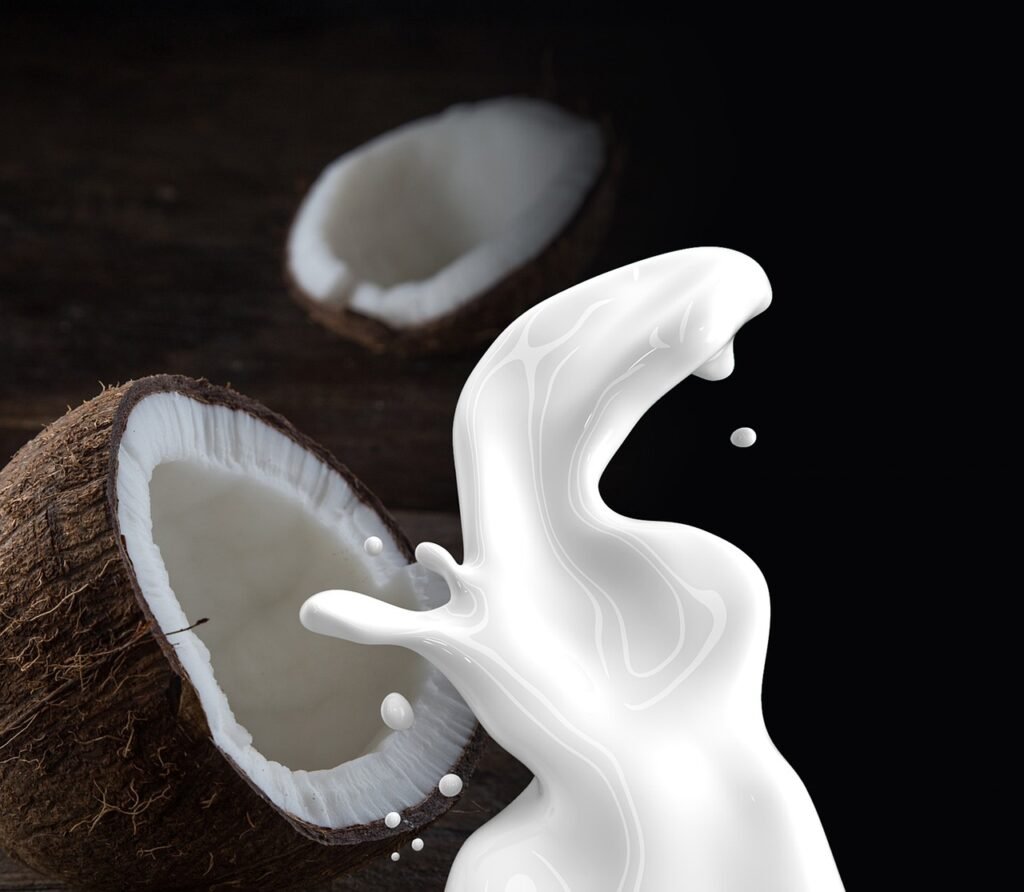
Cube trays beat shoving the can in the freezer
- Shake or stir the can until it looks uniform, so every cube holds the same ratio of fat to water.
- Pour into a silicone ice cube tray, filling each well most of the way but not to the rim.
- Freeze solid overnight, then pop the cubes out and move them into a labeled bag.
- Note the tray size on the bag. Standard wells hold roughly two tablespoons, which makes measuring painless later.
- Press the air out of the bag before sealing, since exposed edges pick up freezer odors quickly.
Cubes let you drop two into a curry or four into a smoothie without thawing a whole batch. A full tub, by contrast, commits you to using everything at once.
Canned and carton coconut milk are not the same product
| Type | How it freezes | Best use after thawing |
|---|---|---|
| Full fat canned | Separates hard, reblends well | Curry, braises, rice, ice cream base |
| Light canned | Separates less, thins out more | Soups, broths, oatmeal |
| Carton coconut beverage | Stabilizers help, texture still grainy | Smoothies, baking, pancake batter |
| Coconut cream | Freezes very firm, richest result | Sauces, curry finishing, frozen desserts |
Putting it back together, and where it still works
Three methods fix the texture. A blender or immersion blender is fastest and gives the smoothest result. A warm pan over low heat with steady whisking works almost as well. A jar and thirty seconds of hard shaking is enough for anything headed into a smoothie anyway.
Where frozen coconut milk shines is cooked applications. Curry, dal, coconut rice, braised greens and soups all reheat it past the point where any graininess matters. It also makes a reliable base for ice cream and frozen bars, since the mixture gets churned or blended regardless.
The one place to be honest about the limits is anything served cold and uncooked, like a coconut panna cotta or a whipped topping. Those rely on the fat being arranged a specific way, and the freezer scrambles that arrangement permanently. Keep the cubes for the stove and buy fresh for the fridge.