
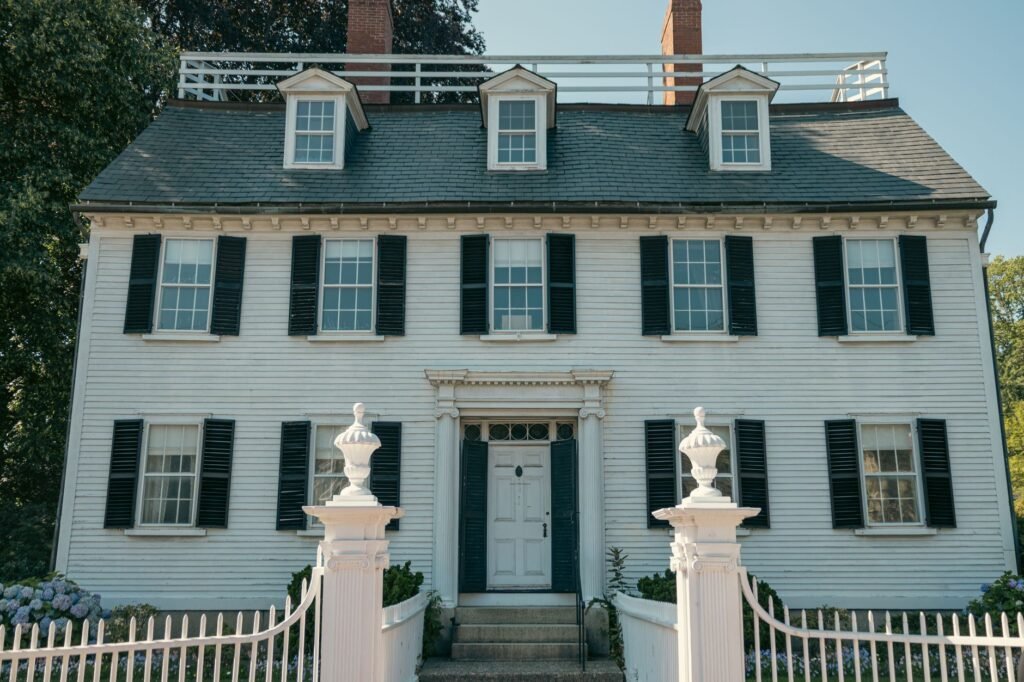
Partly. The people, the house and the years are real. The haunting is testimony, and the film’s villain is a real woman the historical record never accused of anything. Roger and Carolyn Perron did move their five daughters into a farmhouse outside Harrisville, Rhode Island, and Ed and Lorraine Warren did take the case. Everything the film shows happening inside that house rests on what the family and the Warrens later said happened.
The documented facts about the film
| Question | Answer |
|---|---|
| Based on a true story? | Partly, on a family’s account of events beginning in 1971 |
| Based on a book? | No, though the eldest Perron daughter later wrote her own account |
| Written by | Chad Hayes and Carey W. Hayes |
| Directed by | James Wan |
| Lead cast | Patrick Wilson, Vera Farmiga, Lili Taylor, Ron Livingston |
| First shown | 2013 |
The Perron family’s decade in the farmhouse
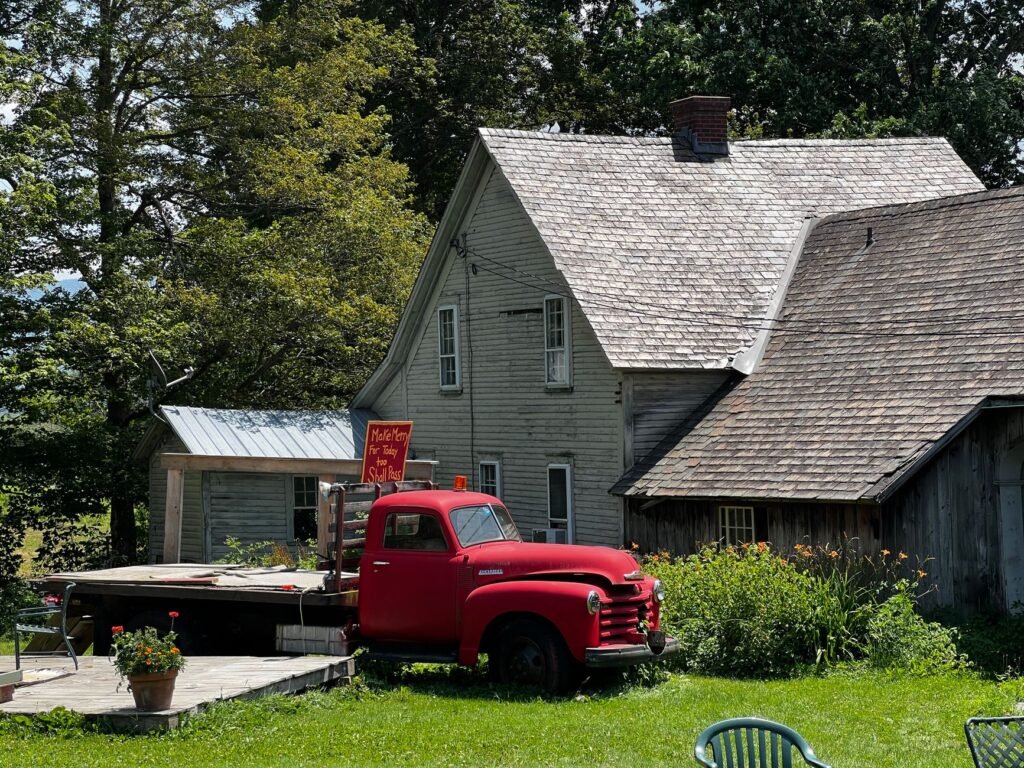
This is the part that survives checking. The Perrons bought a Colonial era farmhouse just outside the village of Harrisville in Rhode Island and moved in with five daughters at the start of the 1970s. They stayed until 1980. Andrea Perron, the eldest, published a three volume account of those years, House of Darkness House of Light, beginning in 2011, and she has spoken about the house publicly ever since.
So the family existed, the address existed, and the years line up. What none of that establishes is the content of the story. A consistent account told for fifty years is still an account. The film presents it as reconstruction, which is a different claim, and that gap is where most of the argument about this movie lives.
Bathsheba Sherman and the parish record
The film’s central figure is Bathsheba Sherman, presented as a witch who sacrificed her own child, cursed the land and now possesses whichever mother lives on it. Bathsheba Thayer was a real woman, born in Burrillville in 1812. She married Judson Sherman in 1844 and died in 1885. She is buried in a local cemetery under her own name.
Researchers who have gone through the surviving Rhode Island records have not found her charged with, tried for or convicted of anything at all. There is no witchcraft case. The stories attaching her to the property appear only in the twentieth century, long after her death. By 2023 local historians were raising money to repair her headstone, which had been damaged by people drawn to the site by the film. That is the single largest liberty here, and unlike a compressed timeline it has a named victim.
Why the Warrens’ files are the weakest link
Ed and Lorraine Warren were real, they were well known, and they did take this case. The film treats their case files as source documents, which is how the marketing language of true case files does its work. But the files are the Warrens describing their own investigations. They are not independent records, they were never subject to outside review, and where the family’s account and the Warrens’ account diverge the screenplay simply takes whichever version plays better.
A real address, with real neighbors
The house is occupied private property on a working road, and the film turned it into a destination. Later owners Norma Sutcliffe and Gerald Helfrich sued over the trespassing that followed, a case dismissed in December 2017. The property sold again in 2022 for just over one and a half million dollars, and has since been run commercially for tours and overnight stays. Whatever you conclude about 1971, the consequences of the film are entirely documented and entirely real.
What based on is doing in the marketing
For horror, the phrase is a sales line rather than a standard. It commits a studio to almost nothing, because a real family, a real address and a real investigator are enough to support it. The useful reading habit is to split the claims. Names, dates, deeds and lawsuits can be checked in public records, and in this film they largely hold. Events that exist only because someone remembers them cannot be checked at all, and that is nearly the entire running time. Bathsheba Sherman sits in a third category, where the record exists and contradicts the film outright.