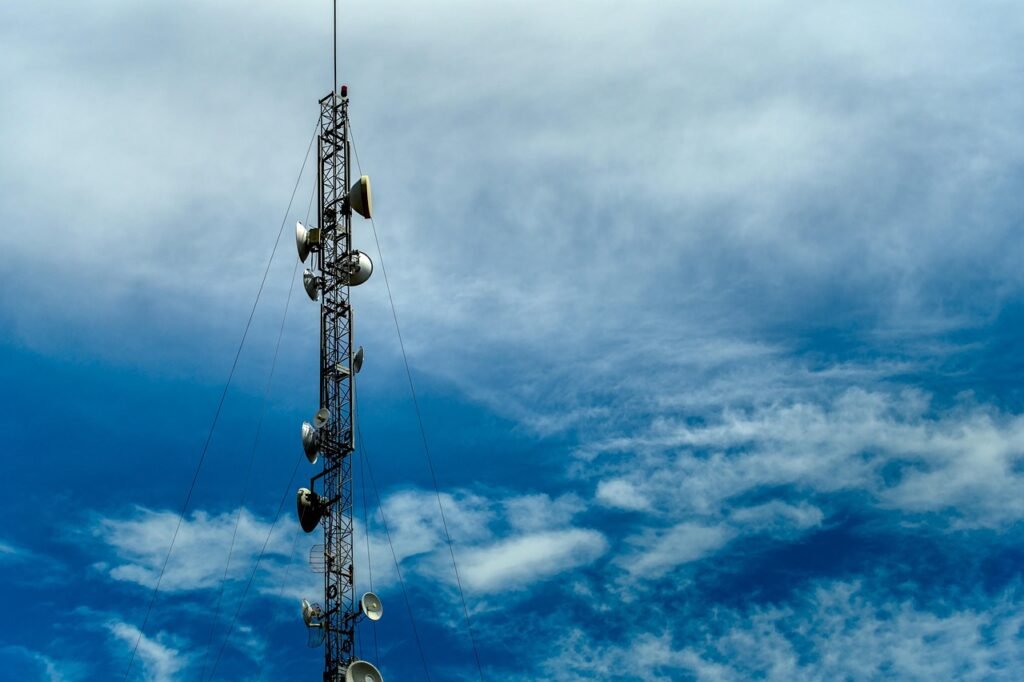
No. Fall is an original screenplay, and the tower two women get stranded on was invented for it. There is no B67 TV tower, no reported incident that matches the plot, and no book or article behind it. The part people are actually reacting to is the photography, because the production went to unusual lengths to make the height look unfaked.
The credits, with no source material
| Question | Answer |
|---|---|
| Based on a true story? | No, original screenplay |
| Based on a book? | No |
| Written by | Scott Mann and Jonathan Frank |
| Directed by | Scott Mann |
| Lead cast | Grace Caroline Currey, Virginia Gardner, Mason Gooding, Jeffrey Dean Morgan |
| First shown | August 2022 |
No B67 tower exists
The film gives its tower a designation, a height of two thousand feet and a backstory as a decommissioned broadcast mast in the American desert with a rusting ladder nobody maintains. None of that describes a real structure. Masts of that height in the United States are a short, documented list. They are licensed, lit, registered with aviation authorities and inspected, because a two thousand foot obstacle is an air traffic matter before it is anything else. An abandoned one with a failing ladder would be a known hazard with a paper trail, not a place two climbers could quietly drive to.
That is worth saying plainly, because the search traffic for this question is enormous and a lot of it comes from people who half remember a news story. There is no news story.
The real towers the design borrows from
The look of the tower was drawn from the KXTV and KOVR mast at Walnut Grove in California, which is real. It was built in 2000, stands around two thousand and sixty feet, and is the tallest structure in the state and one of the tallest in the country. Structures like it are climbed regularly, by crews with harnesses, fall arrest gear and a schedule, and tower work is genuinely hazardous enough that falls in the communications tower trade have drawn repeated regulatory attention in the United States.
So the ingredients are true even though the event is not. Tall masts exist. People climb them. Falls happen. The film simply removes the safety system and the paperwork and asks what is left.
It is also worth noting what the film does not borrow. Real mast maintenance involves a climb of several hours, radio contact with a crew on the ground, and a permit process before anyone leaves the base of the structure. Strip those three things out and the scenario becomes possible on screen and impossible in practice, which is exactly the trade the screenplay makes.
Why a hundred feet looked like two thousand
This is the reason the film reads as real. Rather than shooting the leads against a green screen, the production built the top section of the tower on a peak in the Shadow Mountains in California’s Mojave Desert. The performers were never more than about a hundred feet above the ground they were standing on, but the landscape behind them genuinely fell away for thousands of feet, and it was photographed rather than painted in.
The result is that every cue your eye uses to catch a composite is absent. The haze is real haze, the light on the actors matches the light on the desert, the wind moves their hair and the ladder at the same time. Add that the leads did much of their own climbing and that the film was framed for large format screens, and you get footage that behaves like documentary even though the premise is invented.
The reason viewers assume it happened
Survival cinema has trained the audience badly. The best known films about one person trapped in one place really are reconstructions. 127 Hours retells what happened to Aron Ralston in a Utah canyon. The Impossible retells a family’s experience of the 2004 Indian Ocean tsunami. When a new film arrives with the same tight structure, the same small cast and the same procedural attention to detail, the default assumption is that somebody lived it.
The second factor is the internet the film sits next to. Free climbing footage shot on actual masts and cranes circulates constantly, filmed by people with no safety equipment, and it looks exactly like the film. If your feed already contains real people at real height with a phone, a fictional version of it does not announce itself as fiction. The check is simple though. An original screenplay carries a written by credit and no source line, and Fall carries exactly that.