No. Coraline is adapted from Neil Gaiman’s 2002 novella, and the novella is fiction. The reason people keep asking is a specific story that circulates online about a real child, a house fire and a body with buttons sewn over its eyes. That story has no source, and Gaiman has said publicly that his book was not taken from real events.
The book, the film and the credits
| Question | Answer |
|---|---|
| Based on a true story? | No |
| Based on a book? | Yes, the 2002 novella Coraline by Neil Gaiman |
| Written by | Henry Selick, adapting Gaiman |
| Directed by | Henry Selick |
| Lead voice cast | Dakota Fanning, Teri Hatcher, Keith David, Ian McShane, John Hodgman |
| First shown | 2009 |
The viral legend, and why it fails
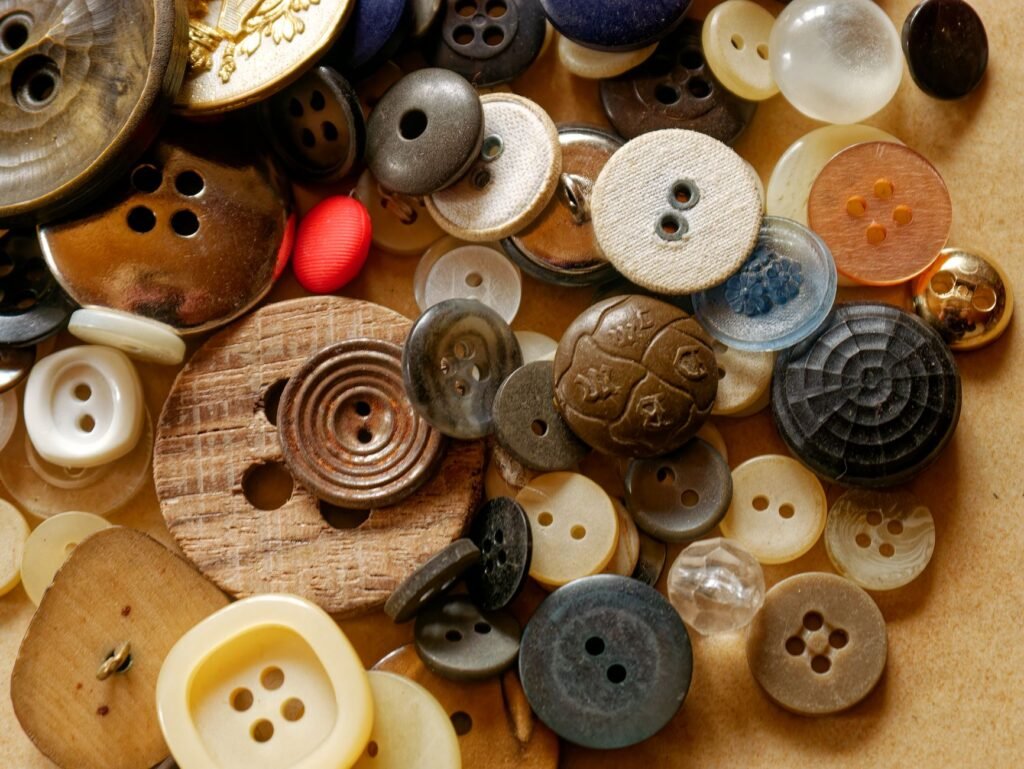
The version that spreads on social platforms is always roughly the same. An elderly woman in the English countryside takes in her infant granddaughter after a fire kills the child’s parents. Nobody ever sees the girl outside. Local children eventually break in and find a burned infant’s body dressed up, with buttons where the eyes should be. The woman ends her life in an asylum.
Test it the way you would test any claim. There is no inquest, no newspaper report, no coroner, no named village, no date and no named family. A case like that in Britain would leave an enormous documentary trail, and none exists. The story also does not appear anywhere before the film, which is the giveaway. It is a creepypasta written backwards from the movie’s best known image, and it spread because a buttoned eye is a detail you remember and a citation is not.
A typo that became the heroine’s name
The small fact that does the most work here is about the name. Gaiman has explained that he intended to write Caroline, mistyped it as Coraline, looked at the result and decided it belonged to someone. He kept it. The book then turns the mistake into a running joke, with the adults around her repeatedly getting her name wrong and calling her Caroline.
That is a writer’s accident, not a record of a real child, and it quietly rules out a whole class of theory. A name taken from a real case does not arrive by slipping on a keyboard, and it does not get treated as a gag inside the text.
The Victorian story that did influence it
Coraline does have ancestors, and they are literary. Gaiman has pointed to Lucy Clifford’s The New Mother, published in 1882, in which misbehaving children are warned that their mother will leave and be replaced by a new mother with glass eyes and a wooden tail. The shape is unmistakable once you know it: the substituted parent, the wrongness in the face, the threat that the replacement will be permanent.
He has also cited Alice’s Adventures in Wonderland, which supplies the structure of a bored child who finds a way through and meets a world that turns hostile. Neither is a true story either. What they give the book is the authority of something very old, which is a large part of why readers assume it must come from folklore, and from there assume folklore means it happened.
What the film adds to the novella
The adaptation is not a transcription, and the differences are another argument against a hidden true source. Selick wrote a new character, the neighbor’s grandson Wybie, who does not exist in the novella at all. He was added to give Coraline somebody to speak to, because a book can live inside a character’s head and a film cannot. Several sequences were expanded or restructured for the same reason.
Why stop motion makes it feel like evidence
There is a formal reason this film in particular attracts the question. It was made by Laika as stop motion, which means the house, the garden, the furniture and the puppets were physical objects, lit by real lights and photographed one frame at a time, with thousands of interchangeable printed faces supplying the expressions. The depth of field is optical. The textures are fabric and wood.
Your eye reads that as photography of something that existed, because it is photography of something that existed. Animation drawn or rendered announces itself as invention. A handmade miniature does the opposite, and the result is a film that feels less like a story and more like footage. That instinct is doing all the work behind the true story question, and it is an instinct about the camera rather than about the plot.