No. The Shawshank Redemption is adapted from a Stephen King novella, and Andy Dufresne never existed. No real prisoner, escape or warden sits behind it. What confuses people is that the film was shot inside a genuine prison with a genuinely grim history, and that building has outlived the movie as a tourist site.
The paper trail behind the film
| Question | Answer |
|---|---|
| Based on a true story? | No |
| Based on a book? | Yes, the novella Rita Hayworth and Shawshank Redemption |
| Source published | 1982, in Stephen King’s collection Different Seasons |
| Written by | Frank Darabont |
| Directed by | Frank Darabont |
| Lead cast | Tim Robbins, Morgan Freeman, Bob Gunton, Clancy Brown, James Whitmore |
| First shown | 1994 |
A Stephen King novella, and not a horror one
Different Seasons collected four novellas King wrote away from the genre he was known for. Three of them became films, and all three are remembered as realist pictures: this one, The Body which became Stand by Me in 1986, and Apt Pupil which was filmed in 1998. None of the three has a supernatural element.
That matters for this question. Readers who know King only for the horror assume that when he writes something plain and grounded he must be writing something down. The opposite is closer to the truth. Different Seasons was an exercise in invention outside his usual register, and the prison story in it carries no source credit of any kind, on the book or on the film.
Maine on the page, Ohio on the screen
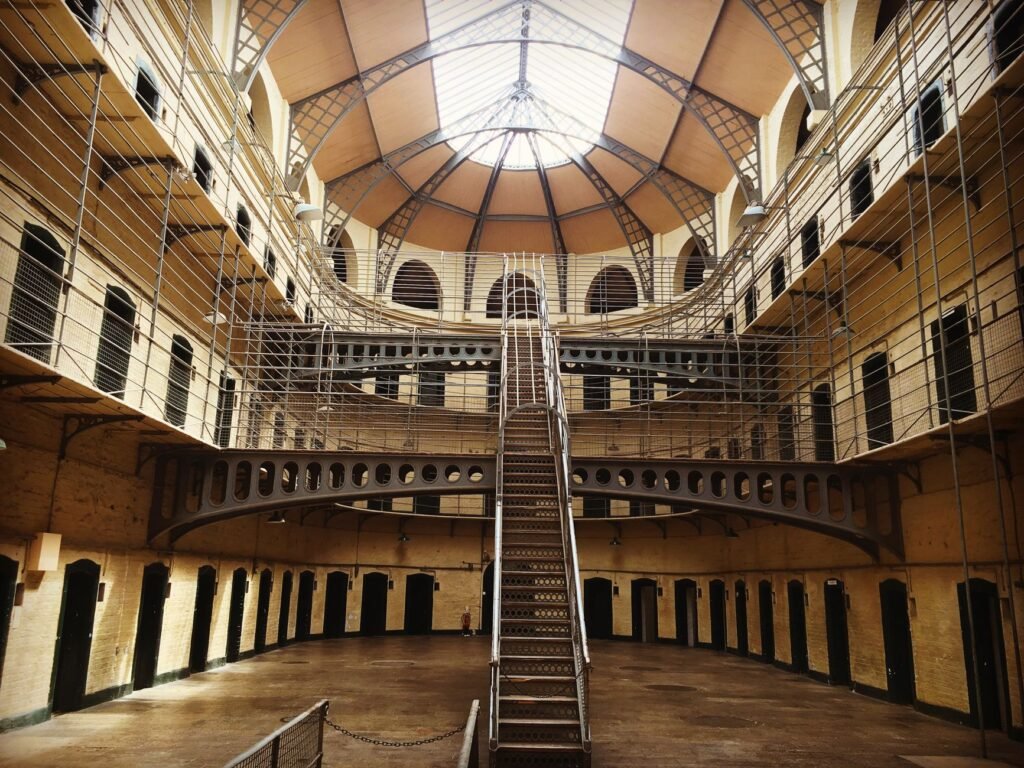
Shawshank State Prison is fictional and, like most of King’s settings, it sits in Maine. The building you watch for two hours is the Ohio State Reformatory in Mansfield, Ohio. It was built between 1886 and 1910 to a design by the Cleveland architect Levi T. Scofield, in a castle like Romanesque style that no modern prison would ever be given, and it received its first prisoners in 1896.
Its real ending is closer to the film’s themes than anything in the plot. A prisoners’ class action over overcrowding and conditions led to a federal court order, and the institution closed in December 1990, four years before the film came out. So the walls are authentic, the decay is authentic and the injustice attached to the building is authentic. The story walking through it is not.
The reformatory outlived the film’s fiction
Since 1995 the site has been run as a museum by a preservation society, with history tours, events and a steady traffic of visitors who come specifically because of the film. You can stand in the cell blocks, in the administration wing and in the yard.
This is the practical source of the confusion. When a visitor walks a real corridor that they last saw in a story, the two records merge. The tour is about a real prison that really closed under a federal order. The film is about a banker who never existed. Both are true statements about the same rooms.
No single real prisoner behind Andy Dufresne
People periodically connect the film to real long term escapes, and American prison history certainly contains tunnels, forged identities and men who stayed free for decades. None of them is credited here, and none of them matches. Andy’s story depends on a very specific combination: a wrongful conviction, a warden running a money laundering operation, and a prisoner with the financial training to serve it. That combination was constructed to make the ending land, not discovered in a file.
Why the texture fools people
The film is built out of documentary furniture. It is narrated in retrospect by a fellow inmate. It marks off the years across two decades of the mid twentieth century. It returns three times to the same parole hearing set up, it follows an institutional routine rather than a plot for long stretches, and it gives a minor character an epilogue. Those are the moves of a reconstruction, deployed on invented material.
If you want a one step check, look for a source line. When a film is drawn from a real case, the opening credits announce it, since that provenance is an asset. This one says it is based on a novella, and the novella says nothing at all.