
No. Stranger Things is an original series, not a dramatization of a real case. Hawkins, Eleven and the Upside Down were invented by Matt and Ross Duffer. One thread underneath the show is real, though. The United States government did run secret experiments on people during the Cold War, and enough paperwork survived for anyone to read it.
Who invented Hawkins, and when
| Question | Answer |
|---|---|
| Based on a true story? | No, original series |
| Based on a book? | No |
| Created by | Matt and Ross Duffer |
| Lead cast | Winona Ryder, David Harbour, Millie Bobby Brown, Finn Wolfhard |
| First shown | Netflix, July 15, 2016 |
| Original setting in the pitch | Montauk, New York, later changed to Hawkins, Indiana |
Why the show feels like a cover up you half remember
Almost every element of season one is shaped like a leak. There is a federal laboratory at the edge of a small town, a program with a director, a child with a number instead of a name, and a chain of officials insisting that nothing happened. The first season is set in 1983, which puts it in the decade when real disclosures about government secrecy were still arriving in newspapers. That combination is why viewers reach for the true story question instead of simply calling it science fiction.
The show also never winks at the audience. There is no framing device, no opening card claiming it was adapted from records. It just presents the machinery of a classified program with a straight face, and a straight face is the single strongest signal that people read as authenticity.

The program that genuinely existed
MKUltra was real. The Central Intelligence Agency ran it from 1953 until the early 1970s through its Office of Scientific Intelligence, working with United States Army biological warfare facilities, and the goal was to find drugs and procedures capable of altering human behavior. Methods included giving people LSD without their informed consent, along with hypnosis, electric shocks and sensory deprivation.
In 1973 the CIA director ordered the files destroyed. Roughly twenty thousand documents survived because they had been stored in the wrong place, and they surfaced in 1977. The Church Committee and the Rockefeller Commission investigated the program, so the record is public rather than rumored. The Duffers have said they anchored the show in Cold War experiments they had read about, MKUltra among them. Using a documented program as scaffolding is a different act from retelling something that happened, and no girl with telekinesis was ever part of MKUltra.
What Montauk has to do with any of this
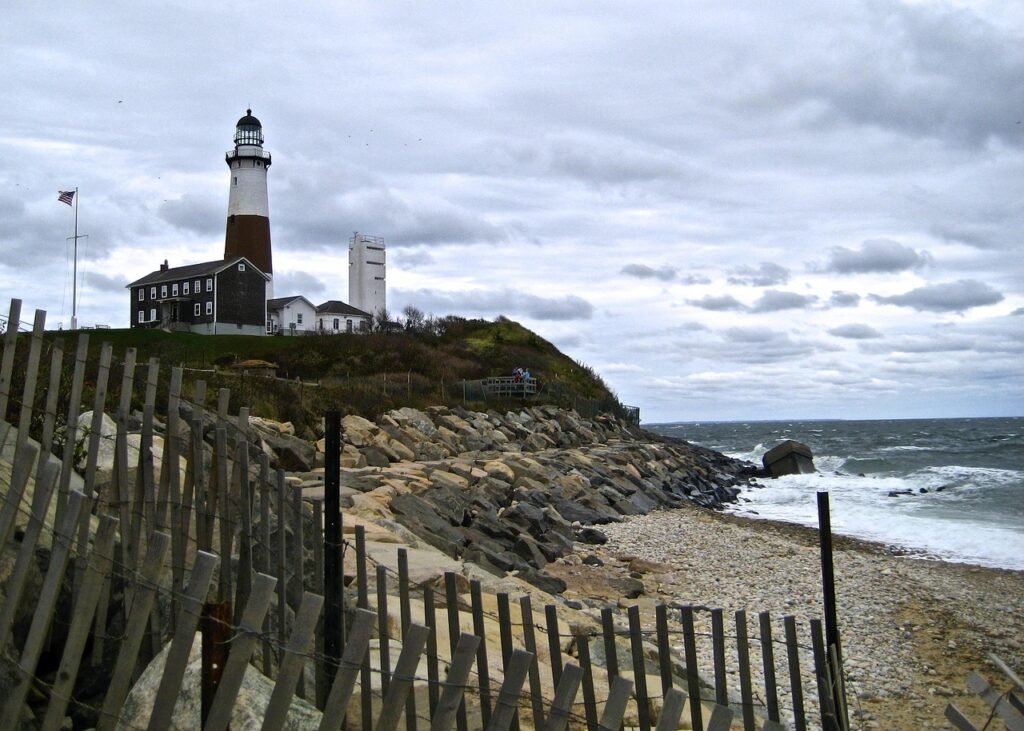
The original pitch was titled Montauk and set in Montauk, New York, partly because that stretch of Long Island stood in for Amity Island in Jaws. Montauk carries its own internet folklore, the Montauk Project, a long running story about experiments at Camp Hero, a decommissioned military site that is now a state park. The site is real. The claims attached to it are not documented the way MKUltra is, and the series borrowed the atmosphere rather than the allegations.
Hawkins was invented for a practical reason
The move from a real town to a fictional Indiana one was a production decision. The creators wanted freedom to do things to the town, including sealing it off entirely, which is awkward when the audience can look the place up. That choice is also a useful tell. A project trying to be received as history keeps the real place names, because the names are the proof. Stranger Things gave them up in exchange for control of the story.
The year was chosen the same way. The Duffers landed on 1983 in part because it sits just ahead of Red Dawn, the film that fixed a particular flavor of Cold War dread in American pop culture. Their stated influences are novels by Stephen King and films produced or directed by Steven Spielberg, John Carpenter and Wes Craven. That is a list of storytellers, not of sources, and it describes what the series was assembled from far better than any conspiracy board does.
Telling a real program from a real story
- Read the credit block. Created by means invented. Based on or inspired by true events is a claim a studio makes deliberately, because it sells.
- Look for a named program. Real operations leave congressional testimony, declassified files and archived hearings. MKUltra passes that test. Most of what circulates alongside it does not.
- Separate the institution from the incident. A real agency appearing in a plot proves nothing about the plot.
- Check whether the places exist. Fictional towns are a signal the writers wanted room to invent.