No. Primate is an original screenplay, and no real chimpanzee attack is being retold. Director Johannes Roberts has described the idea starting with his mother’s dog circling a swimming pool, not with a case file, and Paramount has never marketed it as a true story. The real material sits in the background: people do keep chimpanzees, and researchers really did try to teach them language.
The rabid chimp film, line by line
| Question | Answer |
|---|---|
| Based on a true story? | No, original screenplay |
| Based on a book? | No |
| Written by | Johannes Roberts, Ernest Riera |
| Directed by | Johannes Roberts |
| Lead cast | Johnny Sequoyah, Troy Kotsur, Jessica Alexander |
| Premiere | Fantastic Fest, September 18, 2025 |
| US release | January 9, 2026, Paramount Pictures |
| Runtime | 89 minutes |
It started as a dog by a swimming pool
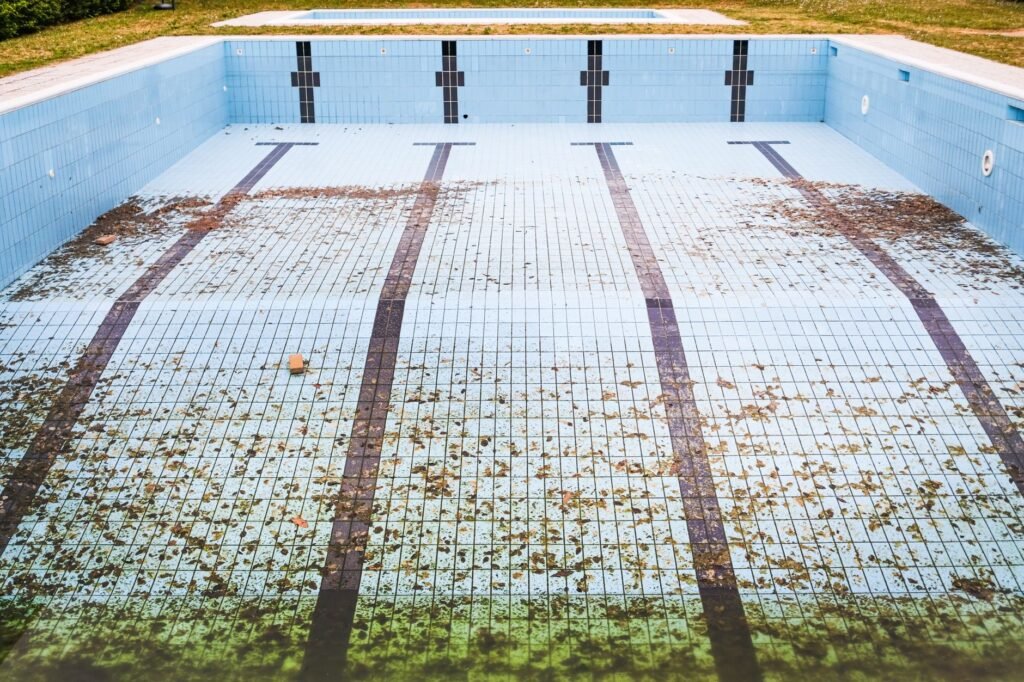
Roberts has told the origin story more than once, and it has nothing to do with a real attack. His mother kept a dog called Ludwig at her home outside Cambridge that ran around her swimming pool barking constantly. “Suddenly, my Cujo brain went, ‘Oh, what if the swimming pool didn’t have a shallow end? And the dog actually had rabies?'” he told Film Stories. The animal in the script stayed a dog through several drafts before he swapped in a chimpanzee.
His stated reference points are Lewis Teague’s Cujo, Stephen King, and the single location siege pictures of John Carpenter. That is a chain of influences, which is a different thing from a source.
A rabid mongoose on a rabies free island
In the film, Ben the chimpanzee is bitten by a rabid mongoose at a cliffside house in Hawaii. Half of that setup is real. Mongooses were introduced to Hawaii from 1883, when the Hilo Planters Association released 72 animals imported from Jamaica to control rats in sugarcane. The scheme failed, because mongooses hunt by day and rats by night, and the population became a serious predator of native ground nesting birds instead.
The rabies is the invented half. Hawaii has never had an indigenous case of rabies, which is precisely why the state quarantines imported dogs, cats and other carnivores and demands microchipping, vaccination and blood testing to avoid a stay of up to 120 days. A rabid mongoose on that island is a horror premise, not a local hazard.
Chimpanzees really were taught to use symbols
Ben communicates through soundboard software on a tablet, trained by the family’s late mother, a linguistics professor. That detail has a genuine lineage. The best documented case is Nim Chimpsky, taken from a primate institute in Oklahoma days after his birth in the 1970s and raised in homes in Manhattan and the Bronx while Herbert Terrace of Columbia University tried to teach him American Sign Language.
The ending is the part worth knowing. After reviewing the footage, Terrace concluded that Nim was not using language at all, but imitating his teachers’ signs to get rewards, without initiating conversation or forming sentences. The experiments were real. The film’s version of what a trained chimp can understand is an extrapolation from them, not a report on them.
The 2009 case people keep bringing up
Search around this film and one real incident surfaces. Travis was a chimpanzee bought as an infant by Sandra and Jerome Herold and raised at their home in Stamford, Connecticut. He got loose from a car in October 2003, and on February 16, 2009 he seriously injured a family friend and was shot by a responding police officer. He was around 200 pounds and 13 years old.
Two things are worth stating plainly. His head tested negative for rabies, so the mechanism the movie turns on is not what happened there. And nobody connected to Primate has claimed the film is about him. What the case did change was law: Connecticut barred keeping primates over 50 pounds without a permit, and a federal Captive Primate Safety Act passed the House 323 to 95 in February 2009 before dying in committee. It was reintroduced in 2024.
The chimp is a performer in a suit
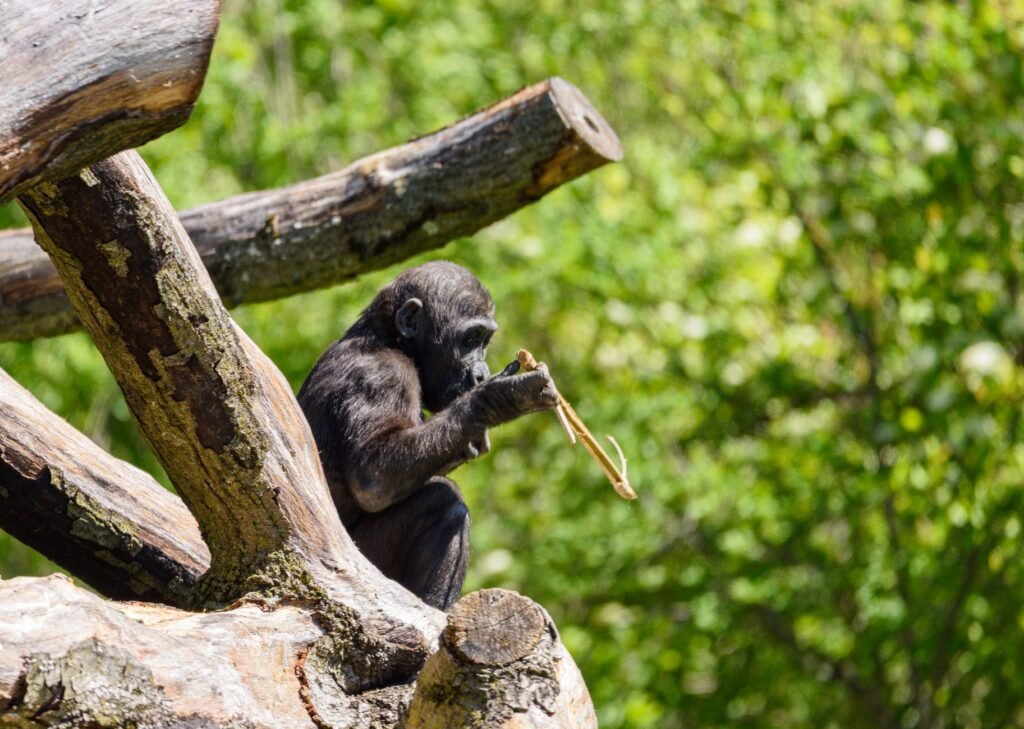
Ben is played by Miguel Torres Umba in a suit rather than assembled in a computer, and Roberts pushed hard for that. “This movie lives or dies on practical effects,” he said. “You can’t make this movie and give it the same impact if you’re always leaning on digital effects.”
The production is the last piece of the answer. Principal photography ran on sound stages in London from September 2024 to early November, roughly five to six weeks of shooting, with Simon Bowles designing the Hawaiian house. The island you are looking at is a set. If the picture feels alarmingly plausible, that is craft doing its job, and craft is not evidence.